
Jean-Michel Jarre: Music Industry Must Embrace AI

Electronic music pioneer Jean-Michel Jarre argues AI will enhance creativity, contradicting concerns from artists like Elton John and Dua Lipa.
Jean-Michel Jarre, the legendary French musician and innovator who revolutionized electronic music during the 1970s, has made a bold statement urging both the music and film industries to abandon their defensive posture toward artificial intelligence. Rather than viewing AI as a threat to artistic expression, Jarre argues that creative professionals should recognize the technology's transformative potential and leverage it to push the boundaries of their respective fields.
Speaking out against what he characterizes as an overly cautious approach, Jarre criticized industry leaders for being "very anti-AI" and suggested that this resistance stems from fear rather than thoughtful consideration. The electronic music pioneer emphasized that while established creative sectors are currently "freaking out" over the technology's implications, this panic is ultimately misplaced and counterproductive to artistic evolution.
Jarre's perspective stands in marked contrast to the concerns voiced by other prominent figures in the entertainment world. Artists including Elton John, Dua Lipa, and numerous other musicians and filmmakers have publicly expressed anxiety about how AI might impact creative professions, job security, and the integrity of artistic work. These established artists worry that AI could devalue human creativity or be used to create unauthorized derivative works.
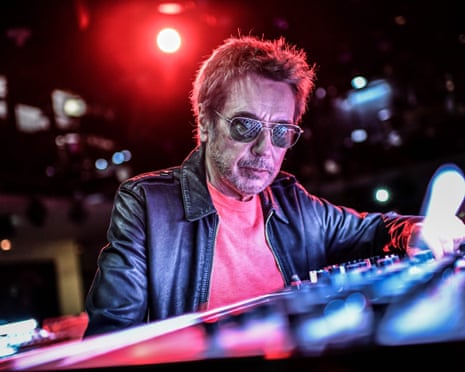
The distinguished musician outlined an optimistic vision of how AI in creative industries could actually enhance artistic possibilities. According to Jarre, rather than diminishing human talent, AI tools would become instruments through which artists could realize unprecedented creative visions. He painted a picture of future artistic movements emerging from the collaboration between human creativity and machine intelligence, suggesting that artists would harness AI to craft "the cinema of tomorrow, the hip-hop of tomorrow, the techno of tomorrow, the rock'n'roll of tomorrow."
This forward-thinking stance reflects Jarre's long history as a pioneer willing to embrace new technologies and push artistic boundaries. Throughout his career, which spans more than five decades, Jarre has consistently been at the forefront of technological innovation in music. He was among the first musicians to fully embrace synthesizers and electronic instrumentation as legitimate artistic tools, when many in the traditional music establishment questioned their validity. His early albums like "Oxygène" and "Équinoxe" demonstrated how electronic devices could create profound emotional experiences and complex musical narratives.
Jarre's willingness to engage with emerging technology reflects a philosophy that has guided his entire career: innovation and artistic expression are not mutually exclusive. Instead, the adoption of new tools and techniques has historically been the catalyst for entire new genres and movements in music and film. From the introduction of electric instruments in rock music to the development of digital recording and production techniques, technological advancement has consistently expanded rather than constrained creative possibilities.
The debate surrounding AI in entertainment touches on fundamental questions about creativity, authorship, and artistic integrity. As AI technology becomes increasingly sophisticated, these discussions will likely intensify within creative communities. Some artists fear that AI-generated content could flood the market, making it harder for human creators to earn livelihoods or gain recognition. Others worry about copyright violations and the unauthorized use of their work to train AI models.
However, Jarre's argument suggests another way to frame this technological transition: as an opportunity rather than a catastrophe. From this perspective, artists who learn to effectively use AI as a creative tool could gain competitive advantages and open entirely new avenues for expression. Musicians might use AI to generate novel chord progressions or instrumental arrangements as starting points for their compositions. Filmmakers could employ AI for visual effects, set design generation, or even scriptwriting assistance. The technology could democratize creative production, allowing independent artists to achieve production values previously requiring large studio budgets.
The parallel to previous technological disruptions in creative industries is instructive. When photography was invented, painters feared their profession would become obsolete. Yet photography's emergence actually led to new artistic movements like impressionism and abstractionism, as painters were freed from the requirement to create photorealistic representations. Digital music production tools initially sparked similar concerns from traditional musicians and producers, yet these tools have since become standard in professional music creation.
Jarre's advocacy for AI adoption comes at a crucial moment when the industry must decide how to regulate and integrate these technologies responsibly. Rather than blanket resistance or uncontrolled adoption, perhaps the most productive path forward involves thoughtful experimentation and collaboration between technologists, artists, and industry stakeholders. Clear frameworks around copyright, fair compensation for artists, and ethical AI training practices could address legitimate concerns while allowing exploration of AI's creative potential.
The French musician's comments also reflect a broader generational perspective. Those who grew up with electronic music and digital technologies may find it more natural to view AI as an evolution of existing tools rather than a revolutionary threat. This intergenerational difference in perspective could become increasingly important as younger artists who have never known a world without digital music production tools enter the industry with different baseline assumptions about technology's role in creative work.
Looking ahead, the music and film industries will likely need to find ways to coexist with AI technology rather than resist it indefinitely. Jarre's message suggests that the most successful artists and creative professionals may be those who thoughtfully integrate AI tools into their practice rather than rejecting them outright. By embracing this technology while maintaining robust ethical guidelines and protections for human artists, the creative industries could potentially enter a new golden age of artistic possibility and innovation.
Source: The Guardian


