
Jets Draft Class Breaks Down NFL Transition

Three New York Jets first-round picks discuss the challenges and surprises of moving from college football to the professional level.
The transition from college football to the NFL represents one of the most significant challenges young athletes face in their athletic careers. The speed of the game, the physical demands, and the mental complexity increase dramatically at the professional level. To gain insight into what this adjustment truly entails, we spoke with three talented players selected by the New York Jets in the 2026 draft during their inaugural week at the team's headquarters at 1 Jets Drive in Florham Park, New Jersey.
After enduring a disappointing 2025 season, the New York Jets organization made aggressive moves to reshape their roster through the draft. The team invested heavily in their future by selecting David Bailey, a standout edge rusher from Texas Tech, with the second overall pick in the 2026 draft. Bailey was widely regarded as one of the most disruptive defensive players available and was expected to address the Jets' defensive line needs immediately. The organization demonstrated confidence in their forward trajectory by securing two additional premium picks in the opening round, signaling a commitment to building through the draft.
At the 16th overall selection, the Jets addressed their offensive weapons by drafting Kenyon Sadiq, an exceptional tight end from the University of Oregon who had impressed scouts with his versatility and receiving skills. Just fourteen selections later, at No. 30, the team selected wide receiver Omar Cooper from the University of Indiana, the defending national champions. Cooper had distinguished himself as a top target for a championship-caliber college program and was seen as having significant upside at the next level. These three selections represented the Jets' comprehensive approach to building a competitive roster for future seasons.

What Have Been the Biggest Surprises About Your First Week in the NFL?
The transition from the collegiate game to professional football often catches even the most prepared players off guard. The speed of the game at the NFL level is noticeably faster than what prospects experience in college, with defensive coordinators employing far more sophisticated schemes and personnel executing assignments with greater precision. The complexity of the playbook, the volume of information required to absorb in a short timeframe, and the competitive intensity of training camp create an overwhelming environment for rookies. Every player who makes this jump must navigate not only the physical challenges but also the mental demands of adapting to an entirely different level of competition.
David Bailey, the defensive end prospect, offered his perspective on the dramatic shift in his responsibilities and the expectations placed upon him from day one. The edge rusher position requires mastery of multiple techniques, understanding offensive line tendencies, and executing assignments in run defense and pass rush situations. At Texas Tech, Bailey had established himself as a dominant force, but the NFL presents a completely different challenge. The talent pool comprises the best athletes from across the country and the world, each with unique skill sets and the ability to execute their assignments consistently.
Kenyon Sadiq, transitioning from Oregon's pass-oriented offense, emphasized the learning curve involved in understanding defensive schemes and how tight ends are targeted differently in the professional game compared to college football. The tight end position has evolved significantly in modern NFL offenses, with players expected to contribute in blocking assignments, route running precision, and situational awareness. Sadiq's ability to adapt to these demands would determine his trajectory with the Jets. Oregon's program had prepared him well, but the professional game operates at a different velocity and complexity.
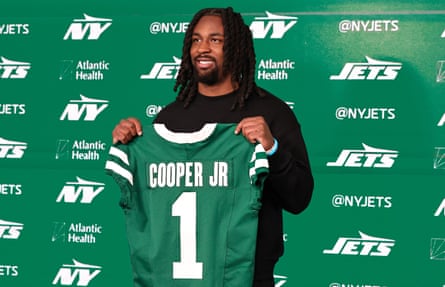
Omar Cooper, arriving from the championship Indiana program, discussed how the physicality and schematic complexity of professional defenses presented unexpected challenges during his first practices. Wide receivers in the NFL face more sophisticated coverage schemes, better cornerbacks and safeties, and more creative defensive designs than they encounter in the college game. The margin for error is significantly smaller, and consistency becomes paramount. Cooper's success would depend on his ability to process information quickly, execute precise routes, and develop chemistry with the Jets' quarterback.
The three draft picks collectively emphasized a common theme: learning quickly is not merely an expectation but a necessity in professional football. The coaching staff does not have the luxury of extended teaching periods or repetitive practice structures typical in college settings. Instead, players are expected to grasp complex concepts, execute assignments immediately, and contribute to competitive team performance within weeks. This compressed timeline forces rookies to mature rapidly and develop a professional approach to their craft.
Bailey reflected on how the preparation process at Texas Tech, while rigorous and high-quality, had not fully prepared him for the immediate demands of the professional level. College programs pride themselves on player development, but the NFL expects near-complete mastery of fundamentals upon arrival. The edge rusher noted that every snap carries weight, every rep in practice serves a purpose, and every interaction with veteran players provides valuable insight into professional standards and expectations. The learning environment at the Jets facility operates at a different intensity than even the best college football programs.
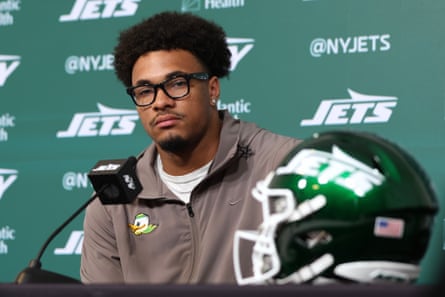
Sadiq, drawing from his experience at Oregon, acknowledged that tight end development in the professional league requires understanding nuanced blocking schemes and recognizing coverage looks pre-snap. The NFL training regimen emphasizes preventative conditioning and injury mitigation in ways that college programs, despite their sophistication, do not fully replicate. Recovery protocols, nutrition management, and treatment methodologies differ significantly. Professional athletes invest substantially in their bodies, understanding that their earning potential and career longevity depend on optimal health maintenance throughout the grueling NFL season.
The physical demands extended beyond game performance into preparation and recovery. Training camp in the professional ranks presents unique challenges, particularly during the hottest months of the year when practices are conducted in full pads and live action. The combination of heat, exertion, and competitive intensity during the preseason tests even seasoned veterans. For rookies, adapting to this environment while simultaneously learning complex defensive or offensive schemes creates a genuinely overwhelming situation that requires mental toughness and resilience.
Cooper emphasized the importance of building relationships with veteran players and coaching staff, understanding that professional football operates as a team enterprise where chemistry and communication become paramount. Indiana's championship season had provided him with team-oriented experience, but the professional game requires different types of collaboration and communication. The speed of communication, the precision of terminology, and the expectations for instant comprehension of complex strategic concepts create a distinct professional culture.
The Jets organization, recognizing the transition challenges faced by draft picks, had invested in support systems and mentorship programs designed to accelerate the learning process. Veteran players serve as informal mentors, coaching staff provides structured instruction, and sports science professionals optimize player development. Despite these resources, the onus ultimately falls on individual draft picks to absorb information, execute assignments, and contribute meaningfully within the demanding professional environment.
Looking forward, Bailey, Sadiq, and Cooper understood that their first NFL season would be defining for their professional careers. The 2026 draft class would be evaluated not merely on draft position or combine performance but on actual contribution to competitive team performance. The New York Jets' future trajectory depended significantly on whether these premium selections could transition successfully from college excellence to professional competence. The next several weeks and months would prove instrumental in determining whether this promising group of athletes could meet the escalating demands of professional football and contribute to building a championship-caliber organization.
The broader narrative of NFL team building emphasizes the unpredictability of draft outcomes and the genuine challenge posed by athlete development at the professional level. Even highly-regarded prospects require time, proper coaching, and organizational support to maximize their potential. The Jets' investment in multiple first-round selections represented a calculated strategy to improve their competitive position through personnel infusion and roster supplementation. Whether these particular players fulfill the expectations accompanying their draft status would become clear over the coming months and years.
Source: The Guardian


