
Job Vacancies Hit 5-Year Low Amid Economic Slowdown

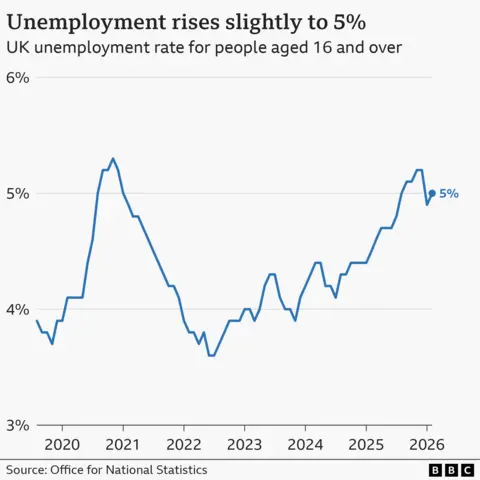
UK unemployment rises to 5% as job vacancies fall to their lowest level in five years, signaling cooling labor market demand.
The UK labor market is showing signs of significant cooling, with job vacancies reaching their lowest point in five years, according to the latest data from the Office for National Statistics (ONS). This downward trend in available positions comes alongside a notable increase in the unemployment rate, which climbed to 5% during the three-month period ending in March, up from 4.9% in the preceding three-month period ending in February. The shift represents a meaningful change in employment conditions across the United Kingdom, raising concerns about job availability for those seeking work.
The rise in unemployment from 4.9% to 5%, though appearing modest on the surface, carries significant implications for workers and the broader economy. This increase comes during a period when employers appear to be tightening their hiring belts, as evidenced by the declining number of open positions across industries. The ONS data provides crucial insights into the health of the employment market, revealing that companies are becoming more cautious about expansion and recruitment strategies in the current economic environment.
Economic analysts point to several factors contributing to this shift in job market dynamics. Rising inflation, persistent interest rate increases, and growing uncertainty about economic growth have prompted many businesses to adopt a more conservative approach to hiring. Companies are reassessing their staffing needs and postponing recruitment plans that they might have undertaken in a more buoyant economic period. This cautionary stance by employers has directly resulted in fewer opportunities for jobseekers navigating the current employment landscape.

The decline in job openings to five-year lows is particularly noteworthy given the tight labor market conditions that characterized much of the post-pandemic recovery period. For several years, employers faced substantial challenges in filling vacancies, leading to competitive wages and strong negotiating positions for workers. However, this dynamic has shifted markedly, with the supply of available positions now contracting significantly. The transition from a worker-favorable market to one increasingly challenging for jobseekers represents a fundamental change in employment conditions.
Different sectors of the UK economy are experiencing varying degrees of impact from these labor market changes. While some industries have maintained relatively stable hiring patterns, others have announced significant recruitment freezes and workforce reductions. The variation across sectors underscores the uneven nature of the economic slowdown, with certain areas proving more resilient than others in maintaining employment levels. Technology, finance, and professional services sectors have been particularly affected by hiring constraints, though traditional industries continue to adjust their workforce strategies.
For jobseekers, the implications of these figures are substantial and concerning. Competition for available positions is intensifying as more people seek work against a backdrop of fewer opportunities. The job market is becoming increasingly selective, with employers able to impose higher qualification requirements and more stringent hiring criteria. This shift disadvantages recent graduates, career changers, and those returning to the workforce, who may find it harder to secure employment without extensive experience or specialized skills.
The Office for National Statistics emphasized that their findings are based on comprehensive data collection methods covering the three-month rolling periods specified. The precision of these measurements allows policymakers and business leaders to track employment trends with considerable accuracy. The most recent figures provide the clearest picture yet of how the labor market has responded to macroeconomic pressures accumulated over the past year. Understanding these trends is essential for developing effective policies and strategies in response to changing employment conditions.
Government and business leaders are closely monitoring these developments, as employment levels directly impact consumer spending, tax revenues, and overall economic health. The rise in unemployment and fall in vacancies could have cascading effects throughout the economy if the trends continue or accelerate. Policymakers may need to consider interventions to support job creation and help workers transition between sectors as the economy adjusts. The upcoming months will be critical in determining whether these developments represent a temporary adjustment or the beginning of a more pronounced economic contraction.
International comparisons provide additional context for understanding the UK's current employment situation. Other developed economies have experienced similar labor market softening as they grapple with inflationary pressures and monetary policy adjustments. The UK's trajectory appears consistent with global trends, though specific factors unique to the British economy contribute to its particular employment dynamics. Understanding how the UK compares with peers can help identify whether current conditions are part of a broader pattern or reflect economy-specific challenges.
Looking ahead, economists are divided on whether current employment trends represent a stabilization at lower levels or a precursor to further deterioration. Some analysts suggest that the labor market is finding equilibrium after years of historically tight conditions, resulting in more balanced supply and demand dynamics. Others warn that continued economic headwinds could push unemployment higher and further reduce job openings. The trajectory of hiring trends in coming months will be essential for clarifying which scenario is likely to unfold.
Individuals considering career moves or job transitions should carefully evaluate the current labor market conditions when making decisions. The reduced number of opportunities means that job searches may take longer and require greater flexibility regarding location, salary expectations, or industry choice. Workers who can demonstrate valuable skills, adaptability, and willingness to upskill themselves will likely have better prospects in this more challenging environment. Professional development and continuous learning have become increasingly important strategies for maintaining employability in the current employment market.
The ONS data serves as a vital barometer for understanding broader economic health and serves as a key metric that policymakers, business leaders, and workers monitor closely. As the situation continues to evolve, future releases of employment statistics will be crucial for determining whether these figures represent an adjustment phase or signal a more fundamental shift in economic conditions. The coming months promise to be telling for the UK labor market and its trajectory in response to macroeconomic pressures.
Source: BBC News

