
Julie Bishop Resigns as ANU Chancellor

Former foreign minister Julie Bishop steps down from Australian National University chancellor role. Finance minister Katy Gallagher emphasizes need for institutional trust rebuilding.
Julie Bishop, Australia's former foreign minister, has formally resigned from her position as chancellor of the Australian National University (ANU), marking a significant leadership transition at one of the nation's most prestigious academic institutions. The resignation comes amid ongoing organizational challenges at the university, which has faced considerable scrutiny regarding governance and institutional practices in recent months.
The announcement of Bishop's departure was made public on Friday morning through an official statement from Finance Minister Katy Gallagher. Gallagher's comments highlighted the complexity of the situation, emphasizing that the embattled institution faces a critical period ahead as it works to rebuild trust and confidence among stakeholders, including students, faculty, alumni, and the broader Australian community.
Bishop's tenure as chancellor represented a high-profile appointment to the university's top leadership position, reflecting her distinguished career in Australian politics and international relations. Her resignation prior to the completion of her term suggests the mounting pressures facing the institution and the challenges associated with leading an organization in transition during a period of public scrutiny and internal reform.
The timing of the resignation is noteworthy, occurring during a period when Australian universities are facing increased scrutiny over governance practices, financial management, and institutional accountability. As chancellor, Bishop would have been responsible for overseeing significant aspects of the university's strategic direction and representing the institution in key external relationships and partnerships.
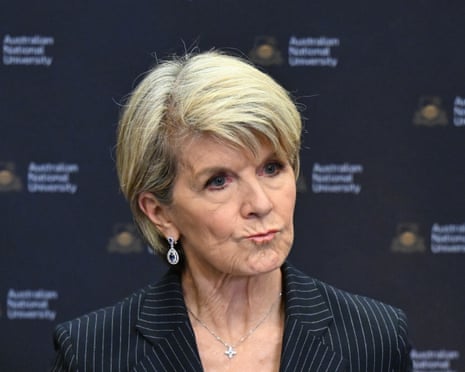
ANU, located in Canberra, stands as one of Australia's leading research universities and consistently ranks among the top institutions globally. The university has played a crucial role in advancing Australian research, innovation, and higher education standards. However, like many large institutional organizations, it has not been immune to governance challenges and organizational complexities that require careful management and transparent leadership.
The chancellor role at universities typically carries significant ceremonial, diplomatic, and governance responsibilities. Chancellors serve as ambassadors for their institutions, fundraising partners, and key decision-makers on major strategic matters. The position requires individuals with substantial experience, credibility, and the ability to navigate complex stakeholder relationships—qualities that Bishop certainly possessed given her background as foreign minister.
Gallagher's statement referenced the necessity for ANU to focus on its core mission of academic excellence while simultaneously addressing institutional challenges. The finance minister's public acknowledgment of the need for confidence rebuilding suggests that the Australian government remains engaged with the university's recovery and reformation efforts. This political-level attention underscores the importance that federal leadership places on ensuring the stability and credibility of Australia's premier research institutions.
The departure of a high-profile chancellor like Bishop could potentially impact the university's external relationships, fundraising initiatives, and international standing. Universities with strong chancellors who command respect and attention tend to benefit significantly from enhanced partnership opportunities and donor engagement. The search for a replacement will likely focus on identifying another individual with substantial credentials and the capability to lead the institution through its current challenging period.
Bishop's background made her a seemingly ideal choice for the role when she was appointed. As former foreign minister under the Abbott government, she brought diplomatic experience, international networks, and a profile that enhanced the university's standing on the global stage. Her resignation therefore represents a notable loss of that external credibility and networks during a period when the institution arguably needs such assets most.
The institutional reform efforts at ANU will likely continue regardless of leadership changes at the chancellor level. Universities must maintain momentum on addressing governance concerns, implementing improved oversight mechanisms, and demonstrating genuine commitment to transparency and accountability. These internal transformation processes often take considerable time and require sustained effort from all levels of institutional leadership.
Looking forward, the search for a new chancellor will be closely watched by university stakeholders and the broader Australian academic community. The successful candidate will need to demonstrate not only impressive credentials and experience but also a clear commitment to restoration of institutional trust and confidence. The role will require someone capable of facilitating dialogue between the university and its various constituencies while maintaining focus on academic excellence and research leadership.
The situation at ANU serves as a reminder of the complex governance challenges that large universities face in the modern era. Balancing research excellence, financial sustainability, student welfare, and stakeholder accountability requires skilled leadership, transparent communication, and genuine commitment to institutional values. Gallagher's emphasis on rebuilding trust suggests that the government will continue to monitor the institution's progress closely in the coming months and years.
ANU's leadership team will need to articulate a clear vision for institutional recovery and demonstrate measurable progress on key reforms. This includes addressing any governance deficiencies, strengthening oversight mechanisms, and implementing cultural changes that prioritize accountability and transparency throughout the organization. The new chancellor, whenever appointed, will play a critical role in championing these efforts and restoring external confidence in the institution's direction and management.
Bishop's decision to step down, while significant, should be understood within the context of the broader transformation process underway at the university. Her resignation does not end the institution's journey toward reform but rather represents another milestone in what will likely be an extended period of institutional renewal and credibility restoration for one of Australia's most important academic centers.
Source: The Guardian


