
Keir Starmer's Quiet Liaison Committee Appearance: A Tactical Triumph?

Keir Starmer's recent appearance before the Liaison Committee was a calculated move, as the Labour leader aimed to avoid making headlines while Iran took center stage.
Keir Starmer, the leader of the Labour Party, recently appeared before the Liaison Committee, a supergroup of select committee chairs, in what was largely a soporific affair - just as he had likely intended. With the focus on the unfolding situation in Iran, Starmer's low-key performance allowed him to avoid drawing attention to himself, a strategic move that played out to his advantage.
Starmer's approach was a stark contrast to his previous prime minister's questions, where he had struggled to remember key details, such as who Peter Mandelson was and why he had been appointed as ambassador to the US. However, during his Liaison Committee appearance, Starmer was eager to convey a sense of control and insider knowledge, particularly when it came to the Iran situation.
The whole premise of being prime minister is that one is expected to possess more state secrets and inside information than the general public. This is the lifeblood of the role, and it's only on rare occasions that the veil slips. Such an instance occurred just days prior, when Donald Trump unexpectedly announced on Truth Social that he would be delaying the bombardment of Iran's power plants for five days, as constructive talks with the Iranian regime were underway.
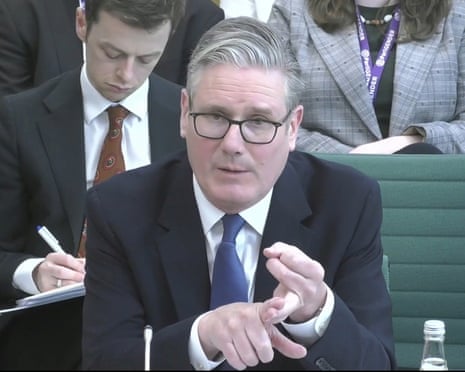
In this context, Starmer's measured approach during the Liaison Committee appearance was a tactical triumph. By avoiding any headline-grabbing moments, he ensured that the focus remained firmly on the unfolding international crisis, rather than on his own performance. This allowed him to project an image of competence and control, while also avoiding any potential missteps that could have damaged his political standing.
Ultimately, Starmer's Liaison Committee jaunt was a masterclass in political strategy. By keeping a low profile and letting the global events take center stage, he managed to present himself as a leader who is well-informed and in command, without drawing unnecessary attention to himself. This approach, while perhaps not the most exciting for political observers, likely served Starmer well in his ongoing efforts to position himself as a credible alternative to the current government.

The art of political leadership often lies in knowing when to speak up and when to remain silent. In this case, Keir Starmer's decision to keep a low profile during his Liaison Committee appearance was a strategic move that allowed him to avoid making headlines and instead let the unfolding international crisis dominate the conversation. By doing so, he demonstrated a level of composure and control that could serve him well in the long run as he continues to challenge the government's leadership.
Source: The Guardian


