
Kennedy's Germ Theory Denialism Exposed in Senate Hearing

RFK Jr. faces Senate scrutiny over rejection of germ theory. Senators Bernie Sanders and Bill Cassidy confront Health Secretary on anti-vaccine stance during budget hearing.
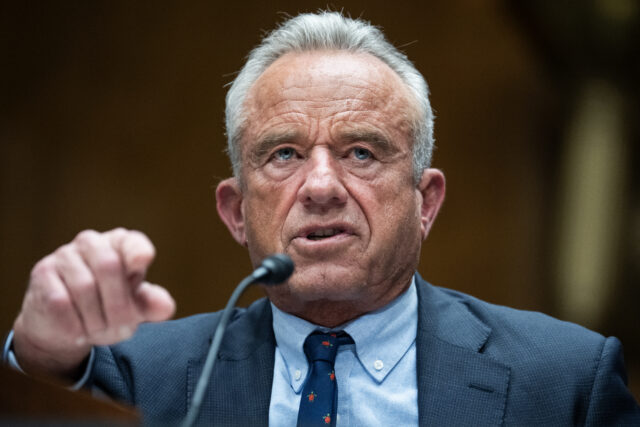
During a contentious Congressional hearing on Wednesday, the fundamental principles of modern medicine became the subject of intense debate when Senator Bernie Sanders (I-Vt.) directly confronted Health Secretary Robert F. Kennedy Jr. over his controversial rejection of germ theory—a foundational scientific concept establishing that specific pathogenic microorganisms cause specific infectious diseases. The exchange, which took place during a Senate Committee on Health, Education, Labor, and Pensions hearing on the fiscal year 2027 Department of Health and Human Services budget, marked a rare moment when Kennedy's unorthodox views were challenged in such a prominent public forum.
Kennedy's defense of his position prompted Senator Bill Cassidy to provide immediate fact-checking and systematic debunking of the Health Secretary's arguments in real time. The confrontation underscored the significant ideological divide between Kennedy's anti-establishment health philosophy and the scientific consensus that underpins modern public health policy. For observers of public health debates, the hearing revealed the extent to which germ theory denial has infiltrated the highest levels of federal health administration, despite the theory's nearly universal acceptance within the scientific community.
The significance of these Senate exchanges cannot be overstated, as they represent one of the most high-profile instances in which Kennedy's dismissal of foundational biomedical science has been raised and directly contested. Kennedy, who possesses no formal background in science, medicine, or public health, has maintained a prominent career as an ardent anti-vaccine activist and prominent distributor of health-related conspiracy theories. His ascent to the position of Health Secretary has raised considerable concerns among medical professionals and scientists worldwide about the direction of federal health policy.
The dismissal of germ theory that Kennedy has championed represents a stark departure from nearly two centuries of scientific progress and medical advancement. Despite the overwhelming evidence supporting germ theory and its essential role in understanding infectious disease transmission, Kennedy has persistently promoted alternative frameworks for understanding disease causation. His controversial positions have remained relatively underreported in mainstream media coverage, despite their profound implications for public health policy and disease prevention strategies.
As documented by Ars Technica's investigation, Kennedy explicitly articulated his germ theory skepticism in his 2021 publication The Real Anthony Fauci, a controversial book that has become a touchstone for anti-vaccine movements across the United States and internationally. In this work, Kennedy characterizes germ theory as fundamentally serving the interests of pharmaceutical corporations, research scientists, and medical professionals seeking to promote and profit from modern medical interventions. Rather than accepting the well-established understanding of disease causation, Kennedy has instead promoted alternative theoretical frameworks that diverge significantly from contemporary scientific understanding.
The implications of having a germ theory denier in leadership of the nation's primary health agency are profound and troubling for medical professionals, public health officials, and the scientific community at large. Throughout his career, Kennedy has built a substantial following among those skeptical of conventional medicine and vaccines, leveraging his family name and legal background to lend apparent credibility to positions fundamentally at odds with established science. His influence has contributed to declining vaccination rates in certain communities and increased vaccine hesitancy among American families.
The rejection of germ theory that Kennedy advocates represents more than mere academic disagreement—it challenges the foundational basis upon which modern medicine has developed treatments, preventive strategies, and public health interventions over the past 150 years. From the development of vaccines to antibiotics to sanitation protocols, the practical applications of germ theory have saved countless millions of lives and dramatically increased human lifespans and quality of life. Kennedy's promotion of alternative theories undermines this hard-won progress.
Senator Sanders' decision to directly confront Kennedy during the budget hearing reflects growing frustration among policymakers about the Health Secretary's scientific positions. The Vermont senator, known for his scrutiny of pharmaceutical industry practices, nonetheless recognizes that legitimate criticisms of pharmaceutical company behavior do not justify wholesale rejection of foundational medical science. The exchange demonstrated that even political allies of health reform have boundaries regarding acceptable scientific skepticism.
The real-time fact-checking provided by Senator Cassidy during the hearing illustrated how Kennedy's arguments collapse under scrutiny from individuals with actual scientific expertise and policy knowledge. Cassidy, a physician himself, was well-positioned to identify the logical fallacies and scientific inaccuracies embedded within Kennedy's rejection of germ theory. This direct refutation in a public setting may prove significant in challenging Kennedy's credibility on health matters.
Looking forward, the Senate hearing raises important questions about the vetting process for senior health officials and the necessary qualifications for individuals responsible for directing the nation's health agencies. Kennedy's prominent role in vaccine skepticism and his rejection of foundational scientific principles contrast sharply with the credentials typically expected of those holding such consequential positions. The hearing may catalyze broader discussions about how to balance skepticism of pharmaceutical industry practices with acceptance of well-established medical science.
The debate also highlights the broader challenge of combating medical misinformation and pseudoscience in an era of widespread internet access and social media amplification. Kennedy's prominence has elevated germ theory denial from fringe status to a position with influence over federal health policy, demonstrating how even thoroughly debunked ideas can gain traction when promoted by charismatic figures with existing platforms. The Senate hearing represents an important moment of public accountability and scientific correction at the highest levels of government.
The medical and scientific communities have responded with concern to Kennedy's position as Health Secretary, viewing his appointment as a potential threat to evidence-based public health initiatives and disease prevention programs. Major medical organizations have expressed alarm about the direction of health policy under his leadership and the potential for implementation of approaches lacking scientific foundation. The Senate hearing provided a crucial opportunity for lawmakers to put pressure on Kennedy to reconsider or publicly defend his positions.
As the nation's health chief, Kennedy wields enormous influence over health agencies, funding priorities, vaccine policies, and public health messaging. His personal rejection of germ theory—regardless of his attempts to couch it in anti-corporate or pro-individual-liberty language—represents a fundamental challenge to the scientific basis of modern medicine. The Senate hearing demonstrated that this challenge will not go uncontested by lawmakers committed to evidence-based health policy and scientific integrity.
Source: Ars Technica


