
Kenya's Sawe Shatters Marathon Sub-2 Hour Record

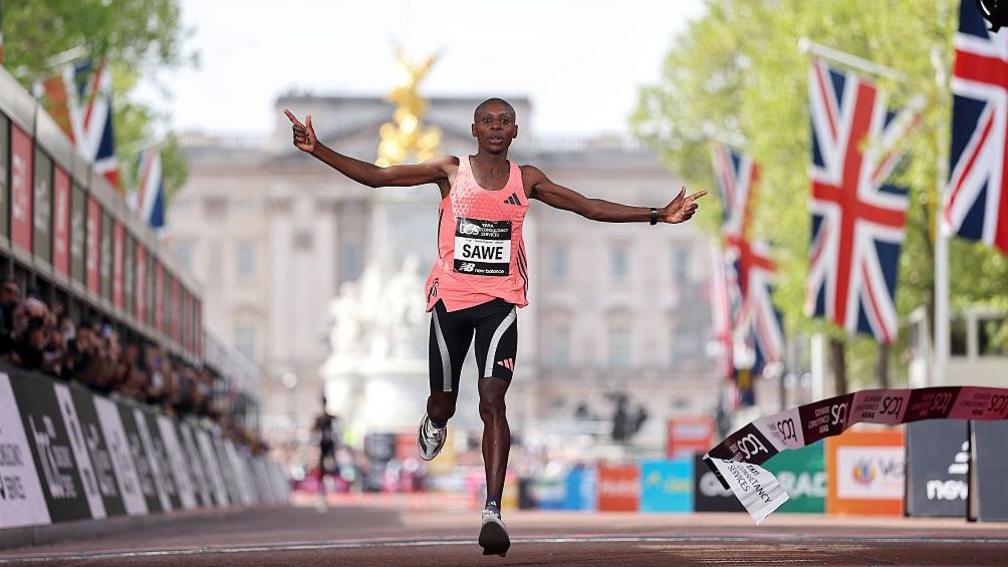
Kenyan runner Sebastian Sawe makes history by becoming the first athlete to break the iconic two-hour marathon barrier at London Marathon.
Sebastian Sawe from Kenya has etched his name into sporting history by achieving what many considered the final frontier in marathon running. The accomplished distance runner crossed the finish line at the prestigious London Marathon, becoming the first person to break the two-hour marathon barrier. This remarkable achievement represents a watershed moment in the sport, breaking through a psychological and physical threshold that has captivated the running world for decades.
The journey toward this historic milestone has been marked by years of dedication, rigorous training, and unwavering determination. Sawe's pursuit of the sub-two-hour marathon reflects not only his personal commitment to excellence but also represents the pinnacle of human athletic achievement in endurance sports. The Kenyan runner's preparation involved meticulous attention to every detail of his training regimen, from altitude work to strategic pacing development. His team worked collaboratively to optimize every aspect of his performance leading up to the landmark race.
Marathon running has traditionally been dominated by East African athletes, particularly those from Kenya and Ethiopia, who have established themselves as powerhouses in the discipline. Sawe's victory in this regard adds to Kenya's rich legacy of marathon running excellence and distance running prowess. The nation has produced countless world-class runners who have set records and achieved remarkable feats on the global stage. Kenya's contribution to athletics cannot be overstated, with the country serving as a source of inspiration for aspiring runners worldwide.
The significance of breaking the two-hour barrier extends far beyond personal achievement or national pride. This milestone represents a convergence of modern sports science, athletic training methodology, and the evolution of marathon preparation. Advances in nutrition science, recovery techniques, and biomechanical analysis have all contributed to enabling athletes to push the boundaries of what was previously thought possible. The technological innovations in running shoe design have also played a crucial role, with specially engineered footwear providing enhanced energy return and reduced injury risk.
The London Marathon, one of the world's most prestigious running events, provided the ideal platform for Sawe's historic achievement. The race course, atmospheric conditions, and the presence of elite pacemakers all contributed to creating optimal conditions for a record-breaking performance. The London Marathon attracts runners from across the globe and offers a world-class organizational standard that supports elite athletes in their pursuit of excellence. The event's history and prestige make it a fitting venue for such a momentous occasion in athletic history.
Leading up to the race, anticipation mounted within the running community as speculation grew about Sawe's capabilities and potential. Sports analysts and veteran coaches observed his recent performances and training progress with keen interest, recognizing the possibility of witnessing something truly special. The atmospheric conditions on race day aligned favorably with the requirements for a world-record attempt, with ideal temperature, wind patterns, and humidity levels all playing supportive roles. Every element seemed to converge perfectly to create an opportunity for athletic greatness.
The actual race execution demonstrated Sawe's tactical acumen and physical prowess in equal measure. The marathon distance of 42.195 kilometers requires not just speed but extraordinary mental fortitude and strategic pacing. Sawe's ability to maintain an aggressive pace throughout the race while managing his effort allocation proved crucial to his success. His splits throughout the race revealed a masterclass in pacing strategy, with consistent performance across each segment of the course. The mental aspect of running, particularly in the crucial final kilometers when fatigue becomes overwhelming, showcased Sawe's psychological strength and competitive spirit.
Breaking the two-hour barrier carries profound implications for the sport of professional marathon running and distance athletics at large. This achievement fundamentally shifts perceptions about human physiological limits and what dedicated athletes can accomplish through proper training and preparation. Sports scientists and researchers will undoubtedly analyze every aspect of Sawe's preparation and performance to extract valuable insights applicable to future athletes. The data generated from his achievement will contribute to an expanding body of knowledge about elite human performance and endurance capacity.
Sawe's accomplishment also highlights the importance of supporting infrastructure and resources that enable athletes to reach their full potential. Access to world-class coaching, training facilities, sports medicine professionals, and nutritional support all played vital roles in his success. Kenya's established running culture and experienced coaching networks provided invaluable expertise and guidance. The combination of natural talent, systematic training, and comprehensive support created the ideal conditions for this unprecedented achievement.
The global running community has responded with enthusiasm and celebration of Sawe's historic performance. Fellow athletes, coaches, and sports enthusiasts recognize the magnitude of this achievement and its place in the annals of athletic history. The breaking of this barrier serves as motivation for the next generation of distance runners who will now pursue their own records and achievements. Sawe's example demonstrates that with determination, proper preparation, and unwavering focus, previously unattainable goals can become reality.
Looking forward, Sawe's achievement raises intriguing questions about the future trajectory of marathon running performance and human athletic potential. Will others soon follow in breaking the two-hour barrier, or will Sawe's achievement stand as a singular, exceptional accomplishment? The competitive landscape of professional marathon running will likely intensify as athletes are inspired to pursue similar goals. The benchmark has been set, and the pursuit begins anew with elevated expectations and expanded possibilities.
For Kenya and the broader East African running community, Sawe's achievement reinforces their position as global leaders in distance running. The Kenyan running heritage continues to produce exceptional athletes capable of competing at the highest levels and setting new standards for the sport. This success will likely attract increased investment in running programs, training facilities, and development pathways for aspiring distance runners. The positive momentum generated by this achievement can have ripple effects throughout the sport at all levels, from elite athletes to recreational runners seeking to improve their performances.
Sebastian Sawe's sub-two-hour marathon achievement represents far more than a personal victory or national accomplishment. It stands as a testament to human determination, the power of scientific advancement in sports, and the endless possibilities that emerge when talent meets preparation. The historic barrier has fallen, opening new chapters in the story of marathon running and endurance athletics. As the sporting world reflects on this momentous achievement, one thing remains certain: Sawe has fundamentally altered the landscape of professional marathon running and inspired countless others to dream bigger and push harder in pursuit of their own athletic excellence.
Source: BBC News


