
King Charles, Queen Camilla Visit White House

British royals King Charles and Queen Camilla arrive at the White House for a state visit, meeting with President Trump and First Lady Melania Trump.
King Charles III and Queen Camilla arrived at the iconic White House on Monday afternoon to commence an official state visit to Washington, D.C., marking a significant moment in transatlantic diplomatic relations. The visit comes at a particularly sensitive time, as the nation's capital remains in a state of heightened vigilance following a tragic shooting incident over the weekend that left the city grappling with security concerns and emotional aftermath. Despite these challenging circumstances, the British royal delegation proceeded with their carefully planned itinerary, demonstrating the importance both nations place on maintaining their historic alliance.
As the royal motorcade approached the White House's North Portico, British flags could be observed adorning lamp-posts and strategic positions throughout the grounds, creating a distinctive patriotic atmosphere welcoming the distinguished guests from across the Atlantic. The decorative displays represented a visible symbol of the enduring relationship between the United Kingdom and the United States, with organizers carefully coordinating every detail to ensure a memorable reception for the visiting dignitaries and their accompanying entourage.
President Donald Trump and First Lady Melania Trump stood at the entrance to receive their royal visitors with formal courtesy and diplomatic warmth. The four principals—King Charles, Queen Camilla, President Trump, and First Lady Melania—exchanged traditional handshakes and engaged in what observers described as pleasant conversation, with visible smiles and relaxed body language suggesting cordial rapport between the parties. Their initial interactions appeared friendly and professional, setting a positive tone for the broader state visit proceedings.

Following the initial outdoor greetings and photographic documentation, the royal party and presidential couple proceeded inside the White House for a private tea reception, a traditional component of official state visits designed to facilitate more intimate dialogue away from public and media scrutiny. During this closed-door engagement, the leaders had the opportunity to discuss bilateral matters of mutual interest, ranging from diplomatic relations and trade considerations to security partnerships and cultural exchanges that bind the two nations together historically.
The photographers and members of the press corps were permitted to capture several images of the group together on the White House grounds, providing official documentation of the historic meeting between the British monarchy and the current American administration. These photographs would serve as important historical records, capturing a moment in time that reflected the continuing diplomatic engagement between two of the world's most significant democratic nations. The formal poses and careful positioning demonstrated the ceremonial importance placed upon the occasion by all participants.
The state visit represented more than a simple ceremonial exchange; it carried significant weight given current geopolitical circumstances and the acknowledged tensions that have emerged in the transatlantic alliance in recent months. Both nations had invested considerable effort in ensuring the visit proceeded smoothly despite the challenging backdrop of recent security incidents in Washington and broader questions about the stability of longstanding international partnerships. The successful execution of traditional diplomatic protocols suggested a commitment to preserving institutional relationships despite surface-level disagreements.
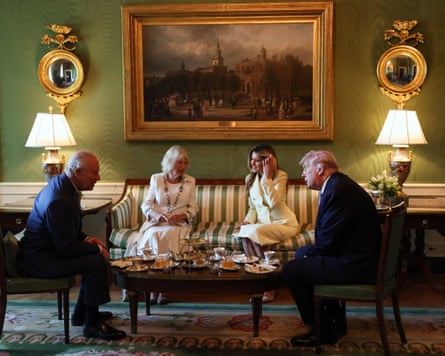
The arrival ceremony itself followed time-honored traditions of diplomatic protocol, with each element carefully choreographed to reflect respect, mutual recognition, and the formal nature of the engagement. From the positioning of flags to the sequence of handshakes and the organization of the photographic opportunities, every aspect had been meticulously planned by protocol officers from both nations working in close coordination during the weeks preceding the visit. This attention to ceremonial detail underscores how seriously both governments take the maintenance of their diplomatic relationship.
The timing of the visit, occurring during a period when various international challenges were testing the strength of the Western alliance, provided an important opportunity for face-to-face dialogue at the highest levels of government and the monarchy. Such in-person diplomatic engagements, though increasingly supplemented by virtual communications in the modern era, remain invaluable for building personal relationships and conveying messages that transcend formal diplomatic channels. The opportunity for King Charles to interact directly with the American leadership offered a chance to reinforce British interests and perspectives on matters of mutual concern.
As King Charles and Queen Camilla embarked upon their full schedule of Washington state visit activities, observers noted the significance of the occasion for both the British monarchy and the American administration. The visit would encompass various formal dinners, ceremonial events, and bilateral meetings scheduled throughout their time in the nation's capital, each designed to strengthen bonds between the peoples and governments of both nations. The ceremonial aspects of such visits serve important functions in reinforcing institutional continuity and demonstrating commitment to enduring relationships.
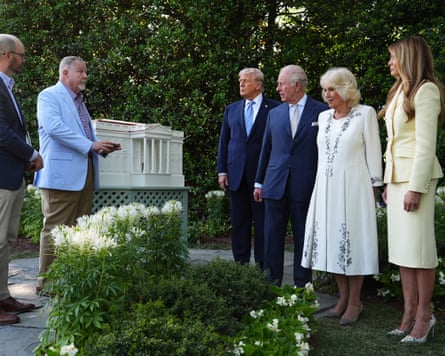
Despite the various challenges and tensions that have characterized the broader relationship in recent times, the formal reception and the dignified execution of traditional diplomatic ceremonies represented a powerful statement about the resilience and importance of the Anglo-American partnership. Both delegations appeared committed to emphasizing areas of agreement and shared values, even as underlying differences on certain policy matters remained evident to international observers and analysts. The diplomatic visit thus served as both a ceremonial affirmation of historical ties and a pragmatic opportunity to advance specific national interests through direct engagement.
The White House grounds, normally the center of American political decision-making, transformed into an arena of international diplomacy, with the presence of the British royal party lending an additional dimension of historical weight and ceremonial significance to the proceedings. The visible security presence and careful coordination between American and British protection details underscored the importance placed upon ensuring the safety and smooth operation of all events throughout the duration of the visit. Such meticulous planning reflects the seriousness with which both nations approach high-level diplomatic engagements.
Source: The Guardian


