
King Charles Urges US-UK Unity in Historic Congress Address

British monarch calls for strengthened partnership between nations during significant four-day visit marking America's 250th independence anniversary.
King Charles III made a historic appearance before the United States Congress on Tuesday, delivering a powerful address that emphasized the enduring bond between two of the world's most influential democracies. The British monarch's speech came during a significant four-day visit to the United States, marking the momentous occasion of the nation's 250th anniversary of independence. In his remarks, the King articulated a compelling vision for the future, urging both nations to strengthen their indispensable partnership amid growing global uncertainties and challenges that continue to reshape the international landscape.
The significance of King Charles's congressional address cannot be overstated, as it represents a continuation of the deep diplomatic traditions between the United Kingdom and the United States. During his eloquent speech, the King emphasized that the contemporary era presents unprecedented complexity, describing it as "in many ways more volatile and more dangerous" than previous historical periods. He specifically referenced the landmark 1991 address delivered by his late mother, Queen Elizabeth II, when she became the first British monarch to address Congress in person, highlighting how the geopolitical climate has evolved considerably in the decades since that historic moment.
The monarch's call for UK-US alliance strengthening resonates deeply with policymakers and international observers who recognize the critical importance of trans-Atlantic cooperation in addressing contemporary global crises. King Charles emphasized that the two nations possess a truly unique relationship that transcends typical international partnerships, rooted in shared values, common heritage, and mutual commitment to democratic principles. The King's choice of words—describing the partnership as "truly unique"—underscores the exceptional character of the relationship and its distinct position in the broader context of international diplomacy and geopolitical strategy.
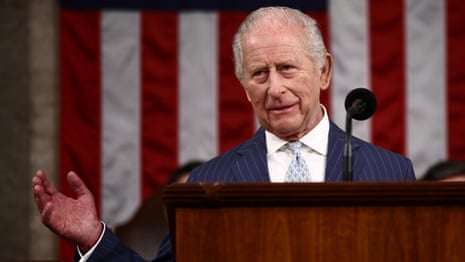
The visit itself carries profound symbolic weight, as it provides an opportunity for the British Crown to reaffirm its commitment to the trans-Atlantic relationship at a critical juncture in global affairs. As the reigning British monarch, King Charles III has prioritized international relations and diplomatic engagement since his accession to the throne, recognizing that effective global governance requires sustained cooperation among established democracies. His presence in Congress represented not merely a ceremonial engagement but rather a substantive diplomatic mission aimed at reinforcing the institutional connections between Westminster and Capitol Hill, particularly given the volatile international environment characterized by regional conflicts, economic uncertainties, and emerging security challenges.
The 250th anniversary celebration of American independence provided a particularly apt occasion for such a visit, allowing the King to contextualize the relationship within the broader historical narrative of American development and constitutional governance. Since its founding, the United States has grown from a fledgling nation to a global superpower, while maintaining important cultural and institutional ties with its former colonial power. Rather than dwelling on historical tensions, King Charles's speech focused on the forward-looking potential of the partnership and the shared responsibilities both nations bear in addressing transnational challenges that no single country can effectively confront in isolation.
In articulating the need for unity and strengthened cooperation, the King addressed several implicit concerns that animate contemporary international relations discourse. The geopolitical volatility he referenced encompasses a complex array of challenges: from regional military conflicts and terrorism, to climate change, pandemic preparedness, and the competition for technological dominance. These multifaceted threats require the kind of coordinated response that only established democratic powers with sophisticated institutions and extensive resources can effectively mobilize. By speaking before Congress, King Charles sought to galvanize political will and reaffirm the commitment of both nations to confronting these interconnected challenges through sustained cooperation and shared strategic vision.
The monarch's invocation of his mother's 1991 congressional address serves as a powerful historical anchor for his remarks, establishing continuity while simultaneously highlighting the transformations in the global environment over three decades. Queen Elizabeth II's 1991 speech itself was groundbreaking, representing the culmination of centuries of diplomatic relations between the United Kingdom and the United States. By referencing that precedent, King Charles positioned his own address within a long tradition of high-level trans-Atlantic engagement while emphasizing that the challenges of the 2020s require even greater commitment to partnership than those of the Cold War era.
The language of "building" on the partnership, which King Charles employed in his remarks, suggests active agency and ongoing effort rather than passive reliance on historical goodwill. This rhetorical choice carries important implications for how the relationship should be understood and cultivated. Rather than assuming the alliance will persist automatically due to shared language, cultural ties, and historical precedent, the King's framing emphasizes that the US-UK relationship requires deliberate investment, strategic attention, and conscious cultivation by both governments and their respective institutions. This perspective reflects sophisticated understanding of international relations, where even the strongest partnerships require sustained commitment to remain vital and effective.
The four-day visit encompassing this congressional address provides numerous opportunities for substantive bilateral engagement beyond the formal speech itself. Such visits typically include extensive meetings between the British monarch and senior American officials, cultural events that celebrate shared heritage, and opportunities for civil society exchanges that strengthen people-to-people connections. These multifaceted interactions reinforce the diplomatic messaging delivered in the formal address while creating practical channels for ongoing cooperation at various institutional levels. The comprehensive nature of such state visits reflects the complexity and depth of the UK-US relationship, which operates simultaneously at governmental, institutional, cultural, and commercial levels.
Looking forward, King Charles's congressional address establishes important parameters for how the British Crown and American government frame their relationship to domestic and international audiences. By emphasizing the unique nature of the alliance while simultaneously stressing the need for renewed commitment, the King positions the partnership not as a relic of past greatness but as a living, dynamic relationship essential to contemporary global governance. His message carries particular resonance at a moment when questions about the future of international institutions and alliances have become increasingly salient in political discourse on both sides of the Atlantic.
The King's call for unity transcends mere ceremonial rhetoric; it represents a substantive commitment to the principle that democracies must stand together in confronting shared challenges. As both the United Kingdom and the United States navigate complex domestic political landscapes while managing intricate international responsibilities, the affirmation of their partnership carries genuine importance for global stability and democratic resilience. King Charles's congressional address thus stands as both a celebration of trans-Atlantic relations and a clarion call for renewed dedication to the principles and practices that have made the relationship endure across more than two centuries.
Source: The Guardian


