
King's Speech & State Opening Explained

Discover what the King's Speech and State Opening of Parliament are, including their ceremonial significance and role in outlining government policies and legislation.
The State Opening of Parliament represents one of the United Kingdom's most significant and time-honored ceremonial events, marking the formal commencement of a new parliamentary year. This elaborate ritual, steeped in centuries of tradition and constitutional significance, serves as the official platform through which the reigning monarch outlines the government's legislative agenda and policy priorities for the coming year. The event draws together members of both the House of Commons and the House of Lords, along with dignitaries, officials, and media representatives, creating a pageant of pomp and circumstance that underscores the importance of parliamentary democracy in British governance.
At the heart of this ceremonial occasion lies the King's Speech, a carefully crafted address delivered by the sitting monarch that articulates the government's vision for the nation. Rather than representing the personal views of the sovereign, this speech is composed by the government in power and reflects the policy direction and legislative priorities of the prime minister and their cabinet. The speech encapsulates the administration's key objectives, from economic initiatives and social reforms to infrastructure projects and security concerns, providing both Parliament and the public with a comprehensive overview of what to expect during the parliamentary session ahead.
The State Opening ceremony itself unfolds with remarkable theatrical precision, featuring the Yeomen of the Guard, ceremonial dress uniforms, and the iconic gilded state coach. The procession begins well before the actual speech, with elaborate preparations involving members of the Royal Household, parliamentary officials, and security personnel. The atmosphere in Parliament is electric with anticipation, as Members of Parliament gather in anticipation of the monarch's arrival, knowing that this moment represents a pivotal juncture in the nation's legislative calendar.
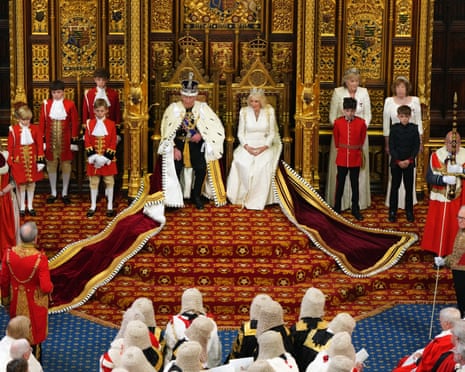
The historical roots of this ceremony extend back centuries, with elements of the parliamentary tradition dating back to medieval times. Over the years, the State Opening has evolved to incorporate various ceremonial elements that reflect both constitutional principles and the dignity of the institution. The presence of the Black Rod, who carries the symbolic ebony rod of office, and the dramatic moment when the Commons' door is ceremonially closed and then opened, all serve to reinforce the independence of Parliament and the constitutional relationship between the Crown and the legislative body.
Government policy announcements form the substantive core of the King's Speech, with ministers carefully selecting which legislative proposals will receive priority during the parliamentary session. These policies can range from sweeping constitutional reforms to targeted interventions addressing specific social challenges. The speech typically addresses multiple areas of governance, including healthcare, education, defense, environmental concerns, and economic management, providing a blueprint that guides parliamentary business for the months ahead. Each announcement carries implications for public services, business regulations, and citizens' daily lives.
The proposed legislation outlined in the King's Speech effectively sets the parliamentary agenda, determining which bills will be introduced, debated, and voted upon during the session. Opposition parties closely scrutinize these proposals, using them as a framework for their own contributions to parliamentary debate and policy discussions. The speech thus functions not merely as ceremonial formality, but as a substantive political document that shapes the trajectory of legislative action and public discourse throughout the parliamentary year.
The ceremonial aspects of the State Opening should not be dismissed as mere pageantry, as they embody important constitutional principles and democratic values. The ritual reinforces the concept that Parliament operates under the Crown, while simultaneously asserting parliamentary sovereignty through carefully choreographed moments of protocol and procedure. The formal dress, the ceremonial language, and the precise timing all work together to create an occasion that feels simultaneously modern and deeply rooted in historical tradition, connecting contemporary governance to centuries of parliamentary practice.
From a practical standpoint, the State Opening also serves important communication functions in contemporary media landscapes. The government's agenda becomes instantly accessible to the public through extensive media coverage, analysis, and commentary. Broadcasting networks dedicate significant airtime to the event, and newspapers provide detailed reporting and interpretation of the speech's implications. This widespread coverage ensures that citizens across the United Kingdom can understand the government's intentions and the legislative priorities that will dominate parliamentary attention in the coming months.
The selection of which bills and policies to feature in the King's Speech involves considerable strategic decision-making by government officials. Senior ministers debate the relative merits and urgency of various proposals, considering political feasibility, public opinion, and the government's broader ideological goals. The final version of the speech represents a consensus about which objectives are most important and most likely to command legislative support within Parliament. This process of prioritization reflects not only the government's policy preferences but also its political calculations about which initiatives might encounter resistance and which might sail through with relative ease.
The responses to the King's Speech from opposition parties and independent commentators provide immediate feedback on how the government's proposals are likely to be received. Leaders of opposition parties deliver formal responses highlighting areas of disagreement or concern, and political analysts offer their assessments of the speech's strengths and weaknesses. These responses often foreshadow the nature of parliamentary debate to come, establishing the lines of contention and agreement that will characterize legislative discussions throughout the session. The media and political commentary industry treats the State Opening and King's Speech as major news events warranting comprehensive coverage and expert analysis.
Understanding the constitutional framework surrounding the State Opening requires appreciating how the British system balances ceremonial monarchy with democratic governance. The monarch's role in opening Parliament is primarily ceremonial rather than substantive, yet the formality of this role emphasizes the constitutional importance of parliamentary institutions. The sovereign represents the state as a whole, standing above partisan politics while performing the ceremonial function of formally initiating parliamentary business. This arrangement preserves the dignity of both the Crown and Parliament while maintaining clear separation between ceremonial authority and executive power.
The King's Speech and State Opening of Parliament thus represent far more than mere ceremony or historical anachronism. They constitute essential rituals that formally initiate the legislative session, communicate government priorities to Parliament and the public, and reinforce fundamental constitutional principles about democratic governance, parliamentary sovereignty, and the rule of law. For those seeking to understand British politics and government, comprehending the significance and mechanics of these institutions provides crucial insight into how the United Kingdom's political system actually functions at the highest levels.
The State Opening and King's Speech will undoubtedly continue to play important roles in British governance for years to come, adapting to contemporary circumstances while maintaining their essential character as formal, ceremonial occasions that mark the beginning of new parliamentary sessions and set the stage for months of legislative activity and political debate.
Source: The Guardian


