
Labour Urged to Stay Unified Amid Leadership Concerns

Cabinet minister Steve Reed warns against repeating Conservative mistakes, urging Labour MPs to support Keir Starmer and avoid leadership turmoil.
Labour Party faces mounting pressure to maintain stability following disappointing results in May's local elections, with senior government figures now intervening to prevent what could become a damaging internal power struggle. Communities Secretary Steve Reed has issued a stark warning to backbench MPs, cautioning against the kind of relentless leadership instability that plagued the Conservative Party during its final years in government. His intervention represents an effort to quell growing speculation about potential moves against Prime Minister Keir Starmer, whose popularity ratings have come under scrutiny in recent months.
The warning from Reed, a prominent figure within the Labour administration, comes amid reports that some MPs have begun privately discussing strategies for potentially removing Starmer from his position. These concerned members, who question whether the current party leader possesses the political capital necessary to guide Labour successfully through the next general election campaign, are reportedly considering presenting the prime minister with a formal timeline for his eventual departure. Such discussions represent precisely the type of destabilizing internal conflict that Reed argues would undermine Labour's position and fatigue the electorate.
In his critique of potential leadership challenges, Reed drew explicit comparisons to the Conservative Party's chaotic final period in office, when rapid successions of leaders undermined party credibility and public confidence. The Communities Secretary described the phenomenon of constant leadership changes as "doomscrolling" through party leaders—a term that captures the compulsive, anxiety-driven nature of repeatedly cycling through different figureheads. This metaphor resonates with modern political discourse, suggesting that constant leadership upheaval creates a sense of perpetual crisis rather than resolving underlying issues.
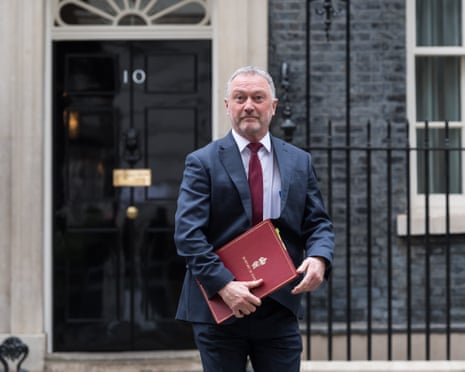
Reed's public comments reflect broader concern within the Labour administration about the potential consequences of internal conflict. The party stability argument centers on the idea that public audiences become exhausted by constant political drama and leadership turmoil. According to Reed's perspective, most voters are "sick and tired of all this psychodrama" and desire a government focused on substantive policy delivery rather than internal factional struggles. This assessment suggests that Labour strategists believe the public has grown weary of the leadership instability spectacle that defined recent Conservative governance.
The May election results that prompted these internal discussions appear to have triggered concerns among some Labour MPs about their party's electoral trajectory. While Labour won the general election decisively in 2024, the more recent local election performance raised questions about momentum and sustained public support. Some backbenchers apparently believe that Starmer's personal popularity presents an obstacle to maintaining Labour's parliamentary majority through the subsequent general election cycle. However, Reed's intervention suggests that senior party figures view such concerns as premature and counterproductive.
The significance of Reed's warning extends beyond immediate internal party politics to encompass broader questions about political leadership and party management. His reference to the Conservative experience serves as a cautionary tale about the dangers of allowing internal dissent to escalate into open leadership challenges. The Conservatives' period following the 2019 election victory saw multiple leadership transitions—from Boris Johnson to Liz Truss to Rishi Sunak—each accompanied by significant institutional trauma and public criticism. Reed's implicit argument suggests that Labour risks similar reputational damage if its MPs pursue aggressive moves against Starmer.
The timing of Reed's comments carries particular weight given the sensitive nature of post-election analysis. Following any electoral setback, parties naturally engage in reflection and recalibration of strategy. However, Reed argues that such legitimate introspection should not cross the threshold into organized campaigns to remove the sitting prime minister. His assertion that MPs should resist such temptation reflects a calculation that Labour unity currently represents the party's greatest strategic asset. Allowing leadership questions to dominate headlines would, from this perspective, only strengthen Labour's political opponents and distract from the policy agenda.
The intervention also raises questions about the balance between democratic accountability within political parties and the practical necessities of governing. While MPs certainly possess rights to question their leader and express concerns about electoral viability, Reed suggests that exercising these rights aggressively during a government's first full term would constitute a strategic error. The implicit argument holds that parties should demonstrate confidence in their leadership publicly while reserving private discussions of succession planning for appropriate moments. This approach prioritizes institutional stability and public perception over immediate factional satisfaction.
Looking forward, Reed's warning may influence how Labour MPs approach the ongoing period of the government's first term. By explicitly cautioning against the kinds of behaviors that damaged the Conservatives, Reed signals that the party intends to resist the cycle of constant leadership transitions that characterized recent British politics. Whether this intervention proves effective in preventing organized pressure against Starmer will likely depend on how electoral circumstances develop and whether economic conditions improve sufficiently to restore public confidence in the government's direction.
The broader context of Reed's comments involves the challenging political environment facing the Labour government. While the party entered office with substantial parliamentary majorities and considerable public goodwill, the realities of governing have proven complex. Economic headwinds, difficult policy choices regarding public spending, and the normal wear and tear of extended political leadership have gradually eroded some of the enthusiasm that characterized Labour's election victory. Under these circumstances, some MPs may naturally begin considering whether alternative leadership might rejuvenate party fortunes. Reed's intervention represents an effort to suppress such speculation before it gains momentum.
The psychological dimension that Reed highlights—captured in his evocative "doomscrolling" metaphor—also merits consideration. The constant cycling through leaders creates an atmosphere of institutional dysfunction that affects not only party members and MPs but also public perception more broadly. When voters observe a party repeatedly changing direction and personnel at the top, they may develop doubts about institutional competence regardless of policy content. Reed's argument implicitly suggests that Labour should prioritize demonstrating steady, confident governance over satisfying every internal faction's preferences regarding leadership questions.
As Labour navigates the remainder of its government's term, the tension between internal democratic processes and external political necessity will likely continue. Reed's warning represents one influential voice arguing for prioritizing unity and stability, but ultimately the party's course will depend on how events unfold, electoral circumstances change, and the broader public mood shifts in response to government performance and opposition messaging.
Source: The Guardian


