
LaGuardia Firefighter Missed Critical Stop Warning Before Jet Collision

NTSB preliminary report reveals firefighter heard air traffic control warning but didn't realize it applied to them. Crash prevention system failed to alert.
A LaGuardia Airport firefighter involved in a tragic collision with an Air Canada aircraft on the runway last month heard an urgent warning from air traffic control but failed to recognize that the alert was directed at their vehicle, according to a newly released preliminary investigation report. The National Transportation Safety Board disclosed this critical detail on Thursday, shedding light on the sequence of events that led to the devastating March 22 incident that claimed the lives of both pilots aboard the commercial jet.
According to the federal investigators' findings, the firefighter's truck was operating on the active runway when an air traffic controller issued a clear warning, repeating "stop, stop, stop" multiple times in rapid succession. However, the firefighter operating the vehicle did not comprehend that this urgent directive was intended for their vehicle, creating a fatal gap in communication that proved catastrophic in the high-speed environment of an active airport runway. The lack of situational awareness combined with communication breakdown resulted in the runway collision that ultimately proved fatal.
In its detailed preliminary report, the National Transportation Safety Board highlighted a significant failure in the airport's automated safety systems. The crash prevention system designed specifically to alert air traffic controllers of potential ground conflicts failed to generate either an audio warning or a visual alert on the controller's display screen. This technological failure meant that while the controller could verbally warn the firefighter through radio communication, the system that should have independently flagged the danger and provided additional safeguards remained dormant.
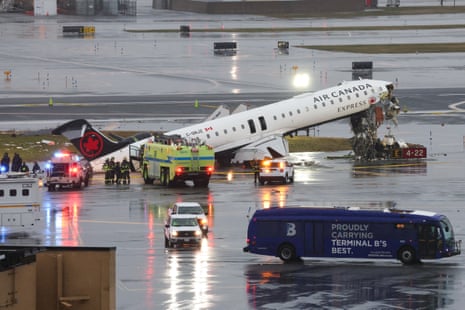
Adding another layer of complexity to the investigation, federal safety officials revealed that the runway's illuminated stop lights, which are specifically designed to halt crossing traffic, remained illuminated until approximately three seconds before the collision occurred. This timing suggests that the lighting system designed to provide visual warning to ground vehicles may not have functioned as intended, or alternatively, the firefighter may not have observed the warning lights in time to execute an emergency stop. The failure of multiple safety systems working in tandem created a perfect storm of circumstances that led to the tragedy.
The incident represents a critical examination of how modern airports coordinate between ground operations and air traffic control. The airport safety protocols at LaGuardia, one of the nation's busiest and most complex airports, clearly have vulnerabilities that contributed to this collision. Investigators are now scrutinizing not only the technical systems but also the procedural guidelines that govern how ground vehicles are cleared to operate on active runways and how controllers communicate with airport personnel during high-traffic periods.
The Air Canada aircraft involved in the collision was preparing for departure when the firefighter's truck entered its path on the runway. The pilots had no opportunity to take evasive action, and the impact occurred with both aircraft and vehicle traveling at significant speeds. The loss of both pilots immediately became a focal point of the investigation, as the NTSB sought to understand how such a preventable accident could occur at a major metropolitan airport with sophisticated air traffic control infrastructure.
This incident has raised serious questions about the reliability and integration of airport safety systems across the nation's aviation network. The fact that a crash prevention system failed to generate any alert whatsoever suggests that the technology may not be functioning as designed, or that its integration with airport operations requires significant improvement. The NTSB's preliminary findings will likely prompt a comprehensive review of similar systems at airports nationwide to ensure that other facilities are not operating with comparable vulnerabilities.
Ground operations at major airports involve a complex coordination of multiple vehicles, equipment, and personnel all operating in close proximity to active aircraft movement areas. The responsibility falls on both air traffic controllers and ground personnel to maintain constant vigilance and communication to prevent such incidents. However, this collision demonstrates that human communication alone, even when clear and direct as in this case, cannot be the sole safeguard against collisions when automated systems fail to provide backup warnings and alerts.
The investigation continues as the NTSB works to determine the complete chain of causation that led to the collision. Beyond examining the technical failures, investigators must also review the training and procedures followed by the firefighter and air traffic controller, the dispatch protocols that authorized the firefighter's vehicle to enter the runway, and any potential fatigue or other human factors that may have contributed to the mishap. These findings will be critical in developing recommendations to prevent similar accidents in the future.
As one of New York's primary air transportation hubs, LaGuardia Airport serves millions of passengers annually and coordinates thousands of ground operations every day. The safety protocols implemented at this facility are meant to be among the most rigorous in the aviation industry, yet this collision reveals significant gaps that demand immediate attention and remediation. The families of the two pilots killed in the collision are now waiting for the NTSB to provide complete answers about how such a preventable tragedy was allowed to occur.
The preliminary report released by the NTSB represents only the first stage of what will likely be a lengthy and comprehensive investigation into every aspect of the collision. Additional testing of the airport's safety systems, detailed interviews with all personnel involved, and analysis of radio communications and radar data will all contribute to the final determination of probable cause. This systematic approach to aviation accident investigation is crucial for identifying systemic issues and developing effective solutions to enhance safety across the aviation industry.


