
Lithuania Leaders Evacuated as Drone Breaches NATO Airspace

Lithuanian president and PM rushed to bunkers after drone violation. NATO and EU warn Russia redirecting Ukrainian drones. First EU shelter alert since 2022.
In a dramatic escalation of tensions in Eastern Europe, Lithuania's president and prime minister were swiftly evacuated to underground bunkers following an unprecedented airspace violation by an unidentified drone. The incident prompted authorities to issue a nationwide emergency alert, marking a significant moment of concern for the Baltic nation and its allies in the Western military alliance.
The evacuation came after a mobile phone alert system activated across Vilnius, instructing residents of Lithuania's capital to seek immediate shelter. This marked the first time such a widespread civilian alert had been issued in any European Union or NATO member state since Russia launched its comprehensive military invasion of Ukraine in February 2022. The gravity of the situation underscored the heightened security concerns affecting the region.
Authorities moved swiftly to secure airspace and transport corridors, with both air traffic and rail services suspended in and around Vilnius for the duration of the alert. Flights were diverted or delayed, and train services came to a complete halt as military and civilian authorities coordinated their response to the breach. The disruptions extended throughout the city and its surrounding areas, affecting thousands of commuters and travelers.

NATO and European Union officials have increasingly expressed alarm about Russian tactics in the region, with intelligence assessments warning that Russia has been systematically diverting and redirecting Ukrainian combat drones toward NATO territory. These diversions represent a troubling escalation in the ongoing conflict, as Russian forces attempt to expand the geographical scope of military operations beyond Ukraine's borders and into the alliance's protected airspace.
The incident reflects deeper security challenges facing the Baltic states, which share a border with both Russia and Belarus. Lithuania, as a NATO member since 2004, benefits from the alliance's collective defense provisions, yet recent months have seen an uptick in incidents testing these commitments. The drone violation sparked immediate diplomatic activity among NATO capitals, with officials convening to assess the threat and coordinate responses.
Military analysts suggest that such incursions, whether intentional or the result of diverted Ukrainian assets, represent a critical test of NATO's air defense capabilities and rapid response protocols. The evacuation of top government officials demonstrated that even the highest levels of the Lithuanian state viewed the threat as sufficiently credible to warrant immediate protective measures. This decision underscores the seriousness with which Baltic leaders regard potential military threats emanating from the east.
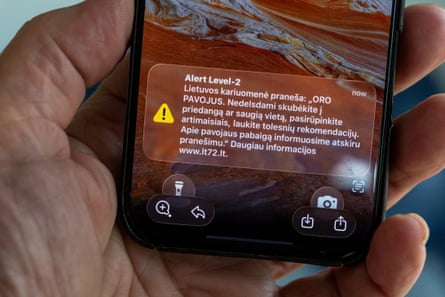
The drone's origin remains unclear, with ongoing investigations to determine whether it was a Ukrainian asset that had been redirected by Russian electronic warfare capabilities or an entirely Russian-operated system. Ukraine has reported numerous instances of Russian jamming and hijacking of its drone fleet, a tactic that has reportedly become increasingly sophisticated as the conflict has progressed. Such capabilities, if confirmed in the Lithuanian incident, would represent a dangerous evolution in hybrid warfare tactics affecting NATO territory.
Lithuanian officials have emphasized their commitment to defending national sovereignty and protecting civilian populations from emerging threats. The rapid deployment of emergency alerts and the suspension of civilian transportation demonstrated the country's capacity to mobilize quickly in response to security incidents. However, the incident also highlighted the vulnerabilities that smaller NATO members face in defending extensive borders against increasingly sophisticated threats.
Regional security experts point to the incident as evidence of escalating tensions that could have broader implications for European stability. The precedent of issuing a civilian shelter alert in an EU nation represents a significant symbolic moment, signaling that the security environment in Europe has fundamentally shifted since Russia's invasion of Ukraine. The psychological impact on residents, coupled with the real disruptions to daily life and economic activity, underscore the tangible costs of regional instability.
NATO's response to the incident has been measured but firm, with alliance officials reaffirming their commitment to defending all member states. The alliance has conducted numerous military exercises and deployments throughout Eastern Europe in recent years, and this incident is likely to inform future defense planning and resource allocation. Enhanced air defense systems and expanded radar coverage may be among the measures under consideration for the region.
The incident also raises questions about the sustainability of Ukraine's defense operations and the potential for escalation as Russia deploys more sophisticated technologies. As the conflict continues to evolve, the risk of incidents affecting neighboring countries appears to be increasing rather than diminishing. International cooperation and intelligence sharing among NATO members will become increasingly critical in managing these emerging threats.
Looking ahead, Lithuania and other Baltic states are likely to intensify discussions with NATO about enhanced security guarantees and additional military support. The drone incident serves as a stark reminder that the consequences of Russia's aggression in Ukraine extend far beyond the country's borders, affecting the security calculus of the entire Euro-Atlantic region. European security architecture will likely undergo significant reassessment in the coming months as policymakers grapple with the implications of these developments.
The evacuation of Lithuania's top leaders and the issuance of the first EU-wide civilian shelter alert since 2022 represent watershed moments in European security policy. These developments signal that the risks posed by the Ukraine conflict are no longer confined to the battlefield but now directly affect the daily lives of NATO and EU citizens. As investigations continue into the drone's origin and purpose, the international community remains vigilant, prepared to respond to any further escalations in this increasingly complex security environment.


