
Loan Shark Violence: Why Victims Stay Silent

Exclusive investigation reveals how loan shark threats and weapons intimidate victims into silence. BBC uncovers seized cleavers and swords from suspects.
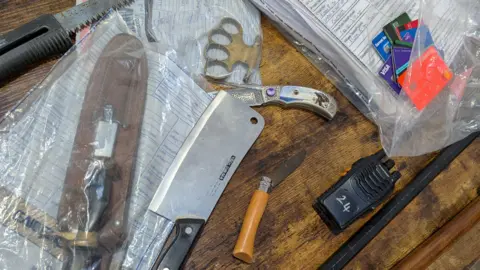
An exclusive investigation by the BBC has shed light on the frightening tactics employed by loan shark operators who prey on vulnerable borrowers across the country. The disturbing findings reveal that victims of predatory lending practices frequently remain silent about their experiences, paralyzed by fear and intimidation. Among the most shocking discoveries are the weapons seized from suspects, which include a meat cleaver and a samurai sword—tools that demonstrate the violent nature of these criminal enterprises.
The weapons cache, shown exclusively to the BBC, provides concrete evidence of the threatening environment that illegal moneylenders create to coerce repayment and maintain control over their victims. These implements of violence are not merely stored as passive possessions; they represent the very real threat of physical harm that hangs over borrowers who fall behind on payments or attempt to escape the cycle of debt. The presence of such weapons underscores the sophisticated criminal infrastructure surrounding the loan shark industry.
Many victims of predatory lending endure years of harassment, threats, and intimidation without seeking help from authorities. The psychological impact of living under constant threat creates a powerful silencing effect, where borrowers believe that reporting their situation to police will only escalate the danger they face. This fear is not unfounded; law enforcement agencies across the country have documented numerous cases where victims who attempted to break free from loan shark arrangements faced severe consequences.
The illegal lending problem has grown significantly in recent years, affecting communities across multiple socioeconomic backgrounds. While loan sharks have traditionally targeted low-income individuals and families desperate for quick access to cash, modern operations have expanded to include middle-class borrowers facing temporary financial difficulties. The accessibility of loan shark services through digital platforms and word-of-mouth networks makes it increasingly difficult for authorities to track and combat these operations.
Victims often describe a gradual entrapment process that begins innocently enough. A person facing an emergency—medical bills, housing costs, or other unexpected expenses—turns to a loan shark because traditional banks have rejected their application. What starts as a seemingly manageable short-term loan quickly spirals into an unmanageable debt trap, with interest rates and fees compounding at rates that make repayment mathematically impossible. The lender deliberately structures these arrangements to ensure long-term dependency and control.
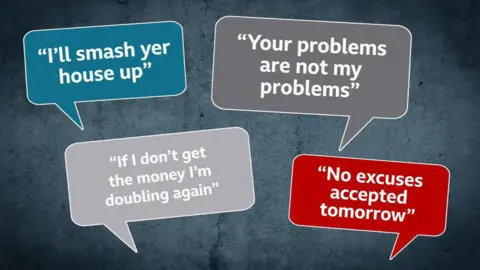
The intimidation tactics employed by loan shark operators are carefully calculated to maximize fear while maintaining plausible deniability. Threats may be implicit rather than explicit, relying on the borrower's awareness of the lender's violent reputation or the weapons they possess. Visits to the debtor's home or workplace serve as constant reminders of the lender's reach and power, creating an atmosphere of perpetual dread that makes escape seem impossible.
Law enforcement agencies acknowledge that loan shark crimes remain deeply underreported due to the fear factor that characterizes these relationships. Victims frequently believe that police involvement will worsen their situation rather than help resolve it. Additionally, some borrowers harbor distrust of authorities or fear immigration-related consequences if they report their situation. This reporting gap means that official statistics likely represent only a fraction of the actual scope of the problem.
The BBC's investigation goes beyond simply documenting weapons; it reveals the complex psychological and social mechanisms that keep victims trapped in silence. Interviews with former victims expose the shame and embarrassment many feel about their financial situation, combined with the genuine terror inspired by aggressive collection tactics. Some victims report being followed, having their property damaged, or receiving threats against family members—all designed to ensure compliance with the lender's demands.
Financial exploitation experts emphasize that predatory moneylending disproportionately affects populations already marginalized by the formal financial system. Immigrants, the elderly, and individuals with poor credit histories are particularly vulnerable to loan shark recruitment. These groups often lack awareness of their legal rights or knowledge of legitimate resources available to help them escape abusive lending situations.

Organizations working to combat loan shark activities have called for increased public awareness about the dangers of illegal lending. Educational campaigns aimed at helping people recognize loan shark tactics before becoming entangled could prevent many cases of financial and physical victimization. Additionally, these organizations advocate for policy changes that would make it easier for victims to report crimes without fear of immigration enforcement or other legal complications.
The weapons discovered during the investigation represent only the visible portion of the coercive apparatus employed by loan shark operations. The invisible dimensions—social isolation, psychological manipulation, and the threat of social shaming—often prove equally effective at maintaining control over victims. Breaking this cycle requires not only law enforcement action but also comprehensive victim support services and accessible alternatives to predatory lending.
Moving forward, addressing the loan shark problem will require coordinated efforts between multiple agencies and community organizations. Law enforcement must develop specialized task forces capable of understanding the nuances of these crimes and building cases that protect victims throughout the prosecutorial process. Simultaneously, providing legitimate financial services, credit counseling, and emergency assistance to vulnerable populations could reduce demand for predatory lending arrangements in the first place.

The BBC's exclusive investigation serves as a critical reminder that behind the statistics and crime reports are real people suffering genuine trauma and financial devastation. Until victims feel confident that reporting their situation will lead to protection rather than retaliation, the cycle of silent victimization will continue. The seized weapons may eventually become courtroom evidence, but the path from victim silence to perpetrator prosecution remains long and uncertain for those trapped in the loan shark economy.
Source: BBC News


