
Lost Christo Installation Finally Realized in London Gallery

Decades after Christo's death, a mysterious 1968 installation design discovered in his studio will finally be created in a UK gallery space.
In an extraordinary development for the contemporary art world, a London gallery is preparing to bring to life a monumental Christo installation that has remained unrealized for more than five decades. The ambitious project, originally conceived in 1968, will finally materialize thanks to the discovery of a meticulously detailed scale model and architectural drawings found in the legendary artist's studio—materials that had been presumed lost to history until their recent chance discovery.
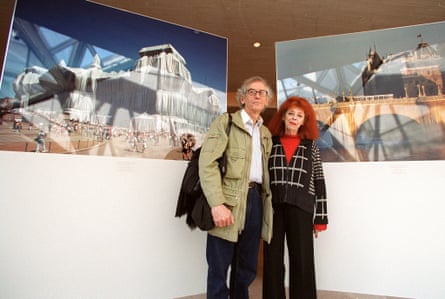
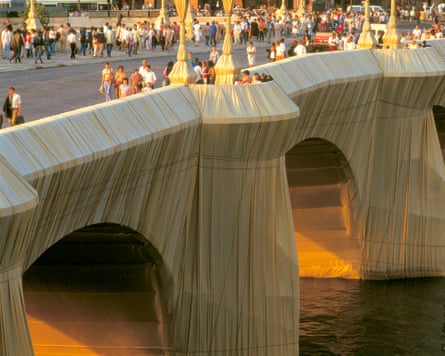
Christo Vladimirov Javacheff, the renowned Bulgarian-American environmental artist who passed away in 2020, left an indelible mark on the global art landscape through his monumental wrapped installations. His portfolio of iconic works includes wrapping the imposing Reichstag building in Berlin with 100,000 square meters of silvery fabric, suspending an enormous curtain across a vast Colorado valley in a project called "The Fabric," and dramatically transforming the historic Pont Neuf bridge in Paris with golden fabric that cascaded down its arches. Each project represented years of planning, countless negotiations with government authorities, and unprecedented feats of engineering and logistical coordination.
The newly discovered installation design represents a radical departure from Christo's ground-based wrapped works. The artist had envisioned a spectacular internally illuminated suspended form that would resemble a floating cloud, hovering mysteriously within an enclosed gallery space. This ethereal concept demonstrated Christo's willingness to explore new dimensions of his practice, moving from external environmental interventions to internal, artificially lit architectural experiences that would have challenged viewers' perceptions of space, light, and sculptural form.

The technical and engineering obstacles that confronted the artist during the 1960s proved insurmountable at that time, making the realization of this ambitious artistic vision impossible within the context of contemporary construction capabilities and gallery infrastructure. Materials technology, structural engineering, and climate control systems available during that era simply could not support the specialized requirements of the piece. The scale model and drawings were subsequently filed away in Christo's archive, where they remained largely forgotten as the artist went on to conceptualize and execute some of his most celebrated works.
The significance of this discovery cannot be overstated for art historians and Christo enthusiasts alike. The documentation and scale model provide unprecedented insight into the artist's experimental methodology and his willingness to venture beyond the wrapped-object paradigm that had come to define his artistic practice. Examining these materials reveals the meticulous planning processes that characterized all of Christo's work, including detailed calculations, material specifications, and aesthetic considerations that informed every aspect of his installations.
The London gallery's commitment to realizing this long-dormant project represents a profound statement about the continuity of artistic vision and the importance of preservation. Rather than allowing these materials to remain archived and unseen, the institution has undertaken the responsibility of transforming design into three-dimensional reality, employing contemporary technology and materials science to overcome the obstacles that had prevented realization six decades earlier.
Bringing the installation to fruition will require sophisticated engineering solutions and specialized lighting design that takes full advantage of modern advancements in LED technology, structural materials, and architectural systems. The internally lit Package on a Ceiling, as the work has been designated, will demand precise calculation of weight distribution, electrical systems, climate control, and visitor safety protocols. Every element must be carefully considered to ensure that the ethereal quality of the original conception is preserved while meeting contemporary building codes and safety standards.
The project holds particular resonance in the context of contemporary art practice and curatorial philosophy. Museums and galleries increasingly recognize the value of revisiting unrealized or abandoned artistic visions, treating them as significant contributions to art history even when circumstances initially prevented their manifestation. This approach honors the creative imagination of artists while acknowledging that temporal, technical, and contextual limitations do not diminish the validity or importance of their conceptual achievements.
Christo's practice fundamentally challenged conventional understandings of what art could be, where it could exist, and how it could engage with both urban environments and the natural landscape. His works required unprecedented coordination between artists, engineers, architects, government officials, and community members. Each project generated extensive documentation, including photographs, videos, and technical drawings that have become invaluable archival resources for understanding contemporary art history.
The discovery of these materials underscores the importance of maintaining comprehensive archives and carefully preserving artist documentation. Had the scale model and drawings been lost to deterioration, careless disposal, or simple neglect, this opportunity to complete the artist's vision would have been permanently foreclosed. The stewardship of Christo's legacy has ensured that his intellectual and creative contributions continue to generate new possibilities and interpretations long after his death.
For visitors to the London gallery, the experience of encountering this newly realized installation will provide a unique opportunity to engage with Christo's artistic practice from an interior perspective. Rather than standing outside and observing wrapped buildings or suspended fabric installations from a distance, gallery visitors will be enveloped by the installation, experiencing the subtle play of internal illumination and encountering the cloud-like form in intimate proximity. This fundamentally different relationship between artwork and viewer will offer fresh insights into Christo's conceptual approach and his understanding of spatial experience.
The realization of this project also raises important questions about artistic legacy, curatorial responsibility, and the evolution of contemporary art practices. As more artists' archives are systematically studied and catalogued, additional unrealized projects may emerge, inviting similar reconsideration and potential realization. The London gallery's decision to undertake this ambitious project sets an encouraging precedent for other institutions contemplating similar initiatives.
Art critics and scholars have expressed profound interest in this development, anticipating that the completed installation will generate renewed scholarly attention to the full scope of Christo's artistic vision. Examining the work in person will allow researchers and enthusiasts to understand the artist's experimental impulses and his continuous pushing of boundaries regarding what environmental art and large-scale installation could encompass. The project represents not merely the completion of an unrealized design, but a significant addition to the documented body of Christo's artistic achievement and his enduring influence on contemporary practice.
The London gallery installation will stand as a testament to Christo's visionary imagination and his profound impact on late twentieth-century and contemporary art. Decades after its initial conception, this monumental work will finally invite viewers into the ethereal, internally illuminated environment the artist imagined, offering a singular experience of light, form, and spatial transformation that could only be created by an artist of Christo's caliber and ambition.


