
Louisiana Delays Primary Elections Amid Electoral Map Overhaul

Louisiana postpones May primaries following Supreme Court's decision weakening Voting Rights Act protections. Southern states redraw districts.
In a significant development that signals the far-reaching consequences of a major Supreme Court decision, Louisiana announced on Thursday that it would postpone its scheduled May primary elections. This action reflects the broader upheaval occurring across Southern states as they grapple with the immediate aftermath of the Court's ruling that severely weakened voting rights protections enshrined in the landmark Voting Rights Act. The postponement underscores the complexity and urgency surrounding the need to redraw congressional districts in compliance with the judicial decision.
The Supreme Court's Wednesday ruling marked a watershed moment in voting rights litigation, fundamentally altering the legal landscape that has governed electoral map creation for decades. By striking down a critical provision of the Voting Rights Act, the Court eliminated a key safeguard that had previously required certain jurisdictions to seek federal approval—or "preclearance"—before implementing changes to their electoral districts. This decision has unleashed a cascade of consequences that are now rippling through multiple states, each scrambling to understand how the ruling will affect their electoral processes and timelines.
Prior to this Supreme Court decision, several Southern states had already initiated preliminary steps to redraw their congressional districts, recognizing that demographic changes and shifting political landscapes necessitated redistricting adjustments. However, the motivation behind these earlier efforts and the current wave of redistricting activities may differ significantly. What had previously been constrained by federal oversight mechanisms is now proceeding with dramatically fewer legal guardrails, raising substantial concerns among voting rights advocates who fear that the elimination of voting rights act protections will enable state legislatures to engage in more aggressive partisan and racial gerrymandering.

Multiple governors across the South have begun calling for special legislative sessions to address the pressing need to redraw congressional districts in light of the Court's ruling. These special sessions represent an extraordinary measure, typically convened only for matters of significant urgency or importance. The governors' eagerness to convene these sessions suggests that state leaders recognize the time-sensitive nature of the redistricting process and want to ensure that new maps are in place well before the critical midterm elections scheduled for November. The speed with which states are mobilizing indicates the high stakes involved in controlling electoral boundaries.
The implications of the Supreme Court's decision to weaken the Voting Rights Act extend far beyond the immediate logistical challenges of redrawing electoral maps. Voting rights organizations and civil rights advocates have expressed deep concern that the removal of the preclearance requirement will enable states to implement electoral maps designed specifically to dilute the voting power of minority communities. Historically, the preclearance provision had served as a critical check against such discriminatory practices, requiring jurisdictions with a documented history of discrimination to demonstrate that their proposed changes would not have a discriminatory effect. Without this requirement, critics argue that the burden of challenging discriminatory maps will shift entirely to those harmed by such redistricting—a costly and time-consuming process.
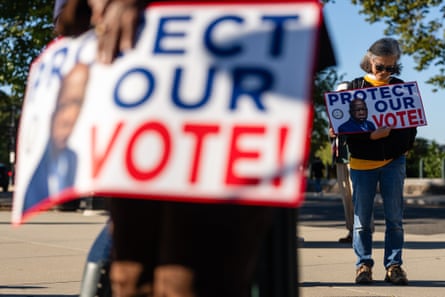
Louisiana's decision to postpone its May primaries reflects the practical complications that arise when a state must simultaneously hold elections while undertaking a comprehensive overhaul of its electoral districts. Election administrators face numerous logistical challenges when timelines become uncertain, including coordinating with local officials, updating voter registration systems, and ensuring adequate notification to the public about new district boundaries and polling locations. The postponement provides the state with essential time to complete the redistricting process and establish new districts before voters head to the polls. This decision also demonstrates how one state's experience may serve as a template for other jurisdictions wrestling with similar timing and procedural questions.
The broader context of this redistricting wave reveals the profound ways in which the Supreme Court's ruling is reshaping the political landscape. States that had previously operated under strict federal oversight requirements now find themselves with considerably more discretion in how they configure their electoral districts. This shift in power from federal oversight to state authority represents a fundamental realignment of the balance that had been struck in voting rights jurisprudence for approximately fifty years. Democratic-controlled and Republican-controlled states alike are recognizing that the new legal environment presents both opportunities and risks, depending on their respective political circumstances.
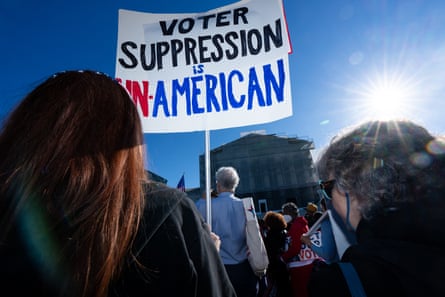
The midterm election timeline adds significant pressure to the redistricting process, as all affected states must complete new maps and allow adequate time for legal challenges or adjustments before November's election. Election officials and state legislators are acutely aware that any maps drawn too close to election day could create chaos and confusion for voters and election workers alike. This temporal constraint has incentivized states to convene special sessions and move with unusual speed through what is typically a time-consuming process. However, this accelerated timeline also raises concerns among voting rights advocates that thoroughness and consideration of civil rights implications may be sacrificed in favor of speed.
The Supreme Court's decision has also triggered a predictable political response from different stakeholder groups. Voting rights organizations have mobilized to monitor the redistricting process in affected states, preparing to challenge maps they believe are designed to dilute minority voting power. Meanwhile, political operatives from both parties are strategizing about how they can leverage the new legal landscape to advance their respective interests. This polarized environment means that the redistricting process in multiple states will likely generate significant litigation and political controversy before maps are finalized.
Louisiana's experience with postponing its primary elections may offer lessons for other states facing similar challenges. Election administrators and state officials in other jurisdictions are likely monitoring Louisiana's situation closely to understand how the postponement process unfolds, what complications arise, and what solutions emerge. If Louisiana successfully manages the postponement and subsequent redistricting without major problems, other states may follow suit. Conversely, if the process generates unexpected difficulties, other states may try to find alternative approaches to managing their own redistricting timelines.
The long-term implications of this redistricting wave following the Supreme Court's ruling remain to be seen. Voting rights experts and political scientists will be watching closely to determine whether the elimination of preclearance requirements leads to the widespread dilution of minority voting power that critics predicted. The elections in 2026 and beyond will provide the first opportunities to assess whether new electoral maps drawn without federal oversight have fundamentally altered the political landscape in affected states. This moment represents a critical inflection point in the history of voting rights in America, with consequences that will extend well beyond the immediate redistricting process.


