
Louisiana Senate Votes to Eliminate Majority-Black District

Louisiana's state senate passes redistricting bill eliminating one of two majority-Black congressional districts, potentially securing Republicans a 5-1 majority.
On Thursday, the Louisiana state senate voted 27-10 to pass a controversial new congressional map that would eliminate one of the state's two majority-Black House districts. The resulting redistricting map could give Louisiana Republicans a commanding 5-1 congressional majority, fundamentally reshaping the state's political representation for the next decade. This pivotal vote marks a significant moment in the ongoing debate over voting rights and electoral representation in the Deep South.
The momentum behind this congressional redistricting effort was largely driven by a landmark Supreme Court decision in Louisiana v. Callais, a case that centered on the constitutionality of the state's existing congressional maps. The court's ruling severely weakened the protections provided by the Voting Rights Act (VRA), a historic civil rights legislation that has long safeguarded minority voting power. Legal experts argue that this decision fundamentally altered the legal landscape surrounding redistricting practices across the nation.
The fallout from the Supreme Court's decision was swift and far-reaching, with several other southern states immediately calling special legislative sessions to pass their own redistricting maps designed to limit Black voting power. Mississippi, Alabama, and Georgia have all undertaken similar efforts, signaling a coordinated strategy among Republican-controlled legislatures to maximize their electoral advantage. The timing of these efforts suggests a strategic response to the court's weakened voting rights protections.
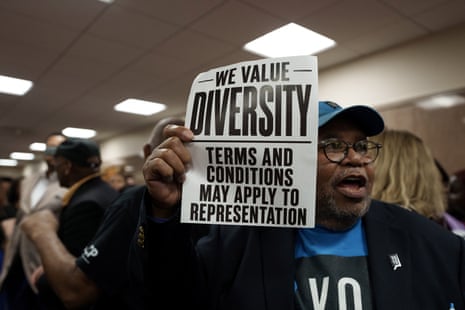
The Louisiana senate bill would consolidate the state's Black voters into fewer districts, diluting their collective electoral influence across the state. Currently, Louisiana has two congressional districts where Black voters comprise a significant majority of the voting-age population, allowing them to elect representatives of their choice. Under the proposed new map, this number would be reduced to just one district, effectively eliminating Black voters' opportunity to determine outcomes in a second seat.
Supporters of the redistricting plan argue that it represents a necessary adjustment to demographic changes and that it creates more compact and contiguous districts. They contend that the map reflects constitutional principles of equal population distribution and that the VRA's weakened protections no longer require the preservation of majority-minority districts. Republican legislators have emphasized that the new configuration would be legally permissible under current interpretations of voting rights law.
Opponents of the bill, including Democratic lawmakers and voting rights advocates, argue that the redistricting represents an unconstitutional attempt to dilute the voting power of Black Louisianans. They point to the state's history of racial discrimination in voting and electoral matters, suggesting that the timing of this effort—immediately following the Supreme Court's decision—indicates discriminatory intent. Civil rights organizations have promised legal challenges to the map if it becomes law.
The voting rights debate centers on a fundamental question about how electoral districts should be drawn and whether they should be constructed to preserve minority voting power. The Voting Rights Act, passed in 1965, had required certain jurisdictions with histories of racial discrimination to obtain federal approval before changing their voting procedures. However, the Supreme Court's decision in Shelby County v. Holder (2013), and now Louisiana v. Callais, has progressively stripped away these protections, allowing states greater freedom in redistricting decisions.
Louisiana's current congressional configuration includes two majority-Black districts out of six total congressional seats. The first district, which includes much of New Orleans and surrounding areas, has long been represented by Democrats and African American members of Congress. The second majority-Black district encompasses parts of northeastern and central Louisiana and has similarly elected Democratic representatives who are responsive to Black voters' priorities.
If the Louisiana House of Representatives approves the bill, the redrawn map would take effect before the next round of congressional elections. This would represent a dramatic shift in the state's political landscape, potentially securing Republican control of five out of six Louisiana congressional seats. The only remaining district that would likely elect a Democratic representative would likely be the second majority-Black district that remains under the new map.
The broader implications of this redistricting effort extend beyond Louisiana's borders. The decision by multiple southern states to pursue similar strategies suggests a coordinated effort to maximize Republican electoral advantages in the wake of weakened voting rights protections. Voting rights advocates warn that this could trigger a cascade of similar actions across the country, fundamentally altering the political representation of minority communities nationwide.
Legal challenges to Louisiana's new redistricting map are expected if the bill becomes law. Voting rights groups have indicated they will argue that the map violates the remaining protections of the Voting Rights Act and potentially violates constitutional principles of equal protection. The litigation could take years to resolve and may eventually reach the Supreme Court again, potentially shaping the future of voting rights law in America.
The vote in the Louisiana state senate reflected mostly along party lines, with Republicans supporting the measure and Democrats opposing it. The 27-10 vote margin suggests strong Republican support for the redistricting plan, though a few Republicans and Democrats may have voted differently than their party leadership preferred. The composition of the senate, with Republicans holding a significant majority, made passage of the bill virtually assured once the leadership pushed for a vote.
The timing of this redistricting effort raises important questions about the relationship between court decisions and legislative action. The Supreme Court's decision in Louisiana v. Callais essentially opened the door to this redistricting effort by removing certain legal obstacles that previously protected majority-minority districts. Within weeks of that ruling, Louisiana's legislature moved quickly to capitalize on the changed legal landscape, demonstrating how rapidly legislative bodies can respond to shifts in voting rights law.
Moving forward, the Louisiana House of Representatives will consider the bill, and observers expect it will likely pass given Republican control of that chamber as well. Once both chambers approve the map, it will go into effect unless blocked by the courts. The outcome of this redistricting process will significantly impact Louisiana's congressional representation and could serve as a model for other states considering similar efforts.
Source: The Guardian


