
Lufthansa Slashes Summer Flights Amid Soaring Fuel Costs

Lufthansa joins carriers cutting summer schedules as geopolitical tensions drive jet fuel prices to unprecedented levels. Impact on travelers explored.
Lufthansa, Europe's largest airline carrier, has announced significant reductions to its summer flight schedule in response to escalating jet fuel prices driven by mounting geopolitical tensions in the Middle East. The airline's decision reflects a growing industry-wide crisis as fuel costs continue to surge, forcing major carriers to reassess their operational capacities and profitability forecasts for the crucial summer travel season.
The price spike stems directly from heightened tensions between the United States and Israel versus Iran, a major oil-producing nation. As regional instability intensifies, concerns about potential disruptions to global energy supplies have triggered a wave of speculative trading in commodity markets. This uncertainty has sent aviation fuel prices soaring to levels not seen in several years, creating unprecedented challenges for airline operators worldwide.
Lufthansa's response marks a critical juncture for the aviation industry as carriers grapple with razor-thin profit margins. The German carrier, which operates one of the world's largest flight networks through its extensive hub system, faces difficult choices between maintaining service levels and protecting financial sustainability. By scaling back its summer operations, Lufthansa aims to preserve revenue per available seat while managing the burden of elevated operational costs.
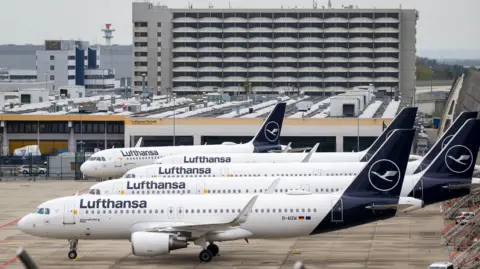
The airline industry has historically been vulnerable to external shocks, with fuel costs typically representing 20-30% of operating expenses for major carriers. When prices spike unexpectedly, as they have in recent weeks, airlines must either absorb losses or implement rapid operational adjustments. Lufthansa's flight reductions represent a proactive strategy to maintain acceptable profit margins during this turbulent period.
Competitors across Europe and beyond are facing similar pressures, with multiple carriers announcing capacity reductions or route suspensions. The global airline industry, still recovering from pandemic-related disruptions, now confronts a new existential threat to its recovery trajectory. Summer travel demand remains robust, but the cost structure to deliver that service has become increasingly untenable without intervention.
Travelers booking summer vacations will face limited availability on popular routes, potentially leading to higher ticket prices due to increased demand relative to supply. Business travelers and leisure customers alike must adjust expectations as airlines prioritize profitability over capacity growth. This represents a shift in industry dynamics that could persist throughout the peak travel season.
The geopolitical dimension of this crisis cannot be overstated, as energy markets remain sensitive to Middle East developments. Iran, positioned as a critical player in global oil markets, influences prices far beyond its direct production volumes through market psychology and hedging behaviors. Any escalation in tensions could further stress fuel prices, creating additional headwinds for the aviation sector.
Lufthansa's strategic response involves analyzing route profitability and consolidating schedules on its most valuable services while suspending or reducing frequency on marginal routes. This targeted approach allows the carrier to maintain its presence on lucrative markets while cutting losses on lower-demand services. The airline's decision-making process reflects sophisticated revenue management systems designed to optimize financial performance under adverse conditions.
Analysts tracking the aviation industry note that this situation mirrors previous crisis periods, including the 2008 financial crisis and the 2011 fuel price surge that tested airline resilience. Many carriers that failed to adapt quickly during those periods subsequently entered bankruptcy, making Lufthansa's proactive approach a necessary defensive measure. The airline's scale and financial reserves provide advantages over smaller competitors in navigating this challenge.
The broader implications for European aviation extend beyond individual carriers, affecting airport operations, ground handling services, catering providers, and numerous supply chain stakeholders. When major airlines reduce capacity, ancillary service providers face reduced demand and revenue pressure. This cascading effect creates economic headwinds throughout airport ecosystems across the continent.
Consumer advocacy groups express concern about the reduced availability of flights, particularly for budget-conscious travelers who may face higher ticket prices or limited scheduling options. The airline capacity reduction represents an inadvertent regressive tax on lower-income passengers, while wealthier travelers retain flexibility through premium fares or alternative travel options. Regulatory bodies in Europe are monitoring the situation to ensure competitive markets are maintained.
Looking forward, industry experts anticipate that fuel prices will remain elevated as long as geopolitical tensions persist in the Middle East. Airlines must prepare for an extended period of high operational costs, potentially necessitating further structural adjustments to their business models. Investment in fuel-efficient aircraft and alternative fuel research becomes increasingly critical for long-term competitiveness.
Lufthansa's leadership has indicated that the flight reductions represent a temporary measure while global energy markets stabilize and geopolitical tensions ease. However, the airline remains prepared to implement additional measures if circumstances deteriorate further. The carrier's communication strategy emphasizes prudent financial management while maintaining its commitment to connecting Europe with global destinations.
The summer 2024 travel season will serve as a significant test of how effectively airlines can manage the complex interplay between cost control and customer service during periods of external stress. Lufthansa's experience will likely inform decisions across the industry, potentially establishing precedents for future crisis management. As the situation develops, all stakeholders in the aviation ecosystem will closely monitor both fuel prices and airline operational responses.
Source: BBC News


