
Macron: EU Defence Pact 'Not Just Words'

French president Emmanuel Macron affirms EU's mutual defence capability, citing Cyprus military aid response to drone attack as proof of European solidarity.
French President Emmanuel Macron has made a forceful case for Europe's defensive capabilities, emphasizing that the EU mutual defence clause represents a binding commitment rather than mere diplomatic rhetoric. During an official visit to Athens, Macron underscored the significance of Article 42.7 of the Treaty on European Union, which establishes a collective defence obligation among member states. His remarks come at a time of heightened scrutiny regarding European security architecture and the continent's ability to respond independently to external threats.
The French leader pointed to concrete examples demonstrating that the mutual assistance clause carries real operational weight within the European framework. He highlighted the coordinated response by multiple EU member states that provided substantial military support to Cyprus following a significant security incident on February 28. This unified action, according to Macron, serves as tangible evidence that Europe possesses both the political will and institutional mechanisms necessary to respond decisively to threats against its member nations.
The incident that prompted this collective response involved a drone attack targeting a British military installation located on the island of Cyprus. The attack, which occurred in late February, triggered an immediate diplomatic and military response from several European capitals, with nations rapidly coordinating assistance to bolster Cyprus's defensive posture. This swift mobilization demonstrated the operational capacity of European defence coordination and challenged perceptions that the EU lacked meaningful security response protocols.
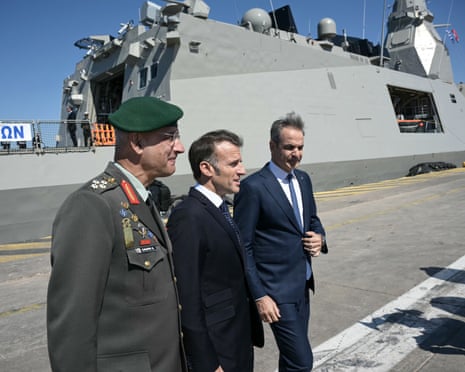
Macron's statement carries particular weight given ongoing discussions about European strategic autonomy and independence from external security guarantees. The French president has long advocated for strengthening European defence capabilities and reducing reliance on external security partnerships. His reference to the Cyprus situation illustrates how Article 42.7—the EU's mutual defence provision—can function as an operational framework rather than a symbolic gesture. This interpretation challenges critics who contend that European defence mechanisms lack practical application or enforcement capability.
The EU treaty mutual defence commitment emerged from earlier versions of European security frameworks and was formally integrated into the Treaty on European Union during its various revisions. The clause stipulates that if any EU member state is the subject of an armed attack on its territory, other member states shall provide it with all the aid and assistance in their power. However, the clause has rarely been invoked and tested in practice, making the Cyprus response particularly significant as a demonstration of its viability.
During his Athens visit, Macron engaged with Greek officials to discuss broader European security architecture and the role Greece plays in regional stability. Greece, as an EU member state with significant geopolitical importance and its own security considerations regarding regional dynamics, represents a key stakeholder in European defence discussions. The French president's emphasis on collective defence mechanisms resonates particularly in Athens, where security concerns related to territorial integrity and regional developments remain paramount in national policy calculations.
The timing of Macron's remarks reflects broader European apprehensions about global security dynamics and the need for enhanced European defence autonomy. With various international developments affecting European security interests, political leaders across the continent have increasingly called for strengthened independent defence capabilities. Macron's framing of the EU mutual defence clause as operational and binding rather than aspirational contributes to this ongoing conversation about European security independence and strategic responsibility.
Beyond the specific Cyprus incident, Macron's comments address deeper questions about European political cohesion and institutional effectiveness. By demonstrating that member states can mobilize rapidly around mutual defence obligations, the French president argues that Europe has evolved beyond a purely economic union into a security actor capable of defending shared interests. This positioning supports France's broader advocacy for European strategic autonomy and reduced dependence on external security arrangements.
The military support to Cyprus represented a significant show of solidarity among diverse European nations with varying geopolitical priorities and defence capabilities. The coordination required to rapidly assemble and deploy military assistance across borders demonstrated institutional capacity that many observers believed was lacking. This practical application of the mutual defence clause provides Macron with concrete evidence supporting his claims about European defence readiness and collective commitment to member state security.
Macron's remarks also carry implications for how Europe positions itself in broader international security discussions. By asserting that the EU possesses functional mutual defence mechanisms, the French president signals European confidence in its capacity to address regional security challenges. This positioning affects diplomatic negotiations, military cooperation frameworks, and European engagement with other global powers regarding security matters affecting the continent.
Looking forward, Macron's affirmation of the EU mutual defence effectiveness may encourage other member states to consider how they can contribute to collective security frameworks and strengthen existing mechanisms. The Cyprus response model demonstrates practical approaches to implementing collective defence obligations while respecting the operational constraints and capabilities of individual member states. This experience provides valuable lessons for future coordination in European security matters.
The French president's statement ultimately reflects confidence in the EU's institutional framework and member states' commitment to collective security principles. By characterizing the mutual defence clause as genuinely operative rather than ceremonial, Macron contributes to a growing consensus among European leaders that the continent must develop stronger autonomous defence capabilities. His words, backed by the demonstrable action taken regarding Cyprus, provide ammunition for advocates of enhanced European security cooperation and strategic independence from external security guarantors.
Source: The Guardian


