
MAGA Critics Divided on Trump's China Policy Shift

Explore how Trump's softer stance on China is reshaping the MAGA movement. Political experts analyze the implications for the base and Beijing relations.
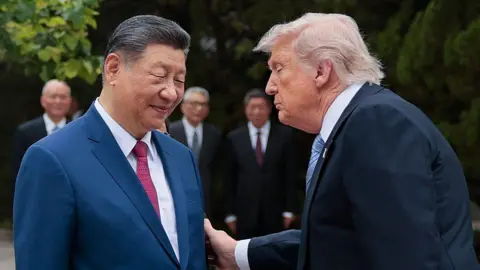
Donald Trump's evolving diplomatic posture toward China represents a significant departure from the hardline stance that once defined his political movement. As the former president contemplates international engagement and potential visits to Beijing, a complex debate has emerged within MAGA movement circles regarding the wisdom and implications of this strategic shift. Political analysts and movement insiders are grappling with how this softer approach to China will resonate with the base that propelled Trump to prominence on a platform of confrontational trade policies and nationalist rhetoric.
The Trump administration's China policy has long been characterized by aggressive tariffs, trade wars, and tough rhetoric aimed at challenging Beijing's economic dominance. However, recent indications suggest the former president may be reconsidering some of these confrontational tactics in favor of a more pragmatic, deal-oriented approach. This potential pivot has sparked considerable discussion within conservative circles, with some supporters viewing it as strategic flexibility and others expressing concern about abandoning core principles that galvanized the movement.
Political experts studying the MAGA base dynamics suggest that Trump's softer positioning on China will likely create ripple effects throughout the broader movement. The transformation from hardline China critic to potential Beijing visitor represents not merely a change in tactics but potentially a fundamental recalibration of how America's relationship with the Chinese government should be framed. Understanding these nuances is critical for comprehending the current state of American conservative politics and its approach to international relations.
The historical context for this debate cannot be understated. During his presidency, Trump implemented sweeping tariffs on Chinese goods, withdrew from international trade agreements, and pursued what many characterized as economic nationalism. These policies resonated strongly with working-class voters in industrial communities who felt abandoned by previous administrations' trade arrangements. The China trade war became emblematic of Trump's willingness to challenge the international establishment and prioritize American manufacturing interests.
However, the efficacy and long-term consequences of these policies have become subjects of intense scrutiny. Economic data reveals mixed results, with some sectors benefiting from tariff protection while others suffered from retaliatory measures and supply chain disruptions. Meanwhile, inflation pressures and consumer price increases added complexity to the political calculus surrounding trade policy. These economic realities have prompted reconsideration of whether a purely confrontational approach best serves American interests in the long term.
Within the MAGA movement itself, perspectives on China policy have begun to diversify. Some hardline supporters remain committed to aggressive trade measures and view any softening as betrayal of movement principles. These voices argue that China relations require sustained pressure to force structural economic reforms and prevent what they see as intellectual property theft and unfair trading practices. They worry that diplomatic engagement might be exploited by Beijing as an opportunity to escape consequences for policies they view as predatory.
Conversely, other movement members have adopted a more flexible interpretation of nationalist principles. They contend that pragmatic deal-making, when achieved from a position of strength, better serves American interests than perpetual confrontation. This faction suggests that Trump's willingness to engage diplomatically with Beijing, should he pursue a Beijing trip, demonstrates confidence in America's negotiating position rather than weakness. They argue that personal relationships and direct communication between leaders can sometimes accomplish more than sustained economic coercion.
Political analysts have identified several key constituencies within the MAGA base whose reactions to Trump's China policy shift warrant close attention. Agricultural workers, who suffered significantly from Chinese retaliatory tariffs during the trade war, may view diplomatic engagement as potentially beneficial if it results in market access and reduced economic pain. Manufacturing workers might similarly welcome approaches that combine strong negotiating positions with practical solutions to supply chain challenges and cost pressures.
The intellectual foundation for re-evaluating US-China relations within conservative circles has been reinforced by various think tanks and policy experts. Some have argued that while China's economic practices warrant criticism and countermeasures, the approach must be strategic and calibrated to achieve specific objectives rather than pursued as an ideological end in itself. This more sophisticated framework allows for both competitive positioning and selective engagement depending on specific policy domains.
The question of whether Trump would actually visit Beijing carries enormous symbolic weight. Such a visit would represent a dramatic visual representation of the shifting tone in international relations. It would signal to allies and adversaries alike that America's approach to China is more fluid than the rigid postures sometimes adopted during his presidency. Media coverage of any such visit would inevitably be interpreted through multiple lenses, with supporters viewing it as diplomatic savvy and critics potentially seeing it as abandonment of hawkish principles.
International observers watching American political dynamics note that the MAGA movement's response to Trump's China policy evolution will have implications beyond internal Republican politics. Allied nations, particularly in the Indo-Pacific region, closely monitor American commitment to regional security and resistance to Chinese hegemonic ambitions. Any perception that Washington is moderating its stance toward Beijing could influence calculations in countries like Japan, South Korea, Taiwan, and Australia regarding their own strategic positioning and defense commitments.
The broader context of global economic competition also influences how MAGA movement members evaluate different approaches to China. The rise of artificial intelligence, advanced manufacturing, semiconductor production, and other cutting-edge industries has created new competitive battlegrounds between the United States and China. Some movement conservatives argue that engagement and competition are not mutually exclusive, and that pragmatic diplomacy might actually protect American interests in emerging technological domains more effectively than sustained economic warfare.
The evolution of Trump's China positioning also reflects broader shifts within conservative ideology regarding America's role in global affairs. Traditional neoconservative approaches emphasizing military dominance and ideological competition are increasingly challenged by nationalist approaches emphasizing economic interests and domestic renewal. This philosophical tension becomes particularly acute when considering how to balance confrontation with pragmatism in dealing with Beijing.
Looking forward, the trajectory of Trump China policy discussions within MAGA circles will likely depend on several factors. Economic conditions, particularly inflation and employment figures, will significantly influence whether the base views alternative approaches favorably. Additionally, any concrete outcomes from engagement with Beijing, whether positive trade agreements, intellectual property protections, or market access improvements, would substantially reshape the conversation about policy effectiveness.
The internal MAGA debate over China policy ultimately reflects deeper questions about what constitutes effective American foreign policy in an era of great power competition. Whether through sustained pressure or strategic engagement, the movement continues grappling with how to advance American interests while maintaining ideological coherence. As Trump's political trajectory unfolds, his approach to China will remain a bellwether for broader conservative attitudes toward international relations and global economic competition.
Source: BBC News


