
Magnus the Walrus Departs Scotland for Norwegian Waters

The celebrated wandering walrus Magnus has completed his 400-mile journey across the North Sea from Scotland to Norway, ending his viral tour.
A wandering walrus that captured the hearts of thousands across Scotland's northern coastline has embarked on an extraordinary oceanic journey, with recent sightings confirming his arrival in Norwegian waters. The young male, affectionately named Magnus by the communities that embraced his presence, has successfully traversed approximately 400 miles of the treacherous North Sea, marking the conclusion of an unforgettable chapter in Scottish wildlife folklore.
Magnus first emerged from the depths of the ocean on April 16th, hauling his impressive 2.5-metre frame onto Stronsay pier in the Orkney Islands, an event that would transform him into an unexpected local celebrity. The marine mammal's appearance sparked widespread excitement and curiosity among residents and visitors alike, who flocked to catch glimpses of the remarkable creature during his extended stay throughout the spring months.
The initial sighting on Stronsay set the stage for what would become a remarkable odyssey along Scotland's northeastern shores. Wildlife enthusiasts and casual observers alike found themselves captivated by Magnus's presence, with the walrus becoming a symbol of the region's rich marine biodiversity and the increasingly frequent wildlife encounters that characterize modern ocean exploration and observation.
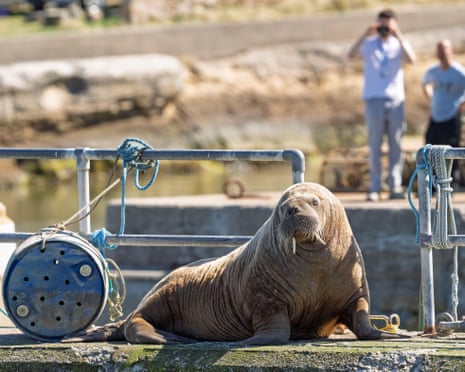
Throughout his time in Scottish waters, Magnus demonstrated the typical behaviors of his species, spending considerable periods resting on coastal rocks and piers while periodically returning to the sea in search of sustenance. The Arctic mammal migration pattern exhibited by Magnus has provided researchers and marine biologists with valuable insights into walrus movement patterns and their adaptation to changing ocean conditions and food availability in northern waters.
The journey from Scotland to Norway represents a significant undertaking for any marine creature, requiring navigating complex currents, varying water temperatures, and the inherent dangers of open ocean travel. This transoceanic crossing demonstrates the remarkable navigational abilities and physical endurance possessed by walruses, who are among the most resilient inhabitants of the Arctic and sub-Arctic regions.
Marine experts have suggested that Magnus's extended presence in Scottish waters and his subsequent departure toward Norwegian territories may be linked to changing food sources and the natural migration patterns that walruses follow in response to seasonal variations and environmental conditions. The walrus behavior patterns observed during his Scottish residency have contributed significantly to scientific understanding of these magnificent creatures and their adaptability to diverse habitats.
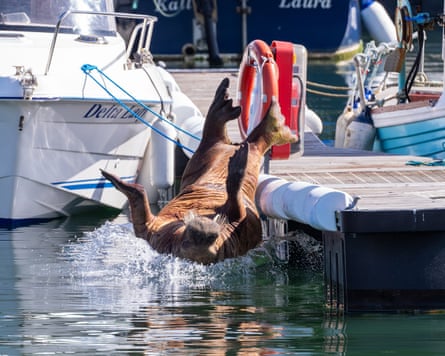
The celebrity status achieved by Magnus during his Scottish sojourn cannot be overstated, with the animal becoming the subject of countless social media posts, news articles, and local folklore. Residents and tourists who had the privilege of observing the marine wildlife spectacle firsthand were treated to a once-in-a-lifetime encounter with a creature that rarely ventures into such heavily populated areas of the British Isles.
Wildlife organizations and maritime authorities maintained careful monitoring of Magnus throughout his stay in Scottish waters, ensuring that his presence did not pose any danger to human populations while also protecting the animal from potential harm. This collaborative approach to wildlife management exemplifies the evolving relationship between humans and marine mammals in the modern era, where conservation and coexistence have become paramount concerns.
The recent confirmation of Magnus's presence in Norwegian waters suggests that the animal has successfully adapted to his new environment and found adequate resources to sustain his massive frame. Norway's extensive coastlines and rich marine ecosystems provide an ideal habitat for Arctic walrus populations, offering abundant food sources and suitable resting areas for these remarkable marine mammals.
Scientists continue to study walrus movements and migration patterns, recognizing that individual animals like Magnus play crucial roles in helping researchers understand broader population trends and environmental changes affecting marine ecosystems. The data collected from Magnus's journey provides valuable baseline information for future wildlife monitoring initiatives and marine conservation projects throughout the North Atlantic region.
The departure of Magnus from Scottish waters marks the end of an era for the communities that had grown fond of their unexpected visitor, yet it simultaneously opens new chapters for researchers and enthusiasts in Norway and beyond who may document the next phase of his remarkable life story. The legacy of Magnus in Scotland will undoubtedly endure through the memories, photographs, and stories shared by those fortunate enough to witness his presence during this extraordinary period.
Source: The Guardian


