
Major Cyber Attack Hits US Universities and Schools

A significant hacking group has breached Canvas, the academic software platform used by thousands of educational institutions across the United States, disrupting services.
A serious cyber attack has disrupted educational institutions across the United States, with hackers successfully breaching Canvas, one of the most widely utilized academic software platforms in the nation. The breach has sent shockwaves through the education sector, affecting thousands of schools and universities that depend on Canvas for course management, student communication, and grade distribution. This incident represents one of the most significant threats to educational technology infrastructure in recent years, raising critical concerns about data security and institutional preparedness.
Canvas serves as a learning management system for countless educational organizations, making it an attractive target for cybercriminals seeking to access sensitive information. The platform is used by major universities, community colleges, K-12 school districts, and various educational organizations nationwide. The security breach has forced institutions to temporarily disable services, implement emergency protocols, and investigate the extent of the compromise. School administrators and IT departments have been working around the clock to assess damage and restore normal operations while protecting student and staff information.
The hacking group responsible for this assault has not yet been publicly identified, though cybersecurity experts are actively investigating the incident. Initial reports suggest that the attackers exploited vulnerabilities within Canvas's infrastructure to gain unauthorized access to the system. The breach highlights the ongoing struggle between educational institutions and sophisticated cybercriminals who continuously develop new methods to penetrate digital defenses. This attack demonstrates the critical need for enhanced security measures across all educational technology platforms.

Schools and universities relying on Canvas have been forced to implement emergency response procedures to mitigate potential data loss and unauthorized access. Many institutions have notified their students and staff members about the breach, advising them to change passwords and monitor their accounts for suspicious activity. Educational leaders are now grappling with the challenge of maintaining educational continuity while addressing serious cybersecurity threats that could compromise sensitive personal information, including names, email addresses, phone numbers, and educational records. The incident has sparked urgent conversations about the adequacy of current security protocols in the education sector.
The disruption to Canvas services has created significant operational challenges for schools nationwide. Teachers have lost access to gradebooks and student records, students cannot submit assignments or access course materials, and administrative staff are unable to process enrollment and registration functions. This widespread disruption has forced educational institutions to explore alternative methods for maintaining classroom instruction and communication during the emergency period. Many schools have reverted to traditional paper-based systems or alternative digital platforms to keep operations functioning while Canvas infrastructure is being secured.
Parents and students have expressed concerns about the security of their personal information stored within the Canvas platform. Educational institutions have issued public statements assuring families that they are taking the breach seriously and implementing comprehensive measures to prevent future incidents. The breach raises important questions about the responsibility of software providers to maintain robust security standards and the obligations of educational institutions to protect student data. Both Canvas and affected schools are likely to face scrutiny and potential legal consequences if inadequate security measures are found to have contributed to the breach.
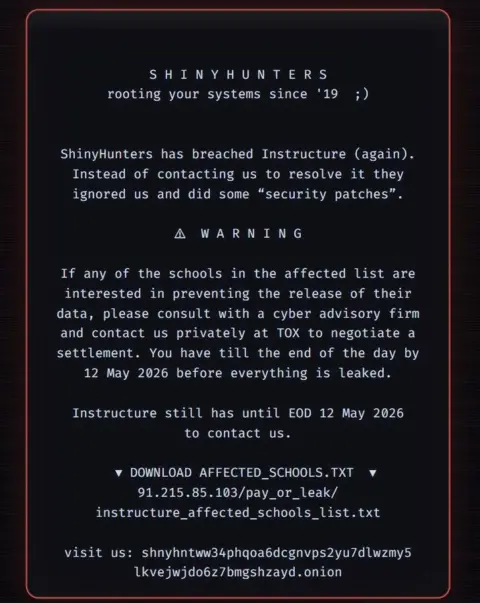
The Canvas security incident comes at a time when educational technology has become more critical than ever before. The pandemic accelerated digital learning adoption, making platforms like Canvas essential infrastructure for schools nationwide. As educational institutions have become increasingly dependent on digital tools, they have also become more vulnerable to sophisticated cyberattacks. The breach underscores the need for educational organizations to invest in robust cybersecurity measures, regular security audits, and employee training to recognize and prevent potential threats.
Canvas has announced that it is working diligently to identify and address the vulnerabilities that allowed the breach to occur. The company is coordinating with cybersecurity experts and law enforcement agencies to investigate the incident thoroughly. Canvas is implementing enhanced security protocols and recommending that all affected institutions take immediate action to secure their systems. The platform provider has also committed to offering support and resources to help schools and universities respond to the breach and protect their users.
The incident has prompted calls for stronger oversight and regulation of educational technology security standards. Education policy experts and cybersecurity professionals are advocating for mandatory security certifications, regular penetration testing, and comprehensive data protection requirements for companies providing services to schools. Lawmakers are considering legislation that would establish federal standards for educational technology security and impose stricter penalties on companies that fail to protect student data. This breach may catalyze significant changes in how educational institutions evaluate and implement technology solutions.

Many affected institutions are now conducting comprehensive reviews of their technology infrastructure and security practices. Schools are evaluating backup systems, disaster recovery plans, and redundancies to ensure they can maintain operations if future breaches occur. This incident has accelerated conversations about the need for diversified technology solutions, rather than relying heavily on a single platform. Educational leaders are also exploring additional cybersecurity insurance and incident response planning to better prepare for potential future threats.
The breach serves as a stark reminder that no organization, regardless of size or sector, is immune to cyber threats. Educational institutions must balance the benefits of digital learning tools with the necessity of protecting sensitive information. As schools continue to modernize their technology infrastructure, cybersecurity must remain a top priority in all strategic planning and investment decisions. The Canvas breach will likely serve as a catalyst for significant changes in how educational organizations approach technology security and risk management going forward.
Source: BBC News


