
Mali's Junta Leader Takes Defense Role After Minister Killed

Mali's military junta leader assumes defense ministry position following the death of predecessor Sadio Camara in a major jihadist and separatist offensive.
In a significant political development that underscores the volatile security situation in West Africa, Mali's junta leader has consolidated power by appointing himself as defence minister following the death of his predecessor. This move marks another dramatic shift in the leadership structure of the embattled nation, which has faced mounting pressure from jihadist and separatist forces operating across its territory.
Former Defence Minister Sadio Camara met his death during an unprecedented military offensive that saw combined forces of jihadist militants and separatist groups launch coordinated attacks across multiple regions. The scale and coordination of the assault represented one of the most significant security challenges the interim government has faced since seizing power, highlighting the deteriorating security landscape that has plagued Mali for years.
The death of Camara sent shockwaves through Mali's military establishment and diplomatic circles, raising serious questions about the government's ability to maintain control and protect its defense infrastructure from increasingly sophisticated attacks. The simultaneous nature of the offensives suggested a worrying level of coordination among previously fragmented militant and separatist groups operating in the Sahel region.
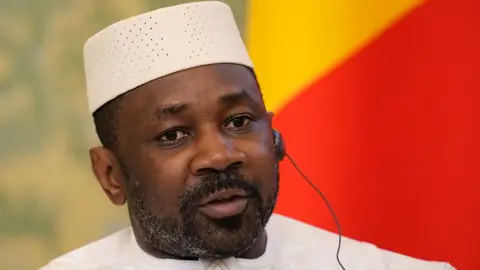
The appointment of the junta leader to the defense portfolio represents an unprecedented concentration of executive and military authority within a single individual. This decision reflects the emergency conditions gripping Mali, where the government feels compelled to streamline decision-making processes in response to the existential threat posed by the combined militant forces. Such consolidation of power is typical during periods of acute national security crisis, though it also raises concerns about accountability and democratic governance.
Mali has been engulfed in conflict since 2012 when separatist movements in the north launched an insurgency seeking independence or greater autonomy. The conflict later became complicated by the influx of jihadist groups affiliated with international terror organizations, transforming what began as a regional separatist struggle into a complex multilayered conflict involving numerous armed factions with varying motivations and international connections.
The circumstances surrounding Camara's death during the offensive reveal the extreme operational pressures facing Mali's military leadership. Defense ministers in conflict zones typically maintain protective security details, yet the scale of the assault was apparently sufficient to overwhelm standard protective measures. The incident demonstrates that even high-level government officials are vulnerable to the violence that has become endemic throughout much of Mali's territory.

International observers and regional analysts have expressed growing alarm at the trajectory of Mali's security situation. The coordination demonstrated by the jihadist and separatist forces in their combined offensive suggests a degree of tactical integration that had previously been absent. Such coordination, if sustained, could fundamentally alter the balance of power and make Mali even more difficult to govern or control through military means alone.
The junta leader's assumption of the defense ministry portfolio also reflects the practical realities of governance in Mali's current circumstances. With experienced defense ministers being eliminated during combat operations, maintaining continuity of leadership requires those already in positions of power to assume additional responsibilities. This practical necessity, while expedient, further concentrates authority and decision-making power in fewer hands.
Mali's international partners, including France and other Western nations that have maintained military presence in the region, are closely monitoring developments. The death of the former defense minister and the consolidation of power by the junta leader raise questions about the trajectory of Mali's governance and the military's capacity to address the security crisis through conventional means. Some analysts suggest that the situation may require a fundamental shift in strategy or international engagement.
The broader Sahel security crisis continues to deteriorate across the region, with jihadist and separatist groups exploiting weak governance, poverty, and ethnic tensions to expand their influence and operational capabilities. Mali's experience demonstrates how these various factors can combine to create environments where non-state armed actors can challenge government authority with increasing effectiveness. The death of high-ranking officials like Camara illustrates the real costs of this ongoing struggle.
Within Mali's interim government structure, the appointment of the junta leader to the defense ministry represents a significant power consolidation that had been anticipated by some observers given the security emergency. However, the speed with which this transition occurred and the circumstances necessitating it reflect the accelerating deterioration of the security situation. The government faces mounting pressure to demonstrate competence in addressing the military threat posed by the various armed groups operating throughout the country.
The situation in Mali serves as a stark reminder of the challenges facing fragile states in the Sahel region, where the absence of robust governmental institutions, economic opportunity, and social cohesion creates conditions favorable to armed insurgency. The combination of jihadist ideology and separatist nationalism has proven particularly difficult for governments to counter, as these movements address different grievances and appeal to different constituencies across Mali's diverse population.
Looking forward, Mali's trajectory remains deeply uncertain. The consolidation of power by the junta leader may enhance short-term decision-making efficiency during the current crisis, but it also risks further isolating the government from broader segments of Malian society. International diplomatic efforts continue, though progress has been limited. The fundamental challenge remains: how to address the complex drivers of conflict while simultaneously managing the immediate security threat posed by well-organized and motivated armed groups operating across vast territorial expanses.
Source: BBC News


