
Mamata Banerjee Refuses to Resign After Election Defeat

West Bengal chief minister rejects resignation despite election loss, claiming BJP conspiracy. Trinamool Congress ends 15-year rule after Modi's party victory.
Mamata Banerjee, one of India's most prominent female political leaders, has made a shocking decision to refuse resignation following a decisive electoral defeat in West Bengal elections this week. The chief minister's bold stance comes after her Trinamool Congress party lost its 15-year grip on power in the eastern Indian state, marking a significant political turning point in the region's governance landscape.
The electoral outcome has sent shockwaves through Indian politics, as Narendra Modi's Bharatiya Janata Party achieved an overwhelming victory in the West Bengal assembly elections on Monday. This triumph represents a major expansion of the BJP's political footprint in traditionally non-saffron territories and demonstrates the party's growing organizational strength beyond its traditional strongholds in northern and western India.
In a defiant public statement, Banerjee has alleged that the elections were not conducted fairly and transparently. She claims that Modi's party "forcefully captured" the election results through what she characterizes as coordinated efforts involving both political machinery and administrative resources. These allegations of electoral manipulation have set the stage for an intense political confrontation between state and central authorities.
The West Bengal political crisis represents a watershed moment for Indian democracy as the state navigates the transition from TMC dominance to BJP governance. Banerjee's refusal to step down, despite losing the electoral mandate, has created constitutional and political complications that observers say could reshape the state's political trajectory for years to come.
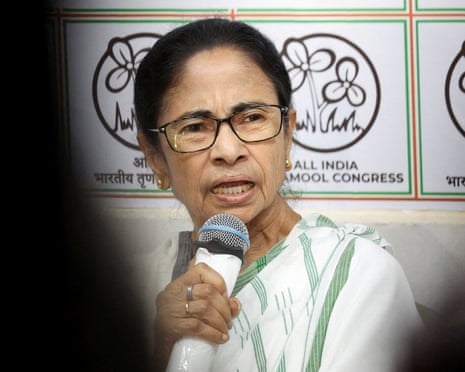
Banerjee's political career spans decades of activism and governance in West Bengal. She rose to prominence as a fiery opposition politician and workers' rights advocate before leading the TMC to power in 2011, ending the Left Front's 34-year rule in the state. Her tenure has been marked by populist welfare schemes, rhetoric against central government overreach, and cultivation of a distinct regional identity separate from national political movements.
The current election result represents the first significant challenge to her authority since establishing TMC hegemony over West Bengal politics. The BJP victory in West Bengal signifies a fundamental shift in the state's political alignment and suggests that Modi's national political machine has successfully penetrated what was previously considered a TMC fortress. The magnitude of the BJP's success indicates not merely a change in government but a broader realignment of electoral preferences among West Bengal's diverse voter base.
Political analysts point to several factors contributing to the TMC's electoral decline, including governance concerns, administrative fatigue after 15 years in power, and effective ground-level organization by the BJP apparatus. Additionally, regional issues related to development, employment, and implementation of social welfare programs appear to have influenced voter behavior across various demographics and constituencies throughout the state.
Banerjee's decision to resist resignation conventions reflects her assessment that the election results were fundamentally compromised and therefore lack legitimate authority to determine power transfer. Her political allies have echoed these claims, suggesting widespread irregularities in voting procedures, electronic voting machine malfunctions, and biased administrative oversight during the electoral process.
The political impasse created by Banerjee's refusal to resign raises important questions about institutional procedures, constitutional governance, and the resolution of electoral disputes in Indian democracy. Constitutional experts have noted that while election commissions certify results based on established protocols, political leaders traditionally respect electoral outcomes and follow established succession procedures regardless of personal conviction about fairness.
Banerjee's stance represents an increasingly common phenomenon in Indian politics where defeated candidates and parties challenge election results through legal challenges, commission inquiries, and public pressure campaigns rather than accepting outcomes quietly. This approach, while exercising democratic rights to protest and seek redressal, also tests institutional resilience and the ability of electoral systems to maintain public confidence.
The confrontation between Banerjee and Modi's government has attracted national and international attention as observers assess implications for democratic institutions, federalism, and power transitions in India. The situation exemplifies broader tensions between regional political movements seeking autonomy and a centrally-directed national political apparatus working to expand influence across diverse states with distinct political traditions.
Media coverage of the West Bengal election crisis has become increasingly polarized, with different news outlets emphasizing either the TMC's allegations of electoral irregularities or the BJP's argument that the election results reflect genuine voter preferences and democratic mandates. This polarization reflects deeper divisions in Indian media landscape between organizations perceived as sympathetic to different political camps.
International observers and democracy watchdog organizations have begun monitoring the situation to evaluate adherence to democratic norms and constitutional procedures during this transitional period. The outcome of this political dispute could establish important precedents for how election-related conflicts are resolved in Indian federalism and influence similar situations in other states experiencing electoral transitions.
Legal challenges initiated by the TMC are expected to wind through courts as the party seeks to substantiate its allegations of electoral fraud and administrative bias. Simultaneously, the BJP is likely to expedite the process of government formation and consolidation of its newly-won position in West Bengal, creating parallel institutional and legal processes that will unfold simultaneously.
Political observers note that Banerjee's resistance to resignation reflects her personal political philosophy emphasizing direct confrontation with perceived injustices and unwillingness to accept outcomes she views as illegitimate. This approach has characterized her political career from her early days as a protest leader through her tenure as chief minister, suggesting her current stance reflects consistent political principles rather than opportunistic positioning.
The situation highlights ongoing debates within Indian democracy about electoral integrity, institutional independence, and the balance between respecting democratic outcomes and investigating alleged irregularities. As the West Bengal political situation continues evolving, it will likely influence how Indian political parties, electoral commissions, and constitutional authorities approach similar scenarios in future state elections and national political transitions.
Looking forward, observers anticipate an extended period of political contestation in West Bengal as institutional processes work toward resolution of the electoral dispute and clarification of legitimate authority. The coming weeks and months will prove crucial in determining whether the situation is resolved through legal adjudication, political negotiation, or other mechanisms available within India's democratic framework.
Source: The Guardian


