
Manchester City's Future Without Pep Guardiola

Explore Manchester City's next chapter after Pep Guardiola's decade of dominance, plus Celtic's Scottish title triumph and Messi's World Cup momentum.
As the sports world contemplates significant transitions in elite football, several pressing questions emerge about the future of top-tier soccer. The landscape of Manchester City hangs in the balance following a transformative decade under Pep Guardiola's management, while Celtic's historic achievement in Scottish football marks a turning point for the nation's domestic competition. Meanwhile, Argentina's World Cup aspirations intensify as Lionel Messi appears to be reaching peak form at a crucial moment in his career, raising intriguing questions about timing and destiny in professional sports.
The impact of Pep Guardiola on Manchester City cannot be overstated. During his tenure as manager, Guardiola has fundamentally reshaped how the Premier League club operates, competes, and succeeds. His influence extends far beyond merely winning titles; he has revolutionized the tactical approach, player development philosophy, and organizational structure that define modern Manchester City. The Premier League landscape has been indelibly marked by his presence, with rival clubs forced to adapt and evolve their strategies in response to City's dominant performances and innovative playing styles.
When examining Guardiola's legacy against other managerial giants, the comparisons become particularly fascinating. While Sir Alex Ferguson boasts an even greater longevity record and perhaps a larger collection of trophies accumulated over decades at Manchester United, Guardiola's efficiency and impact during his Manchester City years have been remarkable. Ferguson's 26-year tenure at Old Trafford established a dynasty, but Guardiola's transformative effect in just over a decade represents an equally significant achievement in terms of modernizing elite football tactics and club structure.

Arsène Wenger's contributions to English soccer modernization in the 1990s and 2000s cannot be dismissed when discussing managerial influence. Wenger pioneered approaches to player fitness, nutrition, and training methodology that were revolutionary for their time, helping to elevate the Premier League's standards. However, Guardiola's comprehensive tactical innovation has extended well beyond individual aspects of club management. He has introduced Barcelona-inspired possession-based football to the Premier League, fundamentally altering how elite English teams approach the game strategically and philosophically.
The question of what Manchester City will look like in the post-Guardiola era represents one of football's most compelling narratives heading forward. The club has been built in his image, with every system, player recruitment decision, and tactical framework reflecting his vision for football. The transition period for Manchester City could determine whether the club maintains its elite status or experiences a decline typical of many organizations following the departure of transformative leaders. Club ownership and leadership will need to carefully manage this transition to preserve the winning culture and tactical sophistication that Guardiola has established.
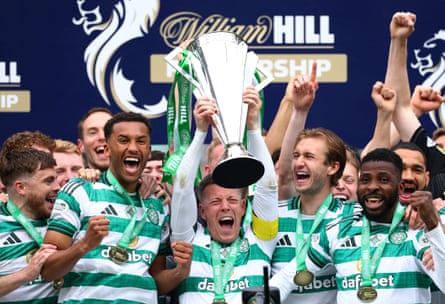
Meanwhile, in Scottish football, Celtic's recent title triumph carries significant implications for the domestic competition's future direction. The Scottish football landscape has been dominated by Rangers and Celtic in recent years, but Celtic's continued success suggests a degree of stability in their organization and management approach. This title win serves as a barometer for the health and competitiveness of Scottish soccer more broadly, raising questions about whether the league can maintain meaningful competition or if dominance will continue to concentrate among the traditional powerhouses.
Celtic's achievement also reflects the club's ability to compete both domestically and on European stages, though the financial and competitive disparities between Scottish football and the Premier League remain stark. The club's management and strategic direction have enabled them to maintain championship-winning form while developing players and maintaining squad cohesion. Their title success demonstrates that Scottish football, while distinct from the Premier League in terms of resources and global profile, can still showcase competitive quality and tactical sophistication among its top clubs.
The narrative surrounding Lionel Messi and Argentina's World Cup prospects adds another compelling dimension to this week's soccer questions. Messi's career trajectory has been extraordinary, spanning multiple decades at the highest competitive level. As he enters the final chapters of his career, the question of whether he is peaking at precisely the right moment in time becomes increasingly relevant to Argentina's World Cup ambitions and hopes for international success.
Messi's form and fitness have been subjects of intense scrutiny in recent seasons, particularly as he has transitioned to different clubs and leagues. His ability to maintain elite-level performance while managing the physical demands of professional football at his age represents a remarkable achievement in itself. The timing of his peak form relative to major international tournaments could prove decisive in determining whether Argentina achieves its World Cup objectives and adds another championship to Messi's already legendary resume.
Argentina's World Cup strategy increasingly centers on maximizing Messi's remaining years at the highest level while building a supporting cast of younger players who can contribute meaningfully to tournament success. The balance between relying on an aging superstar and developing the next generation of talent presents strategic challenges for the national team's coaching staff and administrators. Messi's presence alone elevates Argentina's competitive standing, but sustainable success requires that younger players develop sufficiently to complement his contributions on the field.
The convergence of these three narratives—Manchester City's post-Guardiola future, Celtic's Scottish dominance, and Messi's World Cup timing—illustrates the multifaceted nature of contemporary football discourse. Each story involves questions about sustainability, legacy, organizational structure, and the interplay between individual brilliance and collective team performance. These themes resonate throughout elite football, offering lessons about how institutions maintain excellence and how individual players influence their teams' trajectories.
As these narratives continue to unfold throughout the season and beyond, they will significantly shape discussions about football's future direction. Manchester City's response to Guardiola's departure, Celtic's ability to sustain their domestic excellence, and Argentina's World Cup campaign will all provide compelling case studies in how elite organizations and players navigate transition, competition, and the pursuit of sustained success in professional sports.
Source: The Guardian


