
Markwayne Mullin's DHS Nomination Faces Senate Scrutiny Amid Shutdown

Republican senator Markwayne Mullin's nomination to lead the Department of Homeland Security faces a Senate committee hearing as Democrats demand immigration enforcement reforms.
The Senate will consider Markwayne Mullin's nomination to lead the Department of Homeland Security (DHS) on Wednesday, as Democrats continue to force a partial shutdown of the agency until their demands for guardrails on immigration enforcement are met.
Former President Donald Trump nominated Mullin, a first-term Republican senator from Oklahoma, as DHS secretary earlier this month, after the president ousted former secretary Kristi Noem amid public blowback against the administration's aggressive approach to its mass deportation agenda, which resulted in the killings of two US citizens by immigration agents in Minneapolis.
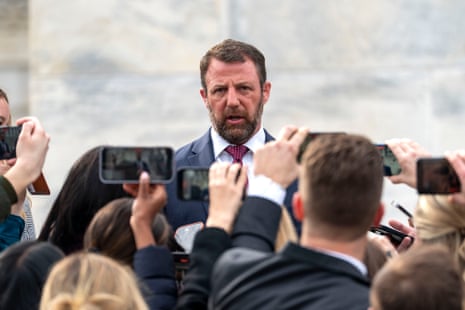
The nomination of Mullin comes as Democrats in Congress have forced a partial shutdown of the DHS, demanding reforms to immigration enforcement tactics that have drawn widespread criticism. The party has refused to approve funding for the agency until certain guardrails are put in place, seeking to rein in the administration's hardline approach to immigration that has led to controversial actions and outcomes.
Critics have accused the Trump administration of wielding DHS and its Immigration and Customs Enforcement (ICE) agency as tools for mass deportation, with reports of heavy-handed tactics, civil rights abuses, and even the killings of US citizens caught in the crossfire. The ouster of former secretary Noem was seen as an attempt by the president to appease these concerns, though the nomination of Mullin suggests a continued commitment to an aggressive immigration enforcement agenda.
As the Senate considers Mullin's nomination, lawmakers will be closely examining his views and approach to immigration policy, as well as his plans for addressing the concerns that have led to the current DHS shutdown. Democrats will be pushing for clear commitments to reform the agency's tactics and restore a measure of oversight and accountability to its operations.
The outcome of the nomination process could have significant implications for the future direction of the DHS and the administration's handling of immigration enforcement more broadly. With the political stakes high and public scrutiny intense, Mullin will face a challenging path to confirmation as he seeks to lead an agency at the center of one of the most contentious policy debates in the country.
Ultimately, the Senate's decision on Mullin's nomination will be a key indicator of whether the DHS is poised to continue its hardline approach to immigration, or if the agency is headed for a shift toward more balanced and humane enforcement policies. The outcome could have far-reaching implications for the lives of countless immigrants and their families across the United States.


