
Massive NASA Satellite Debris Set to Rain Down on Earth

NASA warns a 600kg satellite will re-enter Earth's atmosphere, with most burning up before impact, but the chances of being hit are extremely low.
The U.S. space agency NASA has issued a warning that parts of one of its massive satellites are set to crash to Earth on Tuesday evening. The 600kg Van Allen probe A, which was launched in 2012 as part of a twin probe mission to investigate the Van Allen radiation belt, is estimated to re-enter the Earth's atmosphere around 7:45pm EDT.
According to the U.S. military's Space Force, the majority of the 1,323-pound (600kg) spacecraft is expected to burn up before reaching the surface, posing a low risk to those on the ground. The agency has stressed that the chances of anyone being struck by the falling debris are extremely low.
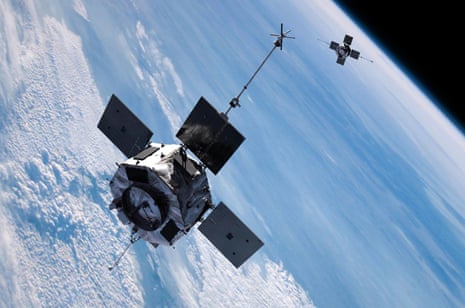
The Van Allen probes, named after the scientist who discovered the radiation belts surrounding Earth, were launched to study the complex and dynamic environment in this region of space. The two identical probes orbited the Earth for several years, providing unprecedented data and insights about the Van Allen radiation belts and their interactions with other space weather phenomena.
While the loss of the Van Allen probe A is certainly a setback for the mission, NASA has emphasized that the second probe, Van Allen probe B, continues to operate and collect valuable data. The agency is closely monitoring the re-entry of the first probe and will provide updates on the situation as it unfolds.
The re-entry of the Van Allen probe A is a reminder of the inherent risks and challenges of operating large-scale space missions. As more countries and private companies launch satellites and spacecraft into orbit, the potential for such uncontrolled re-entries is likely to increase. Agencies like NASA and Space Force will need to continue to closely track and manage these events to ensure the safety of people and property on the ground.
Despite the potential risks, the data and insights gathered by the Van Allen probes have been invaluable for advancing our understanding of the Earth's complex and dynamic radiation environment. The loss of the first probe is a setback, but the mission's legacy and the continued operation of the second probe will ensure that the valuable scientific knowledge gained from this mission will continue to benefit humanity for years to come.
Source: The Guardian


