
Melania Trump Demands ABC Action Over Jimmy Kimmel's Widow Joke

Melania Trump calls on ABC to take responsibility after Jimmy Kimmel's controversial widow joke aired before the White House Correspondents' Dinner.
Melania Trump has issued a forceful statement calling on ABC to take accountability following a controversial segment on Jimmy Kimmel's late-night talk show. The incident centers around a parody that aired just days before the prestigious White House Correspondents' Dinner, sparking significant backlash and drawing attention to the boundaries of late-night comedy commentary on public figures.
During the satirical segment, the talk show host made reference to Melania Trump as an "expectant widow," a barbed remark that struck many observers as crossing the line between humor and personal attacks. The joke appeared designed to critique the former first lady while making broader commentary about current political events and dynamics. The timing of the segment, coming on the heels of significant political developments, added fuel to the controversy surrounding the remarks.
The former first lady's camp has responded by demanding that the network take a more assertive stance regarding the content aired on one of its flagship programs. Melania Trump's representatives argue that the network bears responsibility for ensuring that comedy segments maintain a level of respect and decorum, particularly when targeting public figures and their families. The demand for accountability reflects growing tensions between late-night comedy shows and prominent political figures over the boundaries of acceptable satire.
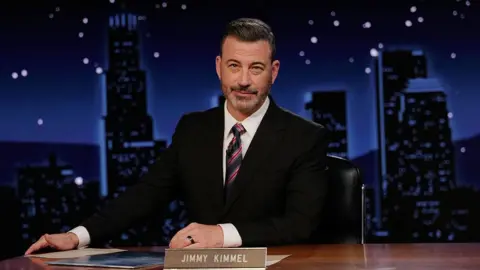
This incident comes as part of a broader conversation about the role and responsibility of late-night comedy hosts in contemporary American media. Networks like ABC have long positioned their comedy programming as providing sharp social and political commentary through the lens of humor. However, critics argue that such programs sometimes cross the line from commentary into personal attacks, particularly when targeting families of public figures rather than policies or public actions.
The White House Correspondents' Dinner itself has historically been a venue where comedy and politics intersect, with presidents and other political figures traditionally expected to laugh along with jokes made at their expense. The dinner celebrates the relationship between the press and political leadership, and humor has been a traditional element of the event. However, the joke in question aired not at the dinner itself, but on a television program in the days leading up to it, giving it a different context and potentially broader reach.
Jimmy Kimmel has built his career on political commentary delivered through comedy, often targeting sitting and former government officials and their families. His show has become known for mixing entertainment with sharp political critique, and he has frequently used his platform to comment on current events and prominent political figures. The format has generally been well-received by his core audience, though it has also occasionally generated controversy when jokes are perceived as particularly pointed or personal.
The reference to Melania Trump as an "expectant widow" appears to have been intended as a critique of political situations or dynamics, yet the execution and specific phrasing of the joke has drawn considerable criticism. Those defending Melania's position argue that such language crosses from satire into making personal implications about individuals based on their family relationships rather than their public actions or statements. This distinction between attacking policies versus attacking families has become an increasingly important debate in media criticism.
ABC's response to Melania Trump's demands will likely set a precedent for how networks handle similar complaints in the future. The network must balance its commitment to free expression and comedy with its responsibility to manage content standards and respond to public figures' concerns. The situation highlights the tension between protecting creative freedom and maintaining professional standards in broadcast entertainment.
The broader context of this controversy includes ongoing discussions about the treatment of political figures and their families in entertainment media. While public figures are generally considered fair game for criticism and satire, there remains ongoing debate about where lines should be drawn, particularly regarding spouses and family members who do not hold elected office. Different media outlets and commentators have varying perspectives on what constitutes appropriate boundaries for late-night comedy targeting prominent political families.
Melania Trump's statement demanding that ABC "take stand" on the matter reflects her more assertive public posture in recent months. The former first lady has become increasingly visible in public commentary and has not shied away from directly addressing media coverage and entertainment industry content that she views as inappropriate or disrespectful. Her willingness to publicly demand accountability from major networks demonstrates a shift in how political families are engaging with media criticism.
The incident also raises broader questions about the evolution of late-night comedy and its role in the contemporary media landscape. As cable news and broadcast television compete with streaming platforms and social media for audiences, late-night shows have increasingly leaned into political commentary as a way to drive engagement and viewership. The strategy has generally been successful in building dedicated audiences, but it has also intensified debates about the responsibilities that come with such significant cultural influence.
Industry observers note that networks often walk a fine line between supporting their talent and responding to public complaints about specific content. ABC will need to carefully consider how to address Melania Trump's concerns while also maintaining the creative autonomy of its programming. The network's decision will likely influence how similar situations are handled going forward and may establish new standards for how networks respond to criticism from public figures regarding entertainment content.
The controversy surrounding the widow joke also touches on broader cultural conversations about appropriate topics for humor and satire. What some view as sharp political commentary, others perceive as crossing ethical lines. These differing perspectives reflect deeper divisions in American culture regarding the role of humor in political discourse and the appropriate limits of satire targeting public figures and their families. As media continues to evolve, these conversations will likely remain central to discussions about entertainment content standards.
Source: BBC News


