
Men Actually Use Vocal Fry More Than Women

New research reveals men use vocal fry more frequently than women, challenging widespread gender stereotypes about this distinctive speech pattern.
Vocal fry, commonly referred to as "creaky voice," represents a distinctive and often noticeable drop in pitch that typically occurs at the end of sentences. This speech characteristic has long been stereotypically associated with young women, becoming such a prominent cultural phenomenon that it has entered mainstream discussions about speech patterns and communication styles. The trend gained particular prominence through high-profile celebrity examples, with Britney Spears being perhaps the most famous case study, having prominently featured the vocal technique in her 1998 chart-topping hit "Hit Me Baby (One More Time)." Since then, countless other public figures have been noted for their use of this distinctive vocal register, making it a subject of widespread cultural commentary and social observation.
However, recent scientific research has fundamentally challenged this deeply entrenched gender-based stereotype. Jeanne Brown, a dedicated graduate student at McGill University, has conducted groundbreaking experimental research demonstrating that vocal fry is actually more common in men than women. Brown presented her compelling findings at this week's meeting of the Acoustical Society of America in Philadelphia, where the research community gathered to discuss the latest discoveries in acoustic science. According to Brown's research, the persistent perception that vocal fry is predominantly a female speech pattern appears to be fundamentally flawed, suggesting that our cultural biases and stereotypes may be influencing how we perceive and interpret vocal patterns in speech.
The discrepancy between actual usage patterns and public perception raises important questions about how gender stereotypes shape our interpretation of observable phenomena. Brown's research indicates that while men actually employ vocal fry more frequently in their speech patterns, society has collectively come to associate this vocal characteristic primarily with women. This phenomenon demonstrates the powerful influence of media representation, celebrity culture, and social narratives in shaping our understanding of linguistic patterns. The finding suggests that our brains may be selectively attentive to vocal fry when it occurs in women's speech while overlooking or minimizing it when men employ the same technique.

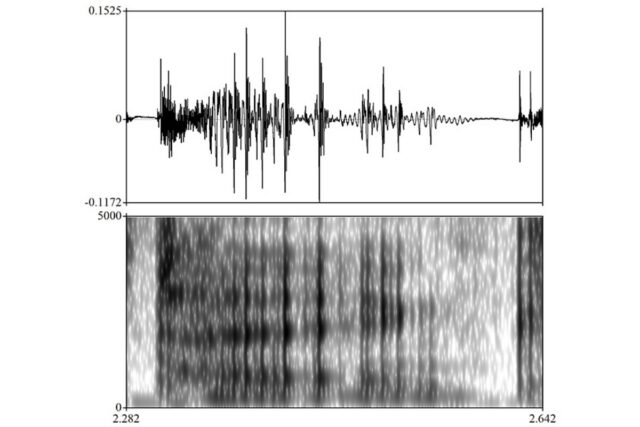
Vocal fry is scientifically classified as the lowest register within the human vocal spectrum, occupying a unique position in the hierarchy of vocal registers available to speakers. The complete range of human vocal registers includes the modal register (the standard register used in everyday conversation), the falsetto register (used for higher pitched sounds), and the whistle register (the highest register). Understanding vocal fry requires knowledge of the physiological mechanisms that produce this distinctive sound. The vocal effect occurs when the vocal cords become significantly relaxed and slack, a physiological state that causes them to vibrate in an irregular and uneven pattern throughout the phonation cycle.
This irregular vibration pattern produces the characteristic audible cracking or rattling sound that defines vocal fry, a sound that occurs as air is expelled from the lungs in distinct spurts rather than in a smooth, continuous stream. The acoustic properties of vocal fry are distinctive and measurable, characterized by extremely low fundamental frequencies that typically hover around 70 Hz in frequency measurements. To provide context for these measurements, the lowest end of the human hearing range falls at approximately 20 Hz, meaning that vocal fry sits well within the range of human auditory perception but occupies the lower end of what humans can typically hear. This low frequency gives vocal fry its distinctive creaky, rattling quality that makes it immediately recognizable to listeners.

The physiological mechanism behind vocal fry production involves specific changes to vocal cord tension and configuration. When speakers intentionally or unintentionally produce vocal fry, their vocal cords enter a state of significant laxity, meaning the muscles controlling the vocal cords relax substantially. This relaxation allows the vocal cords to vibrate in a much slower and more irregular manner than occurs during normal speech. The resulting acoustic signature is distinctly different from both the modal register used in everyday conversation and the falsetto register that allows speakers to reach higher pitches. The irregular vibration pattern of the vocal cords during vocal fry production creates the perception of discrete pulses of sound rather than the smooth acoustic output characteristic of normal speech patterns.
Understanding why men might actually use vocal fry more frequently than women, despite the prevailing stereotype attributing it primarily to women, requires examining multiple factors. One significant consideration involves the physiological differences between male and female vocal apparatus, which could influence the ease or frequency with which different groups employ this vocal technique. Additionally, the research suggests that perceptual biases play a crucial role in how listeners interpret and remember instances of vocal fry. When people hear vocal fry produced by women, they may pay particular attention to it due to cultural narratives that associate this speech pattern with femininity, causing these instances to lodge more firmly in memory. Conversely, when men employ the same technique, listeners may fail to consciously register it or may interpret it differently due to gender-based expectations about male speech patterns.
Brown's research contributes to a growing body of scientific literature examining how gender stereotypes influence our perception of observable phenomena, including speech patterns and vocal characteristics. This research has broader implications beyond linguistics, suggesting that our brains are not objective processors of sensory information but rather are heavily influenced by cultural narratives, media representation, and social expectations. The findings from Brown's work encourage a more critical examination of other widely held beliefs about gender differences in communication and behavior. Scientists and researchers increasingly recognize that distinguishing between actual behavioral differences and perceived differences shaped by stereotypes requires careful experimental design and objective measurement.
The presentation of Brown's findings at the Acoustical Society of America conference represents an important contribution to the scientific understanding of human vocalization and speech patterns. The research methodology employed in Brown's study allowed for precise measurement and analysis of vocal fry usage patterns across different populations. By analyzing actual recordings of speech and measuring the acoustic properties of the vocalizations, Brown was able to provide objective data that contradicts widespread popular assumptions about vocal fry usage. This type of rigorous scientific investigation is essential for challenging stereotypes that have become embedded in popular culture and social consciousness.

The implications of this research extend into multiple domains, including linguistics, psychology, gender studies, and media criticism. Understanding that vocal patterns may not align with gender stereotypes encourages more nuanced conversations about how we interpret and judge others' speech. The research suggests that listeners should be aware of their own potential biases when evaluating speech patterns and vocal characteristics. Furthermore, the findings may influence how speech-language pathologists, voice coaches, and communication specialists approach their work with clients. The research also raises important questions about why certain speech patterns become associated with specific genders in popular consciousness, even when empirical evidence suggests a different reality.
Brown's groundbreaking work exemplifies how scientific research can challenge and potentially reshape cultural narratives that have become accepted without rigorous evidence. As more research emerges examining the intersections between actual behavior and perceived behavior, a clearer picture of human communication patterns will develop. The vocal fry research demonstrates the importance of maintaining skepticism toward popular stereotypes and insisting on evidence-based understanding of human behavior. Future research may build upon Brown's findings, exploring additional variables that influence vocal fry usage and examining how cultural factors shape the development and deployment of different vocal registers across diverse populations.
Source: Ars Technica


