
Met Makes 43 Arrests at London Rallies

Police report 43 arrests at Tommy Robinson's Unite the Kingdom rally and pro-Palestine march in London. Robinson's event drew fewer participants than anticipated.
The Metropolitan Police have reported a significant number of arrests during simultaneous demonstrations that took place across London on Saturday, marking another contentious day of public protest in the capital. Tommy Robinson's Unite the Kingdom rally, which had been anticipated to draw substantial crowds through the streets of London, ultimately failed to achieve the participation levels organizers had hoped for. According to police assessments, attendance at the far-right protest march fell significantly short of expectations, with officers estimating that fewer than half the number of participants from a comparable event held the previous year showed up to support the demonstration.
The day proved to be particularly challenging for law enforcement, as two separate and distinctly different protest movements converged on London's streets simultaneously. The Metropolitan Police Force found themselves managing both Robinson's Unite the Kingdom event and a pro-Palestinian march that drew participants advocating for Palestinian rights and opposing Israeli policies. Police officers were deployed extensively throughout the capital to maintain order, prevent confrontations between opposing groups, and ensure that both demonstrations proceeded without escalating into violence or serious public disorder.
The Metropolitan Police Service confirmed that a total of 43 arrests were made across the two separate events held on the same day. While authorities did not immediately break down the specific number of arrests at each individual protest, the significant arrest figure underscores the challenging nature of managing large public gatherings with opposing political viewpoints. Police presence was notably heightened throughout London's central areas, with officers positioned strategically to prevent potential clashes between supporters of the different movements and to enforce restrictions on protest conduct.
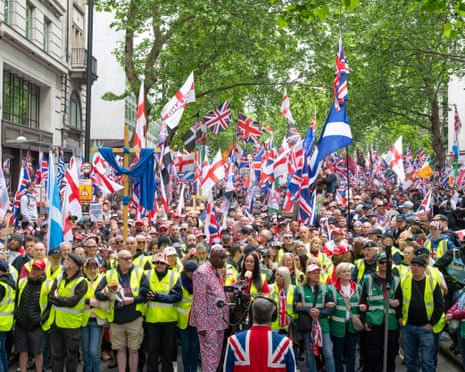
The Tommy Robinson rally represented another attempt by the controversial far-right activist to mobilize supporters around his political messaging. Robinson has consistently drawn both dedicated followers and significant counter-protest opposition when he organizes public demonstrations. The decision to hold the Unite the Kingdom march on a Saturday, a day when attendance at events is typically higher, suggests organizers had anticipated robust turnout, making the relatively lower numbers a notable setback for the movement. The discrepancy between anticipated and actual participation raises questions about the current level of public support for Robinson's political agenda and the broader far-right movement in contemporary Britain.
Simultaneously, the pro-Palestine march attracted participants who gathered to express solidarity with Palestinian communities and voice opposition to Israeli military actions and settlement policies. These demonstrations have become increasingly common across major British cities, reflecting broader international activism around Middle Eastern geopolitical issues. The convergence of these two very different protest movements on the same day created a complex law enforcement scenario, requiring police to manage not only the individual demonstrations but also the potential for dangerous interactions between opposing groups with fundamentally conflicting ideological positions.
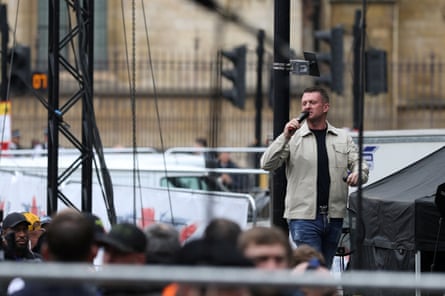
The Metropolitan Police's handling of the dual demonstrations reflects the increasingly complex nature of policing public protest in London. Officers must balance fundamental rights to freedom of assembly and expression with obligations to maintain public order and prevent violence. The arrest figures suggest that some participants at one or both events engaged in conduct that police deemed necessary to arrest, whether due to breaches of protest conditions, public order offenses, or other criminal behavior. The specific charges and circumstances surrounding each arrest were not immediately disclosed by authorities.
Tommy Robinson, whose real name is Stephen Christopher Yaxley-Lennon, has remained a polarizing figure in British politics despite legal troubles and previous convictions. His Unite the Kingdom movement represents an attempt to consolidate far-right support under a new organizational banner. The lower-than-expected turnout at Saturday's event could suggest waning enthusiasm for his leadership or shifting dynamics within far-right activism in Britain. However, the presence of significant numbers still indicates he maintains a committed base of supporters willing to publicly demonstrate their allegiance to his political message.
The pro-Palestine movement, by contrast, has demonstrated sustained and growing participation over recent years, with demonstrations occurring regularly across London and other major British cities. These marches draw participants from diverse backgrounds, including students, community activists, faith groups, and international solidarity networks. The Saturday march added to a long history of Palestinian solidarity protests in Britain, reflecting the issue's prominence in British left-wing and progressive activism. The decision to schedule this march on the same day as Robinson's event may have been coincidental or potentially intentional, depending on how the dates were coordinated.
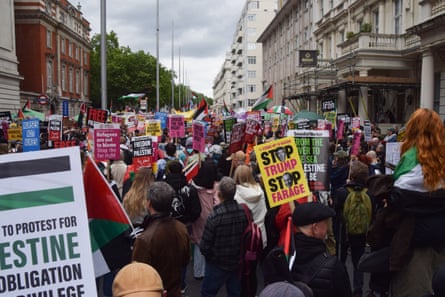
Police intelligence and planning for Saturday's demonstrations would have been extensive, given the known potential for confrontation between participants in these very different movements. The Metropolitan Police likely deployed additional officers in buffer zones between the two groups and positioned units strategically to prevent any attempted marches into areas occupied by the opposing demonstration. Such precautions are standard practice when managing simultaneous protests with potentially conflicting participants. The fact that only 43 arrests were made could be interpreted as a relatively successful policing operation, though such figures must be contextualized against the total number of participants and the nature of any confrontations that did occur.
The broader context of these demonstrations reflects ongoing tensions within British society regarding immigration, national identity, and international conflicts. These tensions regularly manifest in public protests that test the limits of free expression while challenging police resources and public safety infrastructure. The arrests made during both protests underscore how demonstrations, regardless of their political orientation, can sometimes result in conduct that crosses legal boundaries. Each arrest represents police determination that specific actions violated applicable laws, whether related to public order, violent conduct, or breach of protest conditions established by authorities in advance of the events.
As Britain continues to grapple with questions of public order, freedom of expression, and the management of increasingly polarized political divisions, events like Saturday's dual demonstrations will likely continue to occur. Both far-right and pro-Palestine activism show no signs of diminishing, and police forces will face ongoing challenges in balancing the rights of different groups to protest while maintaining public safety. The relatively successful day in terms of arrest figures suggests that police preparation and deployment strategies are proving reasonably effective, though critics from various sides continue to question whether law enforcement response is appropriately calibrated to different forms of political expression. The 43 arrests will now progress through the justice system, where charges will be formally assessed and individual cases evaluated on their merits.
Source: The Guardian


