
Mets' Costly Collapse: Baseball's Richest, Worst Team

The New York Mets have baseball's second-highest payroll but the worst record. How did such an expensive roster become MLB's biggest disappointment?
The New York Mets have constructed one of baseball's most paradoxical narratives: a franchise boasting the second-highest payroll in Major League Baseball while simultaneously holding the worst record across all of professional baseball. This stunning contradiction encapsulates a season that has spiraled into organizational chaos, raising uncomfortable questions about front office decision-making, roster construction, and the fundamental ability to translate financial resources into on-field success.
Once affectionately labeled baseball's lovable losers, the Mets have shed that cuddly reputation in favor of something far more troubling: they are simply baseball's most expensive losers. The franchise that captured hearts with underdog charm has transformed into a cautionary tale about financial mismanagement and failed expectations, despite investing enormous sums into player acquisitions and development. The team's current predicament stands as a stark reminder that money alone cannot guarantee baseball success, and that strategic planning and roster chemistry matter far more than payroll size.
The Mets' April collapse reached a nadir on Thursday evening when they fell 5-4 to the Washington Nationals, a result that pushed their record to an abysmal 10-21—the worst mark in all of Major League Baseball at that point in the season. This loss forced them even deeper into the National League East basement, a particularly galling position given that they have historically competed in one of baseball's most storied divisions. Most bewildering of all, they have somehow managed to perform worse than their cross-state rivals, the Philadelphia Phillies, another high-payroll team that has disappointed observers but maintains a modestly better record than the Mets despite their own struggles.

The statistical reality facing the Mets becomes even more sobering when examining their trajectory through April. If the team were to continue at their current 52-win pace for the entire 162-game season, they would finish with one of the worst records in modern baseball history. While most analysts believe the Mets will inevitably improve from these historically terrible numbers as the season progresses, the damage inflicted during this catastrophic month has fundamentally altered their playoff trajectory. Their postseason probability has collapsed from a promising 87% on Opening Day—a figure that seemed justified given their significant investments—to less than 30% according to advanced analytics platforms.
The numbers become even more damning when examining the team's recent performance trends. Over their last 20 games, the Mets have managed only three victories while suffering 17 defeats, a .150 winning percentage that suggests systemic organizational problems rather than mere bad luck or statistical variance. This win-loss ratio indicates deeper issues with player performance, managerial strategy, or clubhouse cohesion—problems that cannot be simply solved by waiting for momentum to shift naturally. When a team constructed with significant financial investment performs this poorly over an extended period, questions inevitably emerge about whether the investments were made wisely.
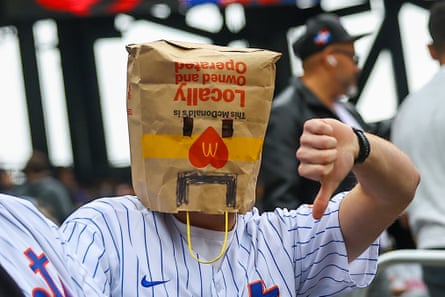
The context of this Mets disaster becomes even more compelling when considering the broader landscape of Major League Baseball payrolls and competitive balance. The Mets, with their second-highest salary structure, should theoretically be positioned among baseball's elite organizations. They should be competing for division titles and Wild Card berths, not fighting to stay respectable in historical terms. The contrast between their investment level and their on-field results creates a narrative of epic proportions—one that will likely dominate baseball discussions for years to come. Front office decisions made during the offseason are now being questioned extensively by fans, analysts, and local sports media.
Player acquisitions and contract decisions made to bolster the roster have not produced the expected returns, raising legitimate questions about the judgment of the front office. When expensive player acquisitions fail to perform or gel as a cohesive unit, the finger-pointing inevitably begins. Managers come under scrutiny, coaching staffs face criticism, and organizational culture becomes a topic of intense scrutiny. The Mets find themselves in precisely this situation—a team with resources that could compete with anyone but instead seems unable to execute basic fundamentals consistently.
The implications of this unprecedented situation extend beyond mere statistics and won-loss records. The Mets organization faces a credibility crisis with their fanbase, who have invested emotional energy and financial support into a team that has failed to deliver results commensurate with its resources. Season ticket holders, merchandise buyers, and casual fans who thought this might be different are now confronting bitter disappointment. The narrative of wasteful spending and poor decision-making threatens to overshadow any positive accomplishments the organization might achieve later in the season.
As the season progresses beyond April, all eyes will remain fixed on whether the Mets can mount any semblance of a recovery. Their ability to climb out of their current abyss will depend on whether they can identify and rectify the fundamental problems that have plagued them. Whether those problems stem from talent evaluation, player chemistry, managerial decisions, or some combination of all three, the organization must act decisively to salvage something from what has become an embarrassing season. The Mets' payroll investment demands nothing less than a significant turnaround if they hope to vindicate the resources devoted to this roster.
The story of the Mets in 2024 will undoubtedly be remembered as one of baseball's greatest mismatches between investment and performance. Their second-highest payroll in baseball combined with the worst record serves as a powerful reminder that sports success requires more than financial commitment alone. Team chemistry, strategic planning, player development, and managerial acumen all play crucial roles in determining whether a franchise will thrive or stumble. For the Mets, the coming weeks and months will reveal whether they possess the fortitude and strategic wisdom necessary to transform their season or whether they are destined to complete an historically forgettable campaign.
Source: The Guardian


