
Mexican Forces Capture Top Cartel Commander

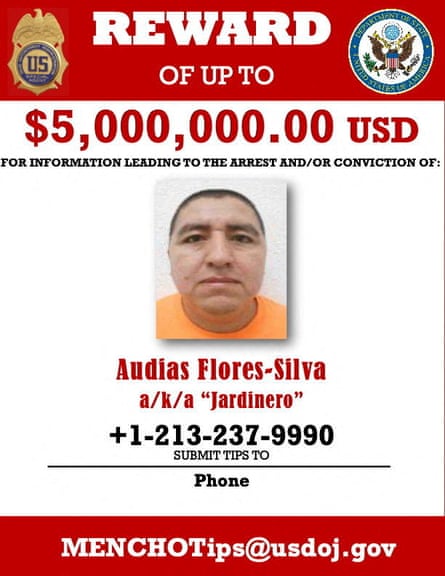
Mexican special forces arrest Audias Flores, a top CJNG commander known as 'El Jardinero', in major operation against drug trafficking organization.
In a significant blow to one of Mexico's most dangerous criminal organizations, Mexican special forces have successfully apprehended Audias Flores, a high-ranking commander of the Jalisco New Generation Cartel, commonly referred to as the CJNG. The arrest took place in the western state of Nayarit, marking another important victory in Mexico's ongoing struggle against organized crime and drug trafficking networks that have destabilized numerous regions across the country.
Audias Flores, who operates under the alias "El Jardinero" (The Gardener), held a position of considerable power and influence within the cartel's organizational structure. As a regional commander, he exercised control over vast territories of CJNG operations along Mexico's strategically important Pacific coast, a region that has become increasingly vital for drug smuggling and distribution operations. His capture represents a critical disruption to the cartel's command structure and its ability to coordinate criminal activities across the region.
The significance of Flores's arrest is amplified by his status within the organization's hierarchy. Security analysts and law enforcement officials had identified him as a potential successor to Nemesio Oseguera Cervantes, better known by his criminal alias "El Mencho", who served as the CJNG leader and primary figurehead of the organization. Oseguera's death in a military security operation in February of this year had created a substantial power vacuum within the cartel's upper echelons, leading to widespread speculation about potential successors and internal power struggles.

The Jalisco New Generation Cartel has emerged as one of the most formidable and violent criminal enterprises operating throughout Mexico and beyond. The organization has been responsible for numerous acts of extreme violence, including territorial disputes with rival cartels, kidnappings, extortion, and drug trafficking operations that span multiple continents. The cartel's activities have resulted in thousands of deaths and have destabilized entire communities across western and central Mexico, making law enforcement efforts against the organization a top priority for Mexican authorities.
Flores's operational control extended across critical smuggling routes and distribution networks along the Pacific coast, making him an invaluable asset to the cartel's criminal enterprise. His command of these territories provided the organization with access to major ports and transportation corridors essential for moving large quantities of narcotics northward toward the United States market. The removal of such a high-level operative disrupts these carefully established networks and forces the cartel to restructure its operations and establish new chains of command.
The arrest was conducted by Mexico's elite special forces units, which have been specifically trained and equipped to combat the country's most dangerous criminal organizations. These specialized military and police personnel have become crucial in Mexico's anti-cartel efforts, bringing advanced tactical capabilities and intelligence-gathering resources to bear against organized crime. The operation that led to Flores's capture likely involved extensive surveillance, intelligence analysis, and coordination between multiple law enforcement agencies at federal and state levels.

The timing of this arrest comes during a period of heightened instability within the CJNG following El Mencho's death earlier this year. The cartel had been experiencing internal conflicts and power struggles as various commanders jockeyed for position within the organization's hierarchy. Multiple regional lieutenants and faction leaders have been competing to fill the leadership void, and Flores's capture removes one of the most credible candidates for succession, potentially altering the trajectory of these internal power dynamics.
Mexico's government has made combating the CJNG and other major criminal organizations a central focus of its security policy. President and senior military officials have publicly acknowledged the severity of the threat posed by these organizations and have committed substantial resources to operations against them. However, the fight against drug cartels in Mexico remains extraordinarily challenging, with criminal organizations demonstrating remarkable resilience, adaptability, and resources despite numerous arrests and military operations.
The Pacific coast region where Flores operated has been a particular flashpoint for cartel violence and competition. Control of this territory provides access to major shipping ports and international trade routes, making it exceptionally valuable for criminal enterprises involved in drug trafficking and other illicit activities. The region has witnessed fierce battles between competing cartels vying for dominance, resulting in significant civilian casualties and displacement.
Analysts specializing in organized crime have emphasized that while individual arrests represent important tactical victories, they do not fundamentally resolve the underlying conditions that enable cartel operations in Mexico. Poverty, corruption, limited economic opportunities, and weak institutional capacity in some regions continue to provide fertile ground for criminal recruitment and operations. Long-term solutions require comprehensive approaches addressing these structural issues alongside targeted enforcement operations.
The capture of Audias Flores demonstrates the continued capability of Mexican law enforcement agencies to identify, locate, and apprehend high-value targets within major criminal organizations. The operation required significant intelligence work, resources, and tactical coordination, reflecting the substantial investment Mexican authorities have made in combating organized crime. Future operations will likely continue targeting the CJNG's leadership structure as part of broader efforts to dismantle the organization's command and control apparatus.
Moving forward, Mexican authorities will continue pursuing other senior CJNG commanders and operatives identified through ongoing investigations. The arrest of Flores provides valuable intelligence about the organization's structure, operations, and networks that can inform future enforcement actions. Law enforcement agencies are likely to escalate pressure on the organization during this period of internal instability, seeking to exploit the power vacuum and further degrade the CJNG's operational capacity.
The international dimension of this conflict cannot be overlooked, as the CJNG and other Mexican cartels operate in close coordination with criminal networks in the United States and other countries. The cartel's drug trafficking operations extend throughout North America, with significant distribution networks operating in major U.S. cities. Cooperation between Mexican and U.S. law enforcement agencies has been critical in disrupting these transnational criminal operations, and the arrest of a high-level commander like Flores benefits law enforcement efforts on both sides of the border.
The stability of Mexico itself depends significantly on the government's ability to confront and reduce the power and influence of major criminal organizations. Public confidence in government institutions, economic development, and social cohesion have all been undermined by cartel violence and the corruption that frequently accompanies it. Successful operations like the capture of Audias Flores contribute to broader government efforts to reassert state authority and provide security for Mexican citizens.
Source: The Guardian


