
Mexico Targets Cartel Leadership in Bold New Offensive

Mexican military arrests suspected CJNG successor El Jardinero as cartel violence escalates. Expert analysis on succession crisis and future gang warfare implications.
The arrest of a top cartel operative represents a significant escalation in Mexico's ongoing battle against organized crime, marking a critical moment in the power struggle within one of the country's most dangerous criminal organizations. Following the death of the Jalisco New Generation cartel's (CJNG) longtime leader, authorities have intensified their focus on dismantling the upper echelon of the organization, employing sophisticated military tactics and intelligence gathering to track down high-value targets.
The dramatic takedown occurred when special forces conducted a raid on a rural property located in Nayarit state, where they discovered Audias Flores, known by the alias "El Jardinero," attempting to evade capture by hiding in a drainage pipe. Drone surveillance footage captured the moment armed personnel extracted the fugitive from his hiding place, with the operation completed without any exchange of gunfire. This method of apprehension underscores the Mexican military's evolving approach to countering cartel operations, moving away from traditional firefights toward intelligence-driven operations.
El Jardinero was widely regarded as a strong contender to assume leadership of the CJNG following the death of Nemesio Oseguera Cervantes, commonly referred to as "El Mencho," whose reign spanned over a decade and established the organization as one of Mexico's most formidable criminal enterprises. The timing of this arrest comes remarkably quickly after El Mencho's funeral, suggesting that Mexican authorities have been preparing and coordinating their response to potential succession scenarios within the cartel hierarchy.

The Jalisco New Generation cartel has been instrumental in reshaping Mexico's organized crime landscape over the past fifteen years, expanding its operations across multiple states and establishing a reputation for extreme violence. Under El Mencho's leadership, the CJNG grew from a regional organization into a transnational criminal enterprise with sophisticated supply chains, violence-prone tactics, and deep infiltration into government institutions. The organization's rapid growth and consolidation of power made it a primary target for law enforcement agencies at both federal and state levels.
Analysts and security experts are closely monitoring the cartel succession dynamics following these high-level arrests, particularly concerned about how the power vacuum might trigger internal conflict. Historical patterns in organized crime suggest that leadership transitions often precipitate violent power struggles, as different factions within the organization compete for control of territory, resources, and operational command. The potential for increased bloodshed in regions where the CJNG maintains a strong presence, particularly in Jalisco itself, remains a significant concern for Mexican officials and regional authorities.
The crackdown reflects a shift in Mexico's anti-cartel strategy, with the government prioritizing the capture of top-tier leadership rather than focusing solely on street-level enforcement. This approach aims to destabilize cartel operations by removing key decision-makers and disrupting established chains of command. However, critics argue that while such captures may provide temporary disruption, they often fail to address the underlying economic and social conditions that enable organized crime to flourish.
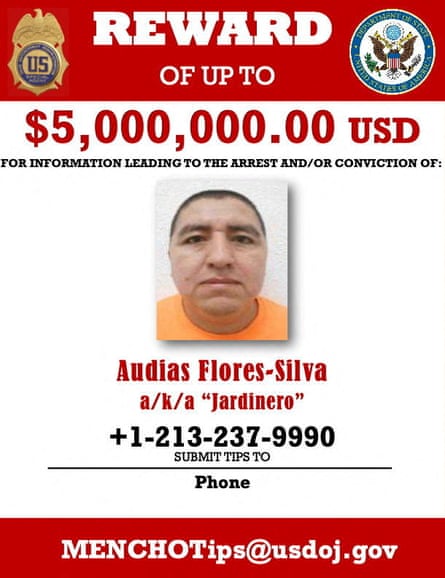
The successful apprehension of El Jardinero demonstrates improved coordination between Mexico's military branches and intelligence services, suggesting that organizational reforms implemented over the past several years may be yielding measurable results. The use of advanced surveillance technology, including drone footage, indicates that Mexican special forces now have access to more sophisticated equipment and training than in previous years. These tactical improvements have proven essential in locating and apprehending high-value cartel operatives who have invested considerable resources in evading detection.
Regional security experts warn that the current offensive against CJNG leadership could inadvertently accelerate violence in the short term, as subordinate commanders attempt to consolidate power before a new supreme leader emerges. The Jalisco region, traditionally the cartel's stronghold, has already experienced unprecedented levels of violence in recent months, with clashes between rival factions, ambushes of government forces, and attacks on civilian infrastructure becoming increasingly common. Residents in affected areas report heightened fear and instability as criminal organizations compete for dominance.
The death of El Mencho and the subsequent arrest of his likely successor raises critical questions about the future direction of organized crime in Mexico. Some analysts predict that the CJNG may splinter into multiple competing organizations, potentially increasing the total number of armed groups but reducing the power concentration of any single entity. Others contend that the cartel's established infrastructure and operational capacity are sufficient to enable a smooth transition to new leadership, allowing the organization to continue functioning with minimal disruption to its criminal enterprises.
The Mexican government's intensified focus on cartel dismantling reflects mounting pressure from citizens, businesses, and international partners to address the security crisis that has claimed tens of thousands of lives over the past two decades. The United States, in particular, has maintained significant pressure on Mexico to combat drug trafficking organizations that supply narcotics to American markets. This bilateral pressure has influenced Mexico's allocation of military and law enforcement resources toward anti-cartel operations, though funding and personnel constraints continue to challenge the scope and effectiveness of these efforts.
Security analysts emphasize that capturing individual cartel leaders, while symbolically important and tactically significant, represents only one component of a comprehensive strategy needed to address organized crime in Mexico. Long-term solutions require addressing corruption within government institutions, strengthening judicial systems to ensure accountability, and implementing economic development programs in regions where criminal organizations recruit members. Without these broader reforms, newly arrested cartel operatives will likely be replaced by ambitious subordinates seeking to advance their status within the criminal hierarchy.
The international implications of Mexico's cartel violence extend far beyond its borders, affecting drug availability and pricing throughout North America. The CJNG's operations have direct consequences for law enforcement agencies in the United States, where fentanyl and other synthetic drugs manufactured or distributed through cartel networks have contributed to a devastating opioid epidemic. This transnational dimension underscores why the capture of El Jardinero and similar high-level operatives receives attention from security agencies and policymakers across multiple countries.
As Mexico's government continues its aggressive pursuit of cartel leadership, the coming weeks and months will prove crucial in determining whether these operations can sustain momentum or whether organizational instability within the CJNG will give rise to even more violent competition. The international community watches closely as Mexico navigates this precarious period, hoping that decisive law enforcement action will eventually contribute to restored stability and reduced criminal violence. The arrest of El Jardinero represents progress in this ongoing struggle, though security experts caution that the ultimate success of such operations will only become apparent as the cartel's organizational response unfolds over time.
Source: The Guardian


