
Middle East Crisis Threatens Glass Workers in India

Supply chain disruptions from Middle East tensions are driving up costs in India's glass industry, jeopardizing livelihoods of thousands of workers.
The reverberations of geopolitical tensions in the Middle East are reaching far beyond regional borders, creating unexpected economic challenges for workers in India's glass industry. Supply chain disruptions stemming from ongoing Middle East conflicts have triggered a significant increase in operational costs, threatening the livelihoods of thousands of workers employed across India's glass manufacturing sector. What began as a distant regional conflict is now directly impacting industrial production and employment stability in one of Asia's most important manufacturing hubs.
India's glass industry, historically centered in regions like Firozabad and other manufacturing clusters, has long served as a critical employment sector for both skilled and unskilled workers. The industry produces everything from household glassware to specialized industrial glass used in construction, automotive, and pharmaceutical applications. The glass manufacturing sector employs hundreds of thousands of workers across multiple states and represents a significant contributor to India's manufacturing output and export revenue. This far-reaching supply chain disruption threatens to destabilize what has been a relatively stable industry for decades.
The primary driver of increased costs stems from disrupted shipping routes and elevated freight expenses caused by Middle East tensions. Manufacturers in India depend heavily on imported raw materials, including soda ash, which is essential for glass production and typically sourced from international suppliers. When shipping lanes become congested or rerouted due to geopolitical instability, transportation costs skyrocket, making it increasingly expensive for Indian glass manufacturers to procure necessary raw materials. These compounding expenses directly translate into higher production costs that manufacturers can ill afford.

Beyond raw materials, the disruptions have also impacted the availability and pricing of energy resources critical to glass production. Glass manufacturing is an energy-intensive process requiring sustained high temperatures in industrial furnaces. When global energy markets become volatile due to Middle East tensions, fuel and electricity costs become unpredictable, forcing manufacturers to absorb substantial additional expenses. Many Indian glass producers operate on relatively thin profit margins, making them particularly vulnerable to sudden cost increases that they cannot immediately pass on to consumers.
The economic pressure is forcing difficult decisions for factory owners and managers across India's glass industry. Some manufacturers have begun reducing production capacity, laying off workers, or implementing temporary shutdowns to manage costs. Workers who depend on consistent employment and daily wages face immediate hardship as hours are reduced or positions are eliminated entirely. The situation is particularly acute in smaller manufacturing units that lack the financial reserves of larger corporations to weather extended periods of elevated costs.
Labor unions representing glass workers have raised alarm bells about the cascading employment crisis. Skilled glass artisans and production line workers are increasingly uncertain about job security and income stability. Many workers in this sector come from economically disadvantaged backgrounds and lack alternative employment options, making job losses in glass manufacturing particularly devastating for their families. The uncertainty surrounding how long these supply disruptions will persist adds to worker anxiety and financial stress.
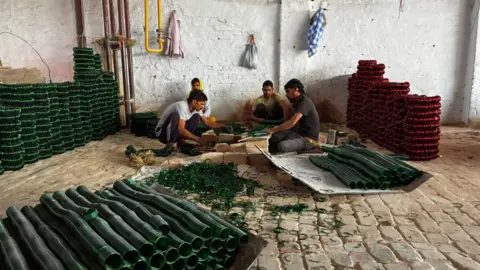
The glass industry crisis reflects broader vulnerabilities in global supply chains and how international conflicts can have unexpected domestic consequences. India's manufacturing sector, while increasingly self-sufficient in many areas, still relies significantly on international trade for critical raw materials. The current situation demonstrates how geopolitical events thousands of miles away can rapidly undermine economic stability and worker welfare in developing nations dependent on global supply chains. These interconnected vulnerabilities have become increasingly apparent in recent years as supply chain disruptions have become more frequent.
Industry experts suggest that several factors exacerbate the vulnerability of India's glass manufacturers to these external shocks. The competitive global glass market leaves limited room for price increases, as manufacturers in India must compete with producers in China, Southeast Asia, and other regions. If Indian manufacturers significantly raise prices to offset higher input costs, they risk losing market share to competitors with better access to cheaper raw materials or lower production costs. This competitive pressure leaves workers vulnerable, as employers have limited options to maintain profitability without reducing workforce size or cutting wages.
Government authorities and industry associations are exploring potential responses to mitigate the crisis. Some discussions focus on identifying alternative suppliers for critical raw materials outside the Middle East region, though finding reliable substitutes with comparable quality and pricing proves challenging. Others advocate for temporary government support or subsidies to help manufacturers weather the cost spike. The Confederation of Indian Industry and glass manufacturer associations have been actively engaging with both government officials and international partners to address the situation.
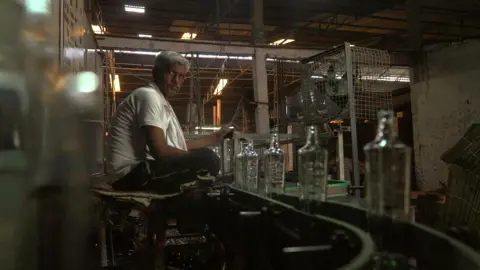
Workers themselves are beginning to organize and advocate for protections. Union representatives argue that government intervention is necessary to prevent mass layoffs and factory closures in affected regions. They call for measures such as temporary wage support programs, job retention incentives for employers, or tariff protection that might help Indian manufacturers maintain competitiveness despite higher input costs. These appeals highlight how geopolitical conflicts can disproportionately impact vulnerable working populations in developing economies.
The situation also raises questions about supply chain resilience and the need for greater diversification of sourcing strategies. Many economists and business analysts suggest that industries like glass manufacturing need to develop more redundant supply chains to protect against disruptions in any single region. This might involve establishing relationships with multiple suppliers across different geographic regions or investing in domestic production capacity for critical materials. However, such investments require capital and long-term planning that many smaller manufacturers cannot undertake individually.
Looking ahead, the trajectory of this crisis will depend on several factors including the duration of Middle East tensions, global shipping rates, energy market dynamics, and government policy responses. If disruptions persist for extended periods, more significant employment losses and factory closures may become inevitable. Conversely, if global conditions stabilize and supply chains normalize, the glass industry may recover relatively quickly, though workers who lost employment or income during the disruption period may face lasting hardship. The coming months will be critical for determining whether India's glass industry and its workers can weather this external shock.
This crisis serves as a poignant reminder of how deeply interconnected the global economy has become and how geopolitical events in distant regions can have immediate and profound impacts on worker welfare and local economies. For the thousands of workers in India's glass industry, the consequences of Middle East tensions are very real and immediate, threatening their ability to support their families. Addressing this challenge will require coordinated action from industry stakeholders, government authorities, and international partners to ensure that workers do not bear the full burden of global supply chain disruptions beyond their control.
Source: BBC News


