
Mini Motorways Players Vote on Next City Map

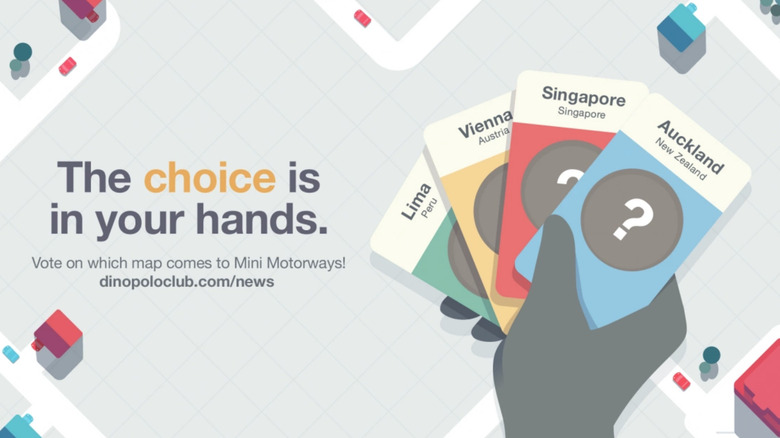
Traffic management sim Mini Motorways lets its community decide the next urban area. The winning city will be added to the game later this year.
Mini Motorways, the addictive traffic management simulation game that has captivated millions of players worldwide, is taking an innovative approach to game development by empowering its community. The developers have announced an exciting new initiative that allows players to directly influence the game's content by voting on which real-world city should become the next playable map in the simulation.
This community-driven approach represents a significant shift in how independent game developers engage with their player base. Rather than making unilateral decisions about which cities to feature, the team behind Mini Motorways has decided to democratize the process, giving fans a genuine voice in shaping the game's future direction. This strategy not only strengthens the relationship between developers and players but also ensures that the new city map will be one that the community genuinely wants to experience.
The voting mechanism is straightforward and accessible to all players, allowing them to cast their ballots for their preferred city map choice. Multiple cities have been selected as viable candidates, each with its own unique geographic characteristics, traffic patterns, and urban layouts that would create distinct gameplay challenges. Players will be able to compare the different options and make informed decisions based on which urban environment they find most compelling or challenging.
The traffic management game has grown exponentially since its initial release, attracting a devoted player community that ranges from casual gamers to serious puzzle enthusiasts. The game's appeal lies in its elegant simplicity combined with genuinely challenging optimization problems—players must design efficient road networks that prevent traffic congestion while working within limited resources and space constraints. Each city in the game presents unique challenges based on its real-world geography, making the voting process particularly significant.
By implementing this player voting system, the developers demonstrate their commitment to community engagement and transparency. The winning city will be carefully studied, analyzed, and recreated within the game's signature minimalist art style, maintaining the visual consistency that has become one of Mini Motorways' most recognizable features. The development team will need to research the actual street layouts, traffic patterns, and geographic constraints of the chosen city to ensure authenticity and gameplay quality.
This approach also provides valuable insights into player preferences and interests. Understanding which cities resonate most with the community helps inform future development priorities and can guide decisions about subsequent updates and expansions. The developers can track engagement metrics, analyze voting patterns, and gather feedback that extends far beyond simple preference data.
The inclusion of the new map is scheduled for sometime later this year, giving the development team adequate time to work on implementation while the voting process generates excitement and anticipation among the player base. This extended timeline also allows for proper quality assurance and refinement, ensuring that the new city addition meets the high standards that players have come to expect. The staggered approach prevents the developers from feeling rushed while maintaining momentum and player engagement.
Mini Motorways' success can be attributed to its addictive gameplay loop, clean aesthetic design, and the intellectual satisfaction that comes from optimizing complex systems. The game appeals to puzzle enthusiasts, urban planning fans, and anyone who enjoys the meditative quality of working through spatial problems. The expanding roster of cities deepens the replay value and gives returning players fresh challenges to overcome.
This voting initiative reflects broader trends in the gaming industry toward greater player agency and community involvement in game development. Successful indie studios have increasingly recognized that players are valuable sources of feedback, inspiration, and creative direction. By involving the community in decision-making processes, developers create a sense of investment and ownership that can strengthen player loyalty and generate organic word-of-mouth marketing.
The candidates for the new city map have likely been selected based on various criteria, including geographic diversity, unique urban characteristics, and feasibility of implementation within the game's mechanics and visual style. Cities with particularly interesting traffic patterns, distinctive layouts, or global appeal probably topped the consideration list. The selection committee would have evaluated each option's potential to offer novel gameplay experiences while remaining true to Mini Motorways' design principles.
As players cast their votes, discussions in online communities, forums, and social media platforms will undoubtedly intensify. Gaming communities thrive on speculation, debate, and shared passion for their favorite titles. The voting period will likely generate significant engagement and organic promotion as players advocate for their preferred cities and engage in friendly competition with supporters of other options.
The successful integration of this new city will serve as validation for the community-driven development model. If the voting system and subsequent implementation go smoothly, it could establish a template for future content additions and become a defining characteristic of how Mini Motorways continues to evolve. The developers may find that regular community voting cycles become an expected and beloved part of the game's update schedule.
Looking ahead, this initiative positions Mini Motorways as a studio that genuinely listens to and values its player community. In an industry sometimes criticized for prioritizing monetization over player satisfaction, such transparent and inclusive approaches stand out. The commitment to implementing community-chosen content demonstrates confidence in the player base's judgment and taste.
For fans eagerly awaiting new content, the opportunity to directly influence which city appears next in the game is an exciting prospect. It transforms passive consumption into active participation, elevating players from mere users to collaborative partners in the creative process. This paradigm shift in how indie games are developed and expanded promises to make the eventual release of the new map feel like a genuine community achievement rather than simply another developer-imposed addition.
Source: Engadget


