
Moscow Closes Airports, Cuts Mobile Signals for Victory Day

Russia intensifies security measures ahead of May 9 Victory Day parade, shutting airports and disrupting mobile internet as drone strike fears mount.
Russia has implemented unprecedented security measures across Moscow as the nation prepares for its most significant annual celebration, the Victory Day parade scheduled for May 9th. The Kremlin's decision to shut down multiple airports and temporarily restrict mobile internet connectivity reflects heightened concerns about potential security threats during this historically important commemoration of Russia's defeat of Nazi Germany during World War II.
On Tuesday, telecommunications providers across the Russian capital began experiencing widespread disruptions as authorities took control of mobile network infrastructure. This dramatic action signals the extent to which Moscow is preparing for what officials view as an exceptionally vulnerable moment. The temporary cuts affected numerous residents and businesses throughout the city, though the exact duration and scope of the disruptions remained unclear. Kremlin officials justified the measure as a necessary precaution to prevent potential interference with drone communications that could be used by Ukrainian forces.
The Victory Day parade represents Russia's foremost national celebration, commemorating the Soviet Union's pivotal role in defeating fascism during World War II. For decades, this event has been characterized by displays of military might, including tanks, missiles, and other heavy weaponry paraded through Moscow's Red Square. However, this year's celebration will mark a dramatic departure from tradition, with authorities announcing that heavy military hardware will be notably absent from the festivities for the first time in nearly two decades.

The decision to scale back the parade's military component directly reflects mounting apprehension about Ukrainian drone strikes targeting Moscow and other Russian cities. Intelligence assessments have increasingly warned about Ukraine's expanding capability to conduct long-range aerial operations, using both commercially modified drones and purpose-built attack systems. These weapons have demonstrated remarkable accuracy in previous strikes against Russian infrastructure and military installations, prompting military planners to reassess security protocols for high-profile public gatherings.
Ukraine has not officially claimed responsibility for specific drone attacks, yet Russian officials have attributed a series of incidents near Moscow and other major cities to Ukrainian operations. The escalating pace and sophistication of these attacks has created genuine anxiety among Russian security forces and civilian leadership. By removing heavy military equipment from the parade route, authorities hope to minimize the potential impact of any attack while still preserving the symbolic importance of the Victory Day celebration.
Airport closures in Moscow have effectively halted civilian air traffic during the period leading up to the parade. Commercial airlines have been forced to cancel or redirect flights, causing significant disruption to travelers and the aviation industry. The airport shutdown demonstrates how thoroughly Russian security agencies are attempting to secure airspace above the capital, preventing any potential aerial incursions that could target the parade or other significant installations in the city.
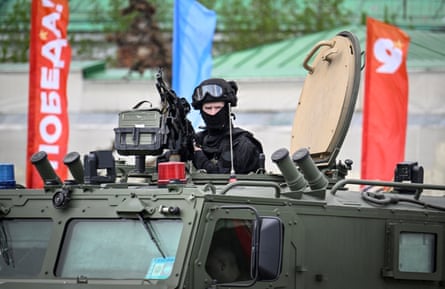
This multi-layered security operation encompasses not only infrastructure closures but also enhanced ground-level defensive measures throughout Moscow. Security forces have implemented checkpoints and increased surveillance in areas surrounding the parade route and other potential targets. The Kremlin has mobilized extensive resources to protect this celebration, recognizing that any successful attack during the event could have profound psychological and symbolic consequences for Russian leadership and public morale.
The tensions surrounding this year's Victory Day parade underscore the escalating military conflict between Russia and Ukraine and its expanding geographical scope. What began as a regional conflict has increasingly involved strikes deep within Russian territory, challenging Moscow's ability to protect its civilian population and maintain normal economic and social activities. The need to restrict internet access and shut down airports for a national holiday demonstrates how profoundly the ongoing war has disrupted Russian civilian life.
Cybersecurity and communications infrastructure have become critical vulnerabilities that Russian authorities must address. Drone attacks increasingly rely on stable network connectivity and satellite positioning systems, making the disruption of mobile networks a logical defensive measure. However, cutting off civilian communications also imposes substantial costs on the Russian economy and population, illustrating the difficult tradeoffs that emerge during extended military conflicts.
The modified Victory Day parade also reflects broader changes in how Russia is conducting military operations and public relations during the conflict. Rather than projecting maximum military strength through hardware displays, organizers have opted for a more modest presentation that prioritizes security and safety. This represents a significant symbolic shift for a celebration that has traditionally been used to demonstrate Russia's military capabilities and resolve.
International observers have noted that the changes to this year's Victory Day arrangements provide insights into Russian strategic thinking and vulnerabilities. The fact that authorities feel compelled to implement such dramatic security measures suggests genuine concern about Ukraine's capabilities and intentions. Defense analysts have pointed out that the absence of heavy military hardware from the parade removes targets that could attract long-range attack systems.
Moscow residents and businesses are experiencing the direct consequences of these security preparations, with disrupted travel plans and interrupted communications creating frustration and uncertainty. The civilian population has largely accepted these measures as necessary precautions, though the broader implications of such disruptions raise questions about how long Russia can sustain this level of internal security mobilization without creating serious economic and social costs.
The Victory Day parade, despite its modified format, continues to carry immense symbolic importance for Russian national identity and historical memory. The commemoration of Soviet sacrifices during World War II remains a powerful rallying point for Russian society, transcending partisan political divisions. However, this year's celebration occurs against a backdrop of ongoing conflict that has transformed how Russians experience their most important national holiday.
Looking forward, the security measures implemented for this Victory Day parade may establish precedents for how Russia manages other significant public events during the conflict. If Ukrainian drone capabilities continue to improve and extend their range, similar restrictions on civilian infrastructure may become more routine rather than exceptional occurrences. This possibility raises important questions about the long-term sustainability of Russian society under conditions of extended military conflict.
Source: The Guardian


