
Moscow's Victory Day Parade Transformed Amid Global Tensions

BBC Russia editor Steve Rosenberg reports on a dramatically different Red Square celebration, notably absent of military hardware typically used by the Kremlin to project power.
The annual Victory Day parade in Moscow underwent a remarkable transformation this year, presenting a starkly different spectacle from what observers have grown accustomed to witnessing in previous celebrations. Steve Rosenberg, the BBC's seasoned Russia editor, provided firsthand observations from Red Square, documenting the conspicuous absence of the military hardware that has traditionally dominated the Kremlin's showcase of national strength and international power projection. The shift in the parade's composition reflects broader geopolitical dynamics and shifting priorities within Russia's leadership.
Victory Day, commemorating the Soviet Union's victory over Nazi Germany in World War II, has long served as one of Russia's most significant national celebrations. The parade traditionally features an elaborate display of military might, with tanks, armored vehicles, and sophisticated weaponry rolling across the historic cobblestones of Red Square while military personnel march in formation. However, this year's event presented a notably different character, with organizers opting for a significantly scaled-back military demonstration compared to the elaborate displays of previous years.
The absence of heavy military hardware from this year's parade carries significant implications regarding Russia's current strategic positioning and military resource allocation. Observers and analysts have pointed to various factors that may have influenced the decision to modify the traditional parade format, including ongoing military commitments, resource constraints, and the broader international context surrounding Russia's actions. The decision to reduce the prominence of military equipment in the celebration speaks volumes about the current state of affairs in Moscow and the Kremlin's calculated approach to public messaging.
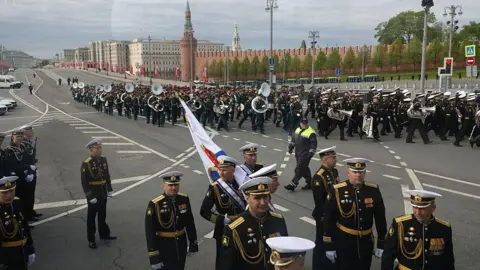
Rosenberg's reporting from the scene provided critical insights into how this year's celebration differed fundamentally from its predecessors. The BBC journalist's observations highlighted that while the patriotic spirit of the commemoration remained intact, the specific mechanisms through which the Kremlin traditionally projected its power and military capabilities underwent substantial modification. The parade maintained its ceremonial significance while adopting a more restrained approach to the display of military strength that has historically been a central feature of the event.
The traditional Red Square parade has served multiple purposes beyond mere commemoration of historical events. For decades, it has functioned as a platform for demonstrating military capabilities to both domestic and international audiences, reinforcing narratives about national strength and security prowess. The modification of this year's format represents a departure from this well-established pattern, suggesting either a strategic reassessment by the Kremlin or practical constraints affecting the organization and execution of the event. Understanding these underlying factors requires examining the broader context of Russia's current geopolitical situation.
The Kremlin's power projection strategy has historically relied heavily on visual demonstrations of military capability during public celebrations and commemorative events. The distinctive rumble of tanks crossing Red Square and the impressive displays of advanced weaponry have become iconic images associated with Russian Victory Day celebrations, broadcast internationally and utilized to reinforce messages about national military strength. The decision to reduce or eliminate these displays represents a notable strategic shift that warrants careful analysis from international observers and geopolitical experts.
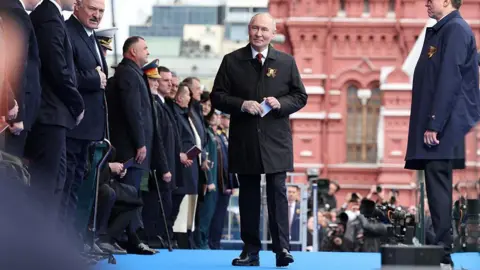
Various factors may have contributed to the modifications observed in this year's Victory Day celebration. Analysts have noted that ongoing military engagements and commitments may have necessitated the reallocation of resources and equipment, potentially limiting what was available for parade purposes. Additionally, diplomatic considerations and the international response to Russia's actions may have influenced decision-making regarding how to stage the commemoration in a manner that aligned with broader strategic objectives while maintaining domestic support and patriotic sentiment.
The symbolic significance of Victory Day within Russian culture cannot be overstated, as the commemoration extends far beyond a simple historical remembrance. The event functions as a crucial component of national identity, serving to unite the population around shared historical narratives and collective pride in Soviet achievements during World War II. The modifications to this year's parade do not appear to have diminished this underlying cultural importance, even as the specific mechanisms through which power has traditionally been demonstrated have undergone substantial change.
International observers and geopolitical analysts have closely monitored this year's parade as a potential indicator of Russian strategic thinking and current capabilities. The absence of traditional military hardware displays may be interpreted in various ways, depending on one's analytical perspective and assessment of Russia's current situation. Some analysts view the change as reflective of constraints or challenges, while others suggest it may represent a deliberate strategic choice aligned with broader objectives and messaging priorities established by Kremlin leadership.
The Red Square celebration continued to feature patriotic elements, including military marches, historical commemorations, and expressions of national pride despite the reduced military hardware presence. Veterans and military personnel still participated in the procession, maintaining the ceremonial dignity and historical respect that characterizes the observance. The event remained a significant date on Russia's national calendar, even as its specific character and emphasis underwent notable transformation from previous years' iterations.
Rosenberg's detailed reporting from the scene provided Western audiences with crucial insights into how contemporary Russian leadership approaches public commemoration and national celebration. The BBC's coverage highlighted that despite the modifications to parade composition, the underlying patriotic sentiment and connection to historical memory remained central to the observance. The shift in presentation strategy reflects a more nuanced approach to demonstrating national strength that diverges from the traditional emphasis on overt military capability displays.
Looking ahead, the implications of this year's modified Victory Day parade may extend beyond the single event itself, potentially indicating broader shifts in how Russian leadership approaches public presentations of military strength and national power. Strategic communication through public events like the Victory Day parade serves important functions in shaping domestic narratives and international perceptions, making the specific choices regarding what to display and emphasize particularly significant from analytical perspectives. The transformation observed this year may represent either a temporary adjustment to current circumstances or a more permanent strategic recalibration in how Russia chooses to commemorate its military history and demonstrate national strength on the world stage.
As international relations continue to evolve and Russia navigates complex geopolitical challenges, the manner in which the nation chooses to stage public commemorations and celebrate its military history will remain an important subject of scrutiny and analysis. The Victory Day parade, with its deep historical roots and cultural significance, continues to serve as a barometer of Russian state messaging and strategic priorities. The significant departures from traditional format observed this year underscore the dynamic nature of international affairs and the ways in which global events shape how nations present themselves to their own populations and the wider world.
Source: BBC News


