
Mugabe's Son Deported From South Africa After Guilty Plea

Bellarmine Chatunga Mugabe faces deportation from South Africa following guilty plea to firearms and immigration charges, unrelated to shooting incident.
Robert Mugabe's youngest son, Bellarmine Chatunga Mugabe, has been ordered to leave South Africa after entering guilty pleas to immigration and firearms-related offences. The 28-year-old faced fines and deportation proceedings following his admission of guilt in court, marking a significant development in a case that has drawn international attention due to his family's prominence in Zimbabwean politics and history.
The legal proceedings concluded three months after a dramatic incident at the Mugabe family residence located in an affluent Johannesburg suburb, where an employee suffered a gunshot wound to the back. Despite the timing of the shooting and the subsequent court cases, the charges to which Bellarmine pleaded guilty are entirely separate matters unrelated to that violent incident. The distinction between the two cases has been carefully maintained throughout the legal process, underscoring the complexity of the situation.
Initially, both Bellarmine Chatunga Mugabe and his cousin Tobias Mugabe Matonhodze, aged 33, were charged with attempted murder in connection with the February 19 shooting incident at the family home. However, the case has since evolved significantly, with separate charges emerging against the younger Mugabe regarding his failure to comply with immigration regulations and his violation of South African firearms legislation.

The decision to pursue deportation of Bellarmine Chatunga Mugabe represents a significant escalation in consequences for the young man, who has maintained residency in the country despite his family's controversial history. South African immigration authorities have moved swiftly to enforce compliance with the nation's strict residency and legal requirements, particularly regarding the possession and handling of firearms within the country. The deportation order effectively ends his legal right to remain in South Africa, forcing him to return to Zimbabwe or seek residence elsewhere.
Bellarmine's legal troubles in South Africa have proven extensive and multifaceted, reflecting broader challenges faced by members of the Mugabe family since their exodus from Zimbabwe. The family fled the country following Robert Mugabe's ousting in 2017 after nearly four decades of authoritarian rule, with many members establishing themselves in neighboring South Africa. However, their presence has repeatedly drawn scrutiny from local authorities and has frequently resulted in legal complications and diplomatic tensions.
The circumstances surrounding the shooting at the family residence in February shocked residents of the upscale Johannesburg neighborhood where the Mugabes had established their South African base. An employee of the household was struck by gunfire in what witnesses described as a disturbing act of violence, prompting immediate police investigation and media attention. The severity of the incident—a shooting at a residential property in a secure neighborhood—initially suggested serious criminal charges would follow for those responsible.
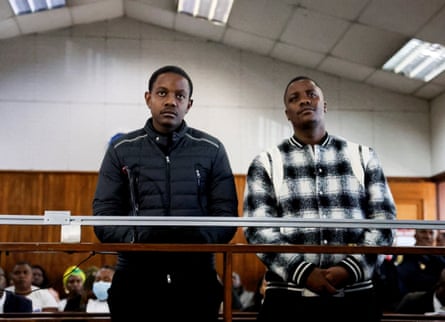
However, the evolution of the case demonstrated the complexity inherent in high-profile criminal investigations involving prominent international figures. The attempted murder charges that initially seemed likely to dominate the legal proceedings were ultimately superseded by separate charges involving regulatory violations. This shift has raised questions about the trajectory of the investigation and the evidence available to prosecutors regarding the actual shooting incident.
The guilty plea by Bellarmine to the immigration and firearms offences represents a strategic legal decision, potentially limiting his exposure to more serious criminal charges related to the shooting. By accepting responsibility for the regulatory violations, he may have negotiated a resolution that addresses the country's immigration and firearms concerns while avoiding the significantly greater legal jeopardy posed by attempted murder allegations. Legal experts have noted that such plea agreements can be strategically advantageous when evidence in more serious cases may be ambiguous or difficult to prosecute successfully.
The fine imposed on Bellarmine Chatunga Mugabe serves as additional punishment beyond the deportation order, further emphasizing South African authorities' commitment to enforcing the nation's laws regardless of a defendant's family background or international prominence. The financial penalty, combined with the forced departure from the country, represents substantial consequences for the young man, effectively dismantling his established life in Johannesburg and forcing significant personal and professional disruption.
The case of Bellarmine Chatunga Mugabe exemplifies the ongoing challenges faced by members of deposed African leaders' families who attempt to establish new lives abroad. The Mugabe family's experience in South Africa demonstrates that even relocated to relative safety and prosperity, such families remain subject to intense legal scrutiny and cannot rely upon their historical status or connections to shield them from ordinary legal accountability. The willingness of South African authorities to pursue enforcement action against the son of one of Africa's most controversial political figures underscores the independence of the South African judicial system.
The deportation proceeding also reflects broader regional concerns regarding security and the regulation of firearms within South Africa. The nation has struggled with gun violence and illegal weapons proliferation, prompting strict enforcement of firearms regulations. The decision to pursue charges against Bellarmine regarding firearms violations demonstrates that these regulations are applied universally, regardless of whether the defendant is a foreign national or member of a politically prominent family.
As Bellarmine Chatunga Mugabe faces deportation from South Africa, the situation highlights the precarious position occupied by many members of exiled African political families. Without the protection of official status or diplomatic immunity, such individuals remain vulnerable to ordinary criminal and administrative law enforcement. The case suggests that geographical distance from one's homeland does not necessarily provide escape from legal consequences or the complications that can arise from conflicts and regulatory violations.
The resolution of Bellarmine's charges regarding immigration and firearms violations does not necessarily conclude the investigation into the February shooting at the family residence. The apparent separation between these cases suggests that the attempted murder inquiry may continue independently, potentially yielding additional developments or charges in the coming months. South African law enforcement has demonstrated commitment to thoroughly investigating the incident, and further actions cannot be excluded as the investigation progresses.
Looking forward, the deportation of Bellarmine Chatunga Mugabe establishes a significant precedent regarding the treatment of prominent exiled families under South African law. The case demonstrates that residence in South Africa, even in wealthy and secure neighborhoods, does not exempt individuals from strict legal compliance and enforcement. The outcome will likely influence how South African authorities approach similar situations involving other members of exiled political families who have attempted to establish residency within the country's borders.
Source: The Guardian


