
Musk Vs. Altman: Trial Over OpenAI's Future

Elon Musk sues Sam Altman over OpenAI's nonprofit mission. Trial could reshape AI industry and determine the company's future direction and structure.
The artificial intelligence world is bracing for a landmark legal battle that could fundamentally reshape how one of the industry's most influential organizations operates. This week, a highly publicized trial begins where Elon Musk will attempt to prove that OpenAI, under the leadership of Sam Altman, has deliberately abandoned its original mission to remain a nonprofit organization dedicated to ensuring that advanced artificial intelligence benefits humanity broadly rather than enriching a select group of billionaires.
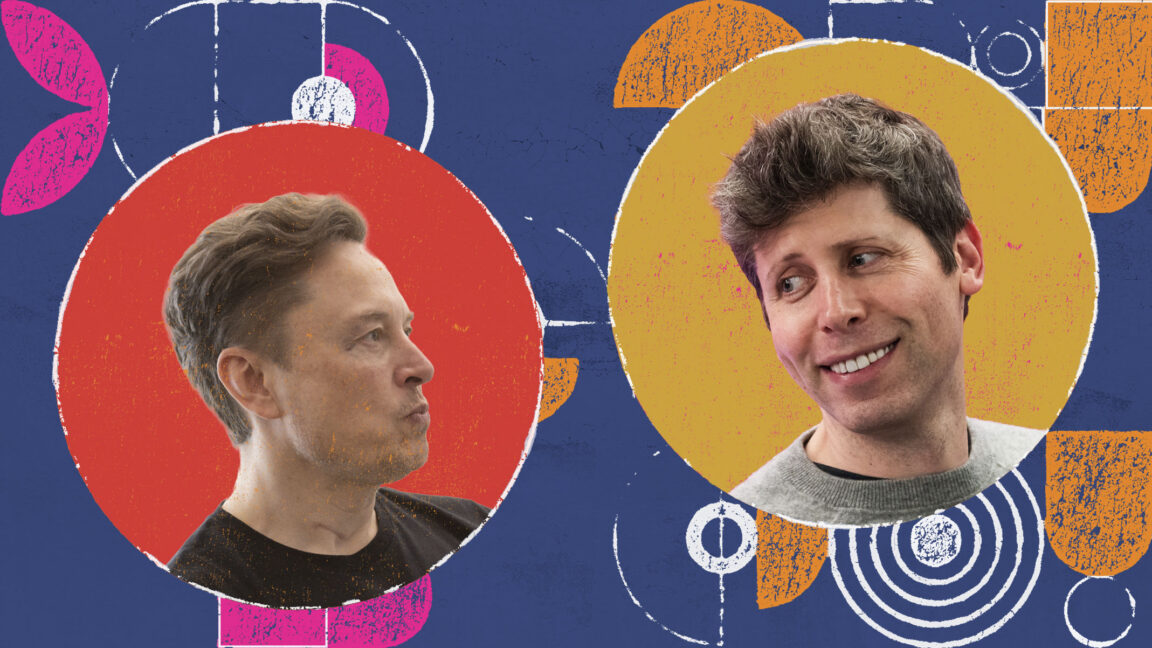
On the surface, observers have characterized this legal showdown as a high-profile clash of egos between two titans of technology and business. Musk, who co-founded OpenAI and served as an influential early advisor and major financial contributor, departed from the organization years ago amid disagreements about its strategic direction. Altman, by contrast, has risen to become the public face and chief executive of OpenAI, positioning the company as a leader in artificial intelligence development. However, recent reports suggest that internal discord within the organization has created growing skepticism among insiders regarding Altman's genuine commitment to preserving OpenAI's original nonprofit principles and its stated mission to benefit humanity.
Yet this litigation extends far beyond a personal vendetta between two billionaires with competing visions and bruised egos. The outcome of this trial carries extraordinary implications for the broader technology landscape and the future of AI innovation. The court's ruling could fundamentally alter how OpenAI operates as an organization, determine what resources the company has available to pursue its stated humanitarian mission, and establish important precedents for how other AI companies balance profit motives with social responsibility.

Should Musk prevail in his legal challenge, the consequences for OpenAI could be severe and far-reaching. The organization's ambitious plans to establish and expand a for-profit subsidiary that would generate revenue to sustain and fund the nonprofit parent organization could be effectively eliminated. This arrangement had been central to OpenAI's long-term financial strategy, allowing the company to attract investment capital while theoretically maintaining its nonprofit mission at the organizational core. Losing this capability would fundamentally constrain the company's growth potential and its ability to pursue expensive research initiatives.
Beyond financial implications, a victory for Musk could result in significant personnel changes within OpenAI's leadership structure. Greg Brockman, who serves alongside Altman in a senior leadership role, could be removed from his position as an officer of the company. Most dramatically for Altman personally, he faces the possibility of losing his seat on OpenAI's board of directors, effectively stripping him of governance authority and decision-making power within the organization he currently leads as chief executive.
The dispute highlights fundamental questions about the nature of OpenAI's organizational structure and the tension between its stated mission and its operational reality. When OpenAI was founded, its charter explicitly committed the organization to developing artificial intelligence in a way that would benefit humanity as a whole, with safeguards against the concentration of AI power among wealthy individuals or corporations. The nonprofit structure was meant to embody this commitment, theoretically shielding the organization from pressure to maximize profits at the expense of safety and ethical considerations.
However, as OpenAI has grown into one of the world's most valuable and influential AI companies, tensions have emerged between maintaining this idealistic mission and the practical realities of competing in a competitive technology landscape. The development of ChatGPT and other commercial products generated significant revenue and raised questions about whether OpenAI was straying from its original purpose. The creation of the for-profit subsidiary structure represented an attempt to reconcile these competing pressures, theoretically allowing OpenAI to access capital markets while maintaining nonprofit governance.
Musk's lawsuit challenges whether this arrangement truly serves the stated mission or whether it has become a mechanism for prioritizing commercial interests over humanitarian concerns. The trial will likely involve extensive testimony about OpenAI's internal decision-making processes, strategic planning documents, and communications between leadership about how the organization's priorities have evolved. Legal experts anticipate that the proceedings will shed light on previously private disagreements about the company's direction and the motivations driving key decisions.
The broader AI industry is watching this case closely because it could establish important precedents about how AI companies can be structured and governed. If courts rule that OpenAI has violated its nonprofit charter and mission, it could influence how other AI organizations approach governance and corporate structure. Alternatively, if the court determines that OpenAI's current structure appropriately balances mission and pragmatic business needs, it could provide a template that other organizations might adopt.

The case also reflects broader societal concerns about the concentration of power in the hands of a small number of organizations and individuals in the rapidly growing field of artificial intelligence. As AI systems become increasingly powerful and influential in society, questions about who controls these systems and what values they embody become increasingly important. OpenAI's original mission was framed as a response to concerns that AI development might be dominated by profit-motivated corporations with little concern for broader social implications.
Industry observers note that the lawsuit arrives at a critical juncture for OpenAI and the entire artificial intelligence sector. The company faces intensifying competition from other well-funded AI research organizations, including those backed by major technology companies like Google and Microsoft. Regulatory scrutiny of AI companies is increasing globally, with governments and policymakers demanding greater transparency and accountability. Against this backdrop, questions about OpenAI's core mission and governance structure take on heightened significance.
The trial will likely generate significant media attention and public interest given the prominence of the individuals involved and the importance of the underlying questions. Legal observers expect the proceedings to reveal details about OpenAI's internal workings and the disagreements that have shaped its evolution into one of the most influential AI organizations in the world. The outcome will have implications not only for the parties involved but for the entire ecosystem of artificial intelligence companies and their approach to balancing innovation, profit, and social responsibility.
As the trial unfolds in the coming weeks and months, the decisions made by the court will likely reverberate throughout the technology industry and influence how companies approach similar questions about mission, governance, and the appropriate balance between commercial and humanitarian objectives. The case represents a pivotal moment in the history of artificial intelligence as an industry and raises fundamental questions about how societies should govern the development of increasingly powerful technologies.
Source: Ars Technica


