
NASA May Delay Artemis II Moon Mission Over Helium Issue

NASA considers rolling back Artemis II rocket after discovering helium flow problems, potentially delaying the March 6 crewed lunar mission launch date.
The National Aeronautics and Space Administration has announced potential setbacks for its highly anticipated Artemis II mission following the discovery of critical technical issues with the spacecraft's systems. The space agency revealed in an official blog post that engineers have identified an interrupted helium flow that could compromise the safety and success of the upcoming lunar mission. This development comes just 24 hours after NASA had confidently announced March 6 as the target launch date for the ambitious crewed mission that aims to send astronauts around the moon for the first time since the Apollo era.
The helium flow disruption represents a significant technical challenge that has prompted NASA officials to consider rolling back the massive rocket system to the Vehicle Assembly Building at Kennedy Space Center in Florida. Helium plays a crucial role in spacecraft operations, serving as a pressurization agent for fuel systems and various other critical components. Any interruption in helium flow could potentially lead to catastrophic failures during launch or while the crew is en route to lunar orbit, making this discovery a top priority for NASA's engineering teams.
NASA's decision to potentially move the Artemis II rocket and Orion spacecraft back to the assembly facility demonstrates the agency's unwavering commitment to astronaut safety and mission success. The Vehicle Assembly Building, one of the largest buildings in the world by volume, serves as the primary location where technicians can conduct comprehensive inspections, repairs, and system tests on the massive Space Launch System rocket and its accompanying Orion crew capsule.
The Artemis program represents NASA's most ambitious human spaceflight initiative in decades, designed to return American astronauts to the moon and establish a sustainable presence on the lunar surface. Artemis II specifically serves as the first crewed test flight of the Orion spacecraft, carrying four astronauts on a journey around the moon without landing. This mission is intended to validate the spacecraft's life support systems, navigation capabilities, and overall performance with humans aboard before attempting the more complex Artemis III lunar landing mission.
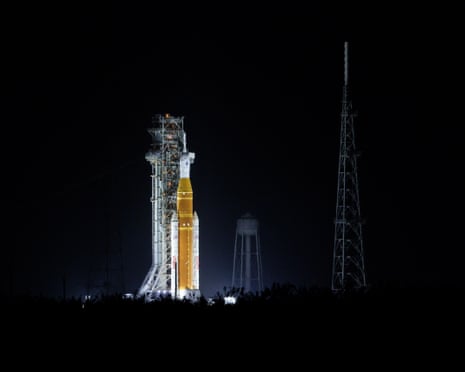
The timing of this technical setback is particularly challenging for NASA, as the agency has been working diligently to maintain momentum in the Artemis program following the successful completion of the uncrewed Artemis I mission in late 2022. That inaugural flight demonstrated the capabilities of both the Space Launch System rocket and the Orion spacecraft during a comprehensive test that included a lunar flyby and ocean splashdown. The success of Artemis I had generated significant excitement and confidence for the upcoming crewed mission.
Kennedy Space Center engineers and technicians are now faced with the complex task of diagnosing and resolving the helium flow issue while minimizing delays to the overall mission timeline. The process of rolling back the rocket to the Vehicle Assembly Building is itself a major undertaking, requiring careful coordination and the use of specialized crawler-transporter vehicles that slowly move the assembled rocket stack from the launch pad to the assembly facility.
Industry experts suggest that helium system problems can range from relatively minor valve issues to more complex problems involving pressurization lines, regulators, or storage tanks. The specific nature of the interrupted flow discovered in the Artemis II system will ultimately determine the extent of repairs needed and the duration of any potential delay. NASA's engineering teams have extensive experience troubleshooting such issues, having dealt with similar challenges throughout the space shuttle program and other major spaceflight initiatives.
The four astronauts selected for the Artemis II crew – including NASA's Reid Wiseman, Victor Glover, and Christina Hammock Koch, along with Canadian Space Agency's Jeremy Hansen – have been training intensively for this historic mission. These experienced space professionals understand the inherent risks and complexities of pioneering spaceflight missions and have expressed full support for NASA's cautious approach to ensuring mission safety and success.
The potential delay of Artemis II could have broader implications for NASA's ambitious timeline for returning humans to the lunar surface. The agency's current plans call for Artemis III to achieve the first crewed lunar landing since Apollo 17 in 1972, with subsequent missions establishing a permanent human presence on the moon. Any significant delays to Artemis II would likely cascade through the entire program, potentially pushing back these historic milestones.
Congressional oversight committees and NASA's international partners, including the European Space Agency, Japan Aerospace Exploration Agency, and Canadian Space Agency, are closely monitoring the situation. The Artemis program represents a substantial investment of public resources and international cooperation, making the successful resolution of technical issues crucial for maintaining political and public support for lunar exploration initiatives.
NASA officials emphasize that discovering and addressing technical issues during pre-flight preparations is far preferable to encountering problems during the mission itself. The agency's methodical approach to spaceflight safety, refined through decades of human spaceflight experience, prioritizes thorough ground-based testing and problem resolution over adherence to arbitrary launch schedules.
The Space Launch System, NASA's most powerful rocket ever built, incorporates numerous complex systems that must function flawlessly during the critical phases of launch and flight. Helium systems are integrated throughout the vehicle, supporting everything from engine pressurization to spacecraft separation mechanisms. Engineers must now determine whether the interrupted flow affects a single component or represents a more systemic issue requiring extensive repairs or component replacement.
Weather considerations at Kennedy Space Center also factor into NASA's decision-making process regarding the potential rollback. Florida's coastal location subjects launch operations to seasonal weather patterns, including thunderstorms, hurricanes, and high winds that can impact both launch attempts and the movement of rockets between facilities. The agency must balance technical repair timelines with favorable weather windows for both facility transfers and eventual launch attempts.
Public interest in the Artemis program remains exceptionally high, with millions of people worldwide eagerly anticipating humanity's return to lunar exploration. Social media platforms and space enthusiast communities have been closely following every development in the mission preparation process. While some disappointment is inevitable if launch delays occur, the space community generally supports NASA's conservative approach to crew safety and mission success.
The economic implications of potential delays extend beyond NASA's budget to encompass the numerous contractors and suppliers involved in the Artemis program. Companies like Boeing, which built the Space Launch System core stage, Lockheed Martin, responsible for the Orion spacecraft, and countless smaller suppliers have invested heavily in supporting the program's aggressive timeline. Extended delays could impact workforce planning and resource allocation across the aerospace industry.
Historical precedent suggests that complex human spaceflight programs inevitably encounter technical challenges that require careful resolution. The Apollo program faced numerous setbacks, including the tragic Apollo 1 fire that claimed three astronauts' lives and led to extensive safety improvements. The space shuttle program experienced multiple delays and technical issues throughout its operational history. NASA's institutional knowledge from these experiences informs the agency's current approach to problem-solving and risk management.
As NASA continues evaluating the helium flow issue and potential solutions, the agency maintains regular communication with stakeholders, including the White House, Congress, international partners, and the public. Transparency in addressing technical challenges helps maintain confidence in the agency's capabilities and commitment to mission success. Regular updates through official channels ensure that accurate information reaches interested parties while avoiding speculation and misinformation.
The resolution of this technical setback will ultimately demonstrate NASA's engineering capabilities and commitment to human spaceflight safety. Whether the helium flow issue proves to be a minor delay or a more significant challenge, the agency's response will set important precedents for handling future technical problems in the Artemis program and beyond. The successful completion of Artemis II, whenever it occurs, will mark a crucial milestone in humanity's return to deep space exploration and the establishment of a sustainable lunar presence.
Source: The Guardian


