
NASA Prepares Astronauts for 2028 Moon Landing

NASA begins training astronauts with Blue Origin's prototype lunar lander ahead of planned 2028 crewed moon mission. New details on crew preparation.
NASA is advancing its ambitious timeline to return humans to the lunar surface, announcing that it will commence comprehensive training operations using Blue Origin's prototype crew moon lander. The space agency has set an ambitious target of 2028 for putting astronauts back on the moon, marking a significant milestone in the Artemis program's mission to establish sustained human presence on Earth's nearest celestial neighbor.
The training initiative represents a critical phase in NASA's lunar exploration strategy, bringing together decades of spaceflight experience with cutting-edge commercial spacecraft technology. By partnering with Blue Origin, a company founded by Jeff Bezos, NASA is leveraging private sector innovation to accelerate the timeline for crewed lunar missions. This collaboration underscores the growing importance of public-private partnerships in space exploration and demonstrates how commercial companies are becoming integral to achieving national space objectives.
The prototype lunar lander that astronauts will train with is specifically designed to meet NASA's stringent safety and operational requirements for transporting crew members from lunar orbit to the moon's surface and back. Engineers from both NASA and Blue Origin have worked extensively to ensure the spacecraft meets all technical specifications necessary for human spaceflight. The design incorporates advanced life support systems, redundant safety mechanisms, and sophisticated navigation technology to guarantee crew safety during descent and ascent operations.
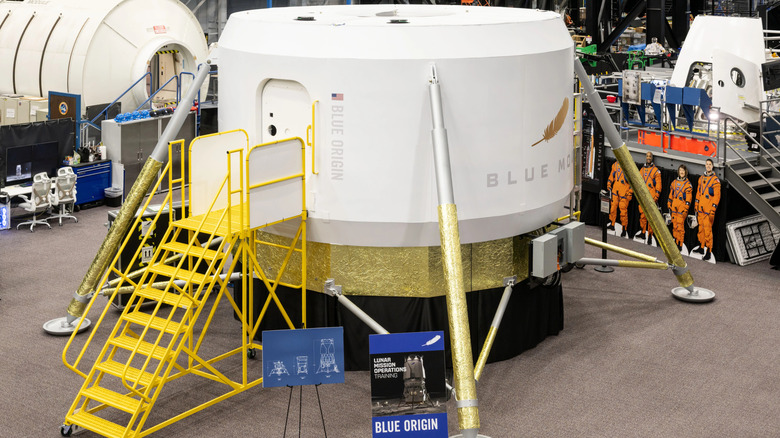
Training with the prototype will expose astronauts to the unique operational characteristics and handling procedures specific to Blue Origin's crew lunar lander design. Astronauts will participate in simulated missions that replicate various scenarios they might encounter during actual lunar operations, including emergency procedures, system malfunctions, and contingency protocols. This hands-on preparation is essential for ensuring that when the actual mission launches, crew members possess the muscle memory and decision-making capabilities necessary to handle any situation that might arise.
The 2028 target date represents an aggressive but achievable goal within the broader Artemis framework. NASA has systematically worked toward this objective through a series of uncrewed test flights and incremental mission milestones that validate each component of the lunar return infrastructure. The timeline reflects confidence in both NASA's management of the program and the readiness of commercial partners like Blue Origin to deliver flight-ready hardware within the established schedule. This pace is considerably faster than previous lunar exploration timelines, thanks largely to streamlined development processes and technological advances since the Apollo era.
The partnership between NASA and Blue Origin exemplifies how the space agency is leveraging commercial spaceflight capabilities to achieve national objectives. Blue Origin's New Shepard and New Glenn vehicles are contributing to a broader ecosystem of commercial space capabilities that support NASA's exploration agenda. The company's experience in rocket propulsion, spacecraft systems, and crew operations makes it well-positioned to develop and operate the lunar lander technology required for sustained lunar activities.
The crew training program will be conducted at facilities equipped with high-fidelity simulators and mockups of the actual lander configuration. NASA's astronauts will work with Blue Origin engineers to develop comprehensive training curricula that address every aspect of lunar landing operations. These training sessions will progressively increase in complexity, starting with basic systems familiarization and advancing to full-mission simulation scenarios that incorporate timeline pressures and multiple simultaneous challenges.
Historical context adds significance to this initiative, as it marks a return to lunar exploration after a fifty-year absence of human missions to the moon. The last crewed lunar landing occurred during Apollo 17 in 1972, making the upcoming 2028 mission a historic turning point for human space exploration. The intervening decades have witnessed tremendous advances in robotics, automation, artificial intelligence, and materials science that will enhance the capabilities and safety of modern lunar missions compared to their Apollo-era predecessors.
Safety remains the paramount concern throughout every phase of NASA's lunar return program. The agency has implemented rigorous testing protocols and maintains strict oversight of all lunar mission components, from the lander itself to support systems and crew equipment. Blue Origin's development process includes extensive ground testing, uncrewed flight tests, and progressive validation missions designed to systematically reduce technical risk before human crews are ever placed aboard.
The training initiative also reflects NASA's commitment to selecting and preparing the most capable astronauts for lunar exploration missions. The space agency's astronaut corps includes individuals with diverse backgrounds in engineering, medicine, military operations, and scientific research. These highly trained professionals bring complementary skill sets that will be essential for conducting complex scientific investigations and construction activities on the lunar surface.
Beyond the immediate goal of reaching the moon by 2028, these training efforts lay groundwork for extended lunar surface operations and eventual human missions to Mars. NASA views the moon as a testing ground and staging area for developing technologies and operational procedures that will be necessary for deeper space exploration. The experience gained through multiple lunar missions will inform designs for advanced spacecraft, habitat systems, and life support technologies required for longer-duration missions beyond low Earth orbit.
The economic implications of this space program are substantial, generating high-skilled employment and advancing technological innovation across multiple sectors. Companies working on components of the lunar mission infrastructure, from propulsion systems to communications equipment, represent thousands of American jobs in engineering, manufacturing, and research and development. The multiplier effects of space program spending extend throughout regional economies as contractors and suppliers support the core mission objectives.
International cooperation and competition shape the context of NASA's accelerated lunar timeline. Other spacefaring nations, including China and Russia, have advanced their own lunar programs and demonstrated increasing capabilities for reaching the moon. The United States' commitment to returning humans to lunar orbit and surface within the 2028 timeframe reflects both national priorities and competitive dynamics in space exploration. Establishing American presence and demonstrating capabilities ahead of other nations carries geopolitical significance beyond the purely scientific dimensions of lunar exploration.
The successful completion of NASA's lunar training program with Blue Origin's prototype represents a crucial validation point before operational missions commence. By investing in thorough preparation now, the space agency maximizes the probability of mission success and crew safety. As astronauts begin working with the lunar lander prototype, they become the public face of this extraordinary technological achievement, embodying humanity's continuing aspiration to explore worlds beyond our own.
Source: Engadget


