
NASA's DART Shifts Asteroid Orbit, Reshaping Solar System Trajectory

DART spacecraft's intentional impact on asteroid Dimorphos resulted in not just altering the moonlet's orbit, but the entire binary system's trajectory around the Sun, a remarkable feat in planetary defense.
NASA's Double Asteroid Redirection Test (DART) spacecraft, which intentionally rammed into the asteroid Dimorphos in September 2022, has achieved an even more remarkable feat than initially reported. Not only did the impact successfully alter the orbit of the 160-meter-wide moonlet, but it has also shifted the trajectory of the entire Didymos binary asteroid system around the Sun.
When the DART spacecraft crashed into Dimorphos, the smaller of the two asteroids in the Didymos system, it reduced the moonlet's orbital period around its parent body by a staggering 33 minutes. This demonstrated the viability of the kinetic impact method as a viable planetary defense strategy against potentially hazardous asteroids. However, the long-term observational data has now revealed an even more significant accomplishment.
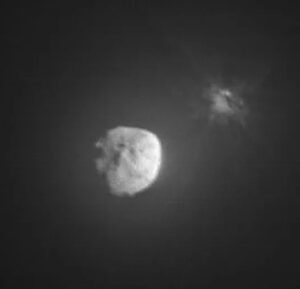
Measuring the precise orbital shift of a 780-meter-wide primary asteroid and its moonlet from millions of miles away is an immensely challenging task. But by analyzing the painstakingly gathered data over the months following the impact, scientists have determined that the DART mission has altered the entire Didymos binary system's trajectory around the Sun.
This is a remarkable achievement in the field of planetary defense, as it shows that a targeted kinetic impact can not only change the orbit of a specific asteroid but can also influence the trajectory of the entire system. This has significant implications for future asteroid deflection strategies, as it suggests that even a small nudge can have far-reaching consequences on the celestial bodies' paths through the Solar System.
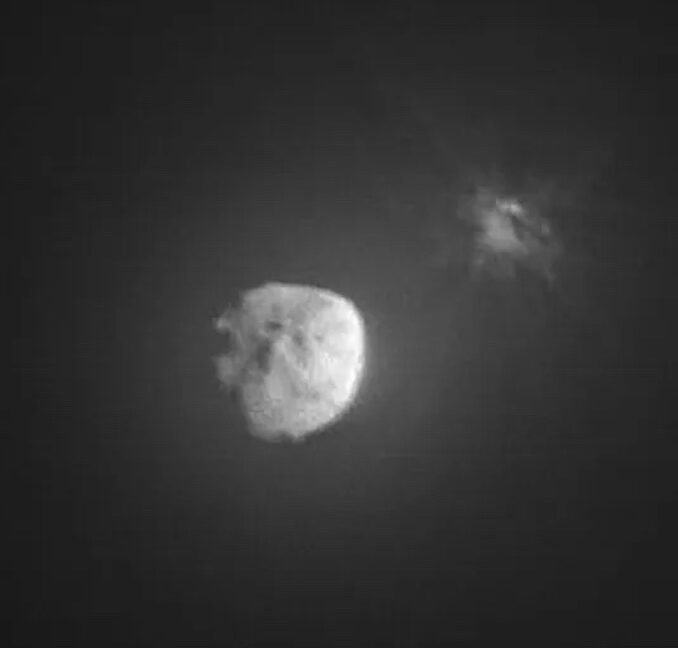
The shift in the Didymos binary system's heliocentric trajectory is expected to be relatively small, a minuscule nudge that will become more apparent over time with continued observations. However, the fact that DART was able to achieve this remarkable feat is a testament to the precision and effectiveness of the mission's execution.
This development in the DART mission's results underscores the importance of continuous monitoring and observation of near-Earth objects. By closely tracking the movement of asteroids and their interactions, scientists can better understand the complex dynamics at play and refine their planetary defense strategies accordingly.

The DART mission has not only demonstrated the feasibility of the kinetic impact method for asteroid deflection but has also revealed the far-reaching consequences of such an intervention. As humanity's first attempt at intentionally altering the trajectory of a celestial body, this achievement represents a significant milestone in the ongoing efforts to protect our planet from potential asteroid threats.
Source: Ars Technica


