
NASA's HD Moon Landing Broadcasts: Inside the Tech

Discover how NASA is upgrading Artemis II mission broadcasts from standard video to stunning HD quality using cutting-edge laser communications technology.
During the Artemis II mission, four astronauts experienced an extraordinary journey to the Moon, transmitting footage back to Earth that captivated audiences worldwide. However, much of the video received during the mission operated at low-definition quality, capturing both internal spacecraft views and lunar landscapes with limited clarity. While the content itself proved exhilarating to observe, the technology used to broadcast these historic moments felt somewhat outdated compared to the high-definition television standards that modern audiences have come to expect in their homes.
The fundamental limitation stemmed from the communication methodology employed by NASA's Orion spacecraft. Like its predecessor from the Apollo era, Orion relied primarily on traditional radio wave communications to establish its connection with Earth. These signals were received through an extensive network of large satellite dishes strategically positioned across the globe, creating a communication infrastructure that has remained largely unchanged for over fifty years. While reliable and proven, this conventional approach could only support bandwidth levels sufficient for lower-resolution transmissions.
The comparison to Apollo-era technology highlights just how revolutionary space communications were in the 1960s and 1970s. Back then, transmitting any video from the Moon represented an unprecedented achievement in human innovation. The radio frequency systems that powered those missions were state-of-the-art, pushing the boundaries of what engineers believed possible. Yet as terrestrial technology advanced exponentially—with fiber optics, digital compression, and satellite networks transforming how we communicate globally—space communications remained anchored to these time-tested but limited methods.
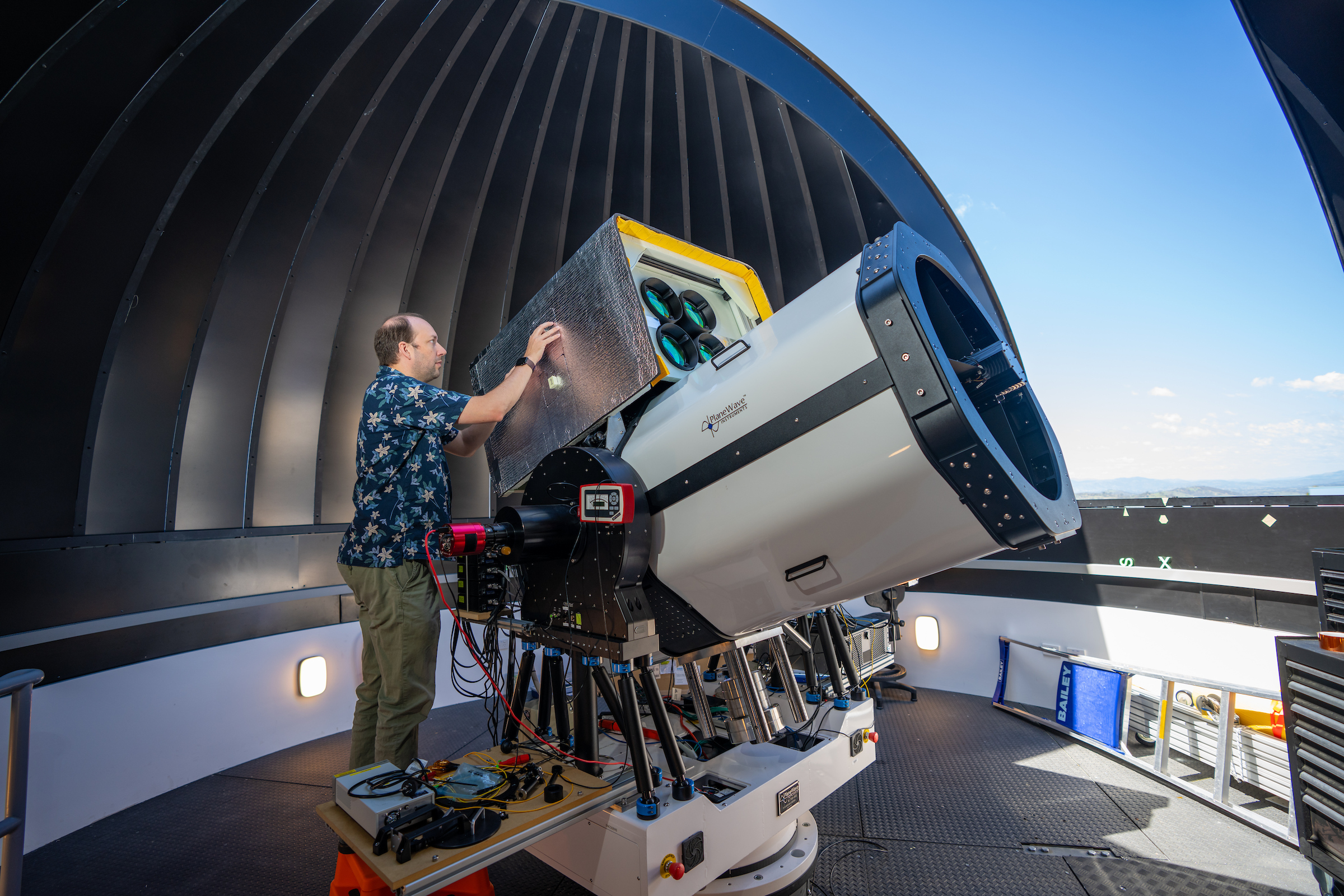
The Artemis II mission, however, introduced a transformative element that promises to revolutionize how we receive data from space: optical laser communications technology. Unlike the radio frequency systems that had dominated space communications for decades, laser-based systems operate at different wavelengths and can transmit vastly larger amounts of information across the same distance. This breakthrough allowed astronauts aboard Orion to periodically transmit batches of significantly higher-resolution data back to Earth, enabling the spectacular high-definition imagery that audiences craved.
The imagery transmitted via these optical laser systems proved remarkable in quality and scientific value. Astronauts captured breathtaking photographs of the Moon's far side—regions invisible from Earth and rarely photographed up close—with unprecedented clarity and detail. These images revealed lunar geography in stunning HD resolution, allowing scientists and the public to appreciate the Moon's surface features as never before. Even more remarkably, the astronauts documented a solar eclipse observed from space, a rare and scientifically significant event that provided unique perspectives on the Sun, Moon, and Earth's relationship in the cosmos.

What makes this technological achievement even more significant is that the laser communication technology wasn't exclusively developed by NASA. The Artemis II mission incorporated a commercial component into its communications architecture, partnering with private sector companies to deliver these advanced capabilities. This collaborative approach reflects a broader shift in space exploration, where government agencies increasingly leverage commercial innovation to enhance mission capabilities. By integrating commercially-developed optical communication systems, NASA demonstrated that space agencies and private companies can work together effectively to push the boundaries of what's possible.
The commercial component of the Artemis II communications system opens fascinating possibilities for future space missions. Private companies have invested heavily in developing laser communication technologies, recognizing the tremendous value of high-bandwidth data transmission from space. These firms understood that as space activities expand—with more satellites, deep space missions, and eventually human settlements on other worlds—the demand for data capacity would far exceed what traditional radio systems could provide. By proving these systems work reliably during the Artemis II mission, both NASA and commercial partners have validated a technology that could transform space operations for decades to come.
The implications of this breakthrough extend far beyond simply improving video quality from the Moon. High-bandwidth space communications enable a new era of scientific discovery and exploration. Future Mars missions, for instance, could transmit detailed scientific data, high-resolution rover footage, and environmental measurements at rates previously impossible. Space telescopes and observation satellites could download vast quantities of research data. Long-duration human missions to the Moon, Mars, and beyond would benefit from improved video communication, allowing for better mission control oversight and enhanced crew morale through higher-quality personal communication with loved ones on Earth.
The technical challenges overcome during the development and deployment of these systems were substantial. Engineers had to design optical communication equipment robust enough to survive the harsh conditions of space travel, including extreme temperature fluctuations, radiation exposure, and vibration during launch. Ground stations had to be upgraded to receive and process the laser signals effectively. Software systems required development to manage the hybrid communication architecture, seamlessly switching between traditional radio systems and optical laser communications as needed. These technical hurdles required innovation across multiple disciplines and represented a genuine engineering achievement.
Looking forward, the success of optical laser communications on Artemis II virtually guarantees its adoption on future NASA missions. The Artemis III mission, planned for the coming years, will carry even more advanced versions of these systems, enabling even higher data rates and more reliable connections. Private space companies developing their own lunar landers and deep space vehicles are racing to incorporate similar technologies into their spacecraft. The competitive pressure to deliver better, faster, and more reliable communications will only accelerate innovation in this field.
The shift toward advanced space communication systems also reflects changing public expectations about space exploration in the modern era. When Apollo astronauts first walked on the Moon in 1969, the grainy, black-and-white television signals they transmitted were nothing short of miraculous. Today's audiences, accustomed to streaming 4K video on their devices, expect lunar exploration to be documented with comparable visual clarity. By investing in these next-generation communication technologies, NASA acknowledges that how we share space exploration matters as much as the exploration itself. The ability to broadcast stunning HD imagery from the Moon enhances public engagement with these historic missions and strengthens support for continued space exploration funding and participation.
Source: Ars Technica


