
NASA's Next-Gen Mars Helicopters: Game-Changing Rotor Tech

NASA engineers develop advanced rotor technology for next-generation Martian helicopters to carry heavier payloads. SkyFall mission planned for late 2028 launch.
Building on the extraordinary legacy of NASA's Ingenuity helicopter, engineers at the Jet Propulsion Laboratory in California have achieved a significant breakthrough in rotor technology that promises to revolutionize how humanity explores the surface of Mars. More than three years after Ingenuity concluded its historic mission on the Red Planet, JPL scientists and engineers are now designing an entirely new generation of Martian rotorcraft capable of handling substantially heavier payloads and traversing significantly longer distances through Mars's challenging low-density atmosphere.
The original Ingenuity helicopter represented a watershed moment in planetary exploration, becoming the first airborne platform to successfully conduct powered, controlled flight on another world. This dual-bladed marvel exceeded all expectations during its operational tenure, completing an impressive 72 flights across the Martian landscape. What makes this achievement even more remarkable is that Ingenuity was designed with conservative mission parameters—NASA engineers had originally projected the helicopter would complete just five flights over a 30-day period before being retired. Instead, the rotorcraft continued to exceed objectives for nearly three years, demonstrating the enormous potential of aerial exploration on other planets.
The success of Ingenuity transformed scientific understanding of how humanity could explore extraterrestrial environments. By leveraging air-based transportation, the helicopter could cover distances far greater than traditional ground-based rovers and could access geographical locations and terrain features that would be impossible or impractical for wheeled vehicles to reach. The mission generated invaluable data about Martian atmospheric conditions, flight dynamics in low-pressure environments, and operational parameters for rotorcraft systems. When Ingenuity's mission finally concluded with a controlled landing in January 2024, it left behind a comprehensive operational and engineering blueprint for future aerial vehicles on Mars.
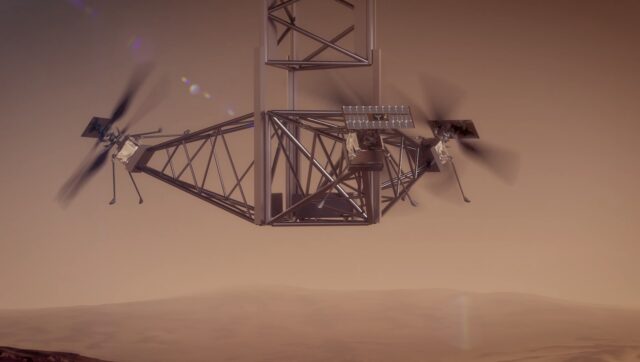
With this proven success as a foundation, NASA has committed to an ambitious follow-up initiative called the SkyFall mission, which represents a substantial advancement in Martian exploration capabilities. The SkyFall program is scheduled to transport three additional helicopters to Mars, each equipped with improved technology and enhanced capabilities derived from Ingenuity's operational experience. The mission is currently targeted for launch in late 2028, providing NASA engineers with several years to refine designs, conduct extensive ground testing, and optimize the next-generation helicopter systems.
The SkyFall mission will utilize an innovative transportation method that reflects NASA's forward-thinking approach to space exploration. These Martian helicopters will be delivered to the Red Planet aboard Space Reactor-1, or SR-1, a cutting-edge nuclear-powered spacecraft that exemplifies NASA's commitment to developing advanced propulsion technologies for deep space missions. The SR-1 project is one of several ambitious technology demonstration initiatives that NASA Administrator Jared Isaacman announced earlier in the year, signifying the agency's broader strategic focus on expanding human and robotic exploration capabilities.
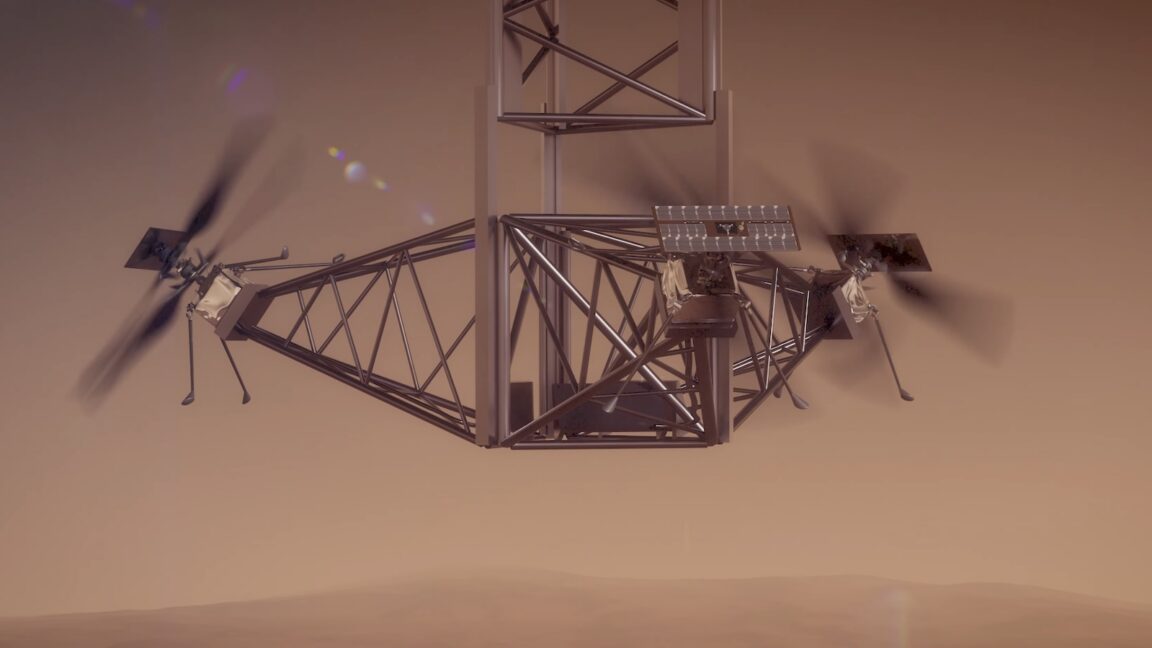
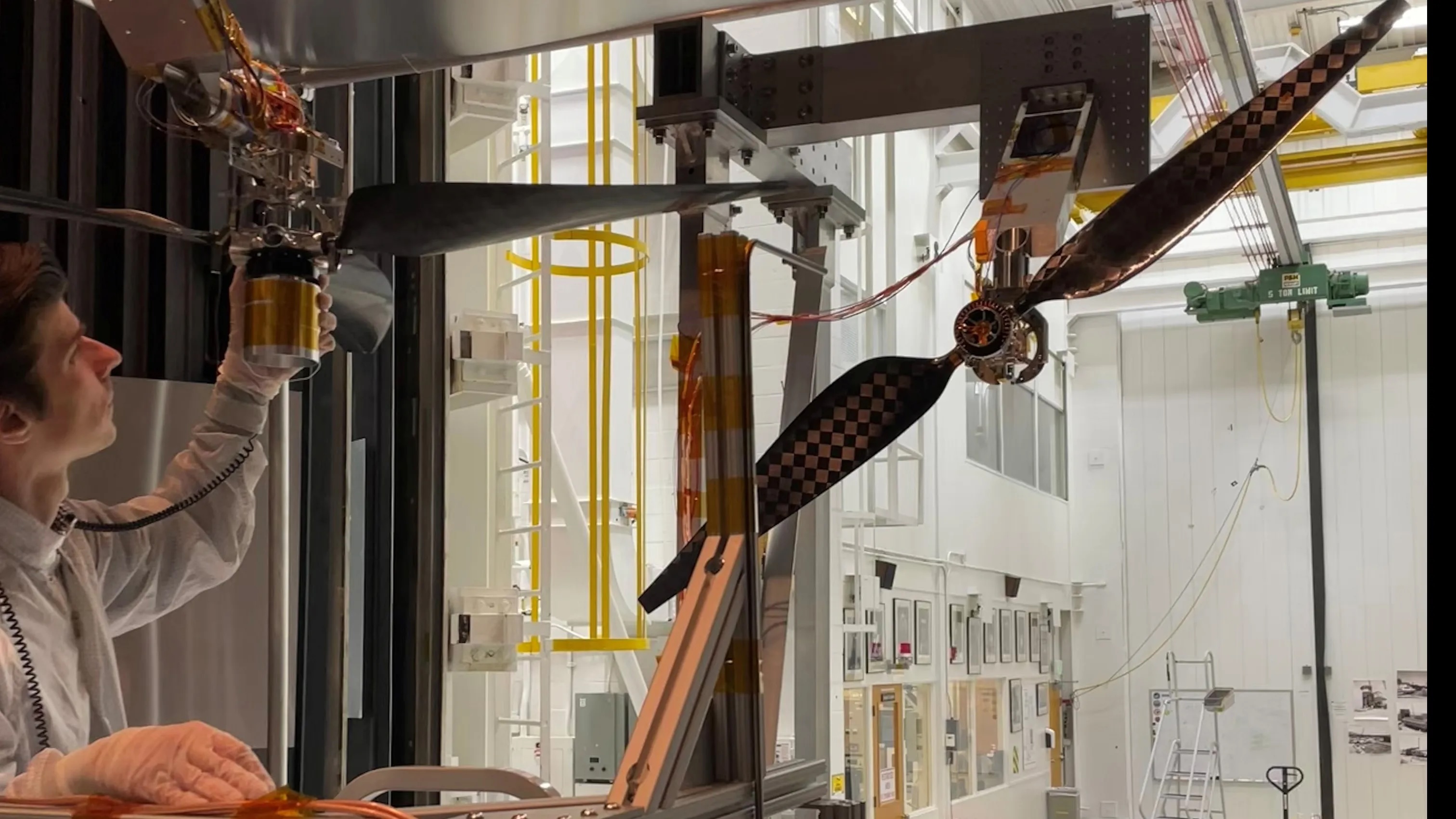
The breakthrough in rotor technology that JPL engineers have achieved addresses some of the fundamental challenges that previous Martian rotorcraft faced. The Martian atmosphere, while extremely thin at less than one percent the density of Earth's atmosphere at sea level, still provides sufficient medium for carefully engineered rotors to generate lift. However, the design constraints are severe—rotors must spin at extraordinarily high speeds to generate sufficient lift, yet must do so while maintaining structural integrity and managing thermal conditions. The new rotor designs being developed for SkyFall helicopters incorporate advanced materials and aerodynamic principles that were refined through Ingenuity's extensive flight operations.
These improved rotor systems promise to deliver several key enhancements over previous generations. The new rotors can support significantly increased payload capacity, allowing future Martian helicopters to carry more sophisticated scientific instruments and equipment for extended research missions. Additionally, the enhanced designs should enable longer flight ranges, permitting these aircraft to cover greater distances across the Martian landscape and reach exploration targets located far from rover landing sites. The combination of increased payload capacity and extended range represents a quantum leap in the capabilities available to Mars exploration teams.
The implications of these technological advances extend far beyond the SkyFall mission itself. By developing advanced Martian helicopter systems, NASA is creating a new paradigm for planetary exploration that emphasizes aerial reconnaissance and sample collection over traditional ground-based approaches. Future missions to Mars could employ multiple helicopters working in concert, creating an aerial observation network that could scout terrain, identify promising geological formations, and support human exploration missions by providing reconnaissance and logistical support. The lessons learned from developing and operating these systems will also inform the design of rotorcraft and aerial vehicles for potential missions to other worlds, including Venus and the moons of Jupiter and Saturn.
The Jet Propulsion Laboratory, NASA's premier facility for robotic space exploration, continues to demonstrate its capacity for innovation and breakthrough engineering. The laboratory's teams bring together world-class expertise in aeronautics, materials science, systems engineering, and planetary science to tackle problems that push the boundaries of what's possible in space exploration. The breakthrough in rotor technology represents the culmination of years of research, analysis of Ingenuity flight data, and creative problem-solving aimed at overcoming the unique challenges of the Martian environment.

Looking ahead to the late 2028 launch window, NASA engineers have multiple years to validate new designs, conduct rigorous testing in specialized Martian atmosphere simulation chambers, and prepare the three helicopters destined for the SkyFall mission. Each aircraft will carry upgraded avionics systems, improved power generation capabilities, and enhanced navigation systems that will allow for more autonomous operation and greater operational flexibility. The mission will mark a significant step forward in humanity's ability to explore the Red Planet and pave the way for even more ambitious aerial exploration initiatives in the coming decades.
Source: Ars Technica


