
NBA Injury Crisis: When Will the League Act?

Stars falling left and right in NBA playoffs. Are injuries winning the postseason? Explore the mounting injury crisis and what needs to change.
The 2026 NBA playoffs have become a cautionary tale of what happens when a professional sports league prioritizes schedule density and player workload over athlete safety. At this point, one might legitimately ask: should we simply acknowledge that NBA injuries have become the true champions of this postseason, overshadowing the competition itself? The sheer volume and severity of injuries affecting star players has reached unprecedented levels, forcing fans and analysts alike to question whether the league's current structure is fundamentally broken.
The casualty list reads like a tragedy in professional basketball. The Oklahoma City Thunder, despite their impressive regular season performance, have been forced to navigate the playoffs without Jalen Williams, their critical second-best player, who has battled what appears to be a recurring hamstring injury plague. Meanwhile, the Minnesota Timberwolves have watched their championship hopes deteriorate as injuries have decimated their roster at the most critical juncture of the season. Donte DiVincenzo suffered a catastrophic Achilles tear during their series against the Denver Nuggets, a blow that essentially removed a key rotation piece from the equation.
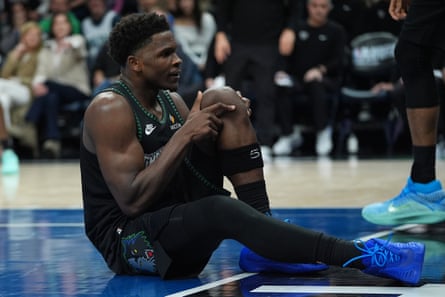
Anthony Edwards grimaced through a gruesome hyperextension of his knee that had everyone holding their breath, while the team's backup point guard Ayo Dosunmu delivered an absolutely heroic 43-point performance in Game 4—a testament to his determination in the face of adversity—only to return to the bench just two games later nursing a calf injury. The Denver Nuggets injury report hasn't been any prettier, with Aaron Gordon sidelined by a calf strain and Peyton Watson remaining unavailable due to a hamstring problem that kept him out of crucial playoff moments.

Perhaps no injury narrative captured the emotional rollercoaster of this postseason quite like Jayson Tatum's journey. The Boston Celtics star achieved what seemed impossible, executing a remarkably quick comeback from a serious Achilles tear that had many skeptics questioning whether he could return at all. The story appeared to be a feel-good triumph of determination and modern sports medicine—until his leg gave way again, ruling him out of a pivotal Game 7 that his Celtics desperately needed. The loss to the Philadelphia 76ers in that elimination game will forever carry an asterisk, as the absence of their best player fundamentally altered the series' trajectory.
The Los Angeles Lakers have experienced their own nightmare scenario, with their starting rotation ravaged by various injuries that have compromised their ability to compete at the highest level. The NBA playoff injuries have affected teams across the league, creating an uneven playing field where health rather than talent sometimes determines advancement. Teams that managed to stay healthy have found themselves with an almost unfair advantage, while those hit hardest by the injury bug have been forced to call up role players and reserves to fill critical minutes.
The fundamental question that league executives and team owners must confront is simple: how much longer can the NBA schedule remain as grueling as it currently is? The regular season stretches across nearly nine months, followed immediately by an intensive playoff tournament that demands peak physical condition from every participant. Add in back-to-back games, cross-country travel, and the psychological pressure of competing at the highest level, and you have a recipe for exhaustion-related injuries that simply shouldn't occur in a league with unlimited financial resources.
Player workload management has become a hot-button issue, yet many teams still resist giving their star athletes adequate rest during the regular season. The logic is understandable from a business perspective—fans want to see the best players compete, and television networks want star power to drive ratings. However, this short-term thinking inevitably leads to long-term consequences that nobody wants to see: elite athletes going down with preventable injuries at the worst possible times.
The injured reserve list has become so populated that backup players are now getting extended minutes and opportunities they never anticipated. In some cases, these replacements have stepped up admirably, providing inspiring performances that show the depth of NBA rosters. Yet these performances, while entertaining, come at a cost that transcends entertainment value. These young players are being asked to carry loads they weren't designed for, potentially setting the stage for their own injury issues.
The postseason injury rate has become an ongoing concern that sports medicine experts and league analysts cannot ignore. Every year, the narrative seems to be similar: stars go down, substitutes step up, and fans are left wondering what might have been had everyone stayed healthy. The unpredictability created by injuries makes it difficult to crown a true champion, as there's always the lingering question of what would have happened if the opposing team had their full roster available.
Unless the NBA implements meaningful structural changes—such as reducing the number of regular season games, implementing mandatory rest days, or creating a more player-friendly schedule—this pattern will continue indefinitely. The league has all the tools necessary to protect its most valuable assets: its players. What it lacks is the collective will to make difficult business decisions that prioritize long-term player health over short-term revenue generation.
The owners and commissioners must understand that allowing player injuries to systematically compromise playoff integrity damages the league's credibility and diminishes the value of its championship. A title won with half the opposition healthy isn't as meaningful as one earned against complete rosters. Fans want to see the best players compete against each other at full strength, not watch a parade of backup players and rehabbing stars limping through crucial games.
The current trajectory is unsustainable. If injuries continue to dominate headlines and determine playoff outcomes, the NBA risks losing the narrative that makes the postseason compelling. Rather than celebrating athletic excellence and competitive depth, fans are forced to discuss what's broken about the system that's producing these injuries. The league stands at a crossroads where meaningful intervention could prevent future catastrophes, or continued inaction could result in even more devastating scenarios that tarnish the prestige of championship basketball.
Source: The Guardian


