
New Leader Takes Helm of Troubled Adelaide Writers' Week

Rosemarie Milsom appointed as new director of Adelaide Writers' Week following Louise Adler's resignation amid controversy over Palestinian author's disinvitation.
Adelaide Writers' Week has appointed a new director to guide the literary festival through a period of unprecedented turbulence and public scrutiny. Rosemarie Milsom, the accomplished founder and director of the Newcastle Writers Festival, will assume leadership of the prestigious event following the dramatic resignation of former director Louise Adler and the subsequent departure of the entire festival board.
The appointment comes as the Australian literary community continues to grapple with the fallout from one of the most contentious moments in the festival's history. In January 2026, the Adelaide festival board made the controversial decision to rescind an invitation to Palestinian-Australian author and academic Randa Abdel-Fattah, citing concerns about her past public statements regarding Israel and Zionism. The decision, made without the full support of the festival's leadership, ignited a firestorm of criticism that would ultimately reshape the entire organization.
Milsom's selection represents an attempt to rebuild trust within the literary community and restore the festival's reputation as a champion of free expression and artistic integrity. Speaking about her new role, Milsom acknowledged the complexity of the situation, stating, "I don't envy anyone in this position." Her candid remark underscores the magnitude of the challenge ahead as she navigates the reconstruction of an institution that has been fundamentally shaken by internal conflict and public controversy.

The implosion of Adelaide Writers' Week during its planning stages shocked Australia's literary establishment and garnered international attention. When the festival board overrode Adler's decision to include Abdel-Fattah on the program, hoping to minimize controversy, the move backfired spectacularly. Rather than quieting dissent, the disinvitation sparked an unprecedented response from the writing community, with approximately 200 authors pledging to boycott the festival in protest of the censorship.
Louise Adler, who had steered the festival for several years, found herself at the center of the crisis. Unable to reconcile her commitment to protecting writers' freedom of expression with the board's decision, Adler tendered her resignation. In a statement explaining her departure, she articulated the impossible position she faced, declaring, "I cannot be party to silencing writers." Her principled stand resonated with many in the literary world and marked a turning point in how the public perceived the crisis.
The situation deteriorated further when the entire Adelaide festival board resigned in the wake of Adler's departure, acknowledging the severity of the organizational failure. The wholesale exodus of leadership left the festival in a state of crisis management, requiring urgent intervention to restore any semblance of institutional credibility. South Australian Premier Peter Malinauskas was drawn into the controversy, becoming involved in efforts to address the debacle and chart a path forward for the culturally significant event.
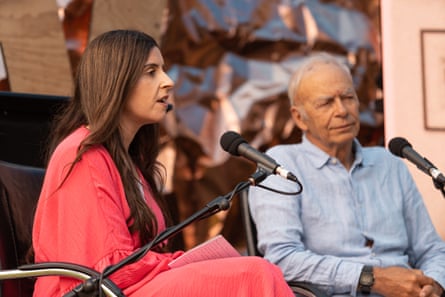
Rosemarie Milsom brings considerable experience in managing successful literary festivals and author events. Her work establishing and directing the Newcastle Writers Festival has earned recognition for fostering a vibrant literary culture and providing platforms for diverse voices. Her track record suggests she possesses both the organizational expertise and diplomatic acumen necessary to rebuild the damaged institution. The Newcastle festival, under her stewardship, has become known for thoughtful programming and strong community engagement.
Taking on the role of director for Adelaide Writers' Week at this particular moment requires exceptional resilience and vision. Milsom will need to address multiple challenges simultaneously: restoring confidence among writers who boycotted the festival, rebuilding relationships with the literary community, establishing new governance structures that protect editorial independence, and developing programming that reflects the values of artistic freedom and cultural diversity. Each of these objectives presents significant obstacles that will test her leadership abilities.
The controversy surrounding Abdel-Fattah's disinvitation raised fundamental questions about the role of literary festivals in a polarized social and political landscape. Supporters of including Abdel-Fattah argued that festivals should be spaces where difficult conversations can occur and where writers with diverse perspectives can be heard. Critics of the disinvitation contended that silencing any author, regardless of their stated positions, undermined the core mission of literary organizations and set a troubling precedent for future programming decisions.
The involvement of legal proceedings added another layer of complexity to the situation. Following the board's decision to disinvite her, Abdel-Fattah and her supporters pursued potential defamation claims, asserting that the manner in which she was removed from the festival's schedule had caused significant professional and personal damage. These legal dimensions extended the crisis beyond internal literary world debates into formal dispute resolution processes.
Milsom's appointment signals a commitment from the Adelaide festival's stakeholders to move forward constructively, though the path remains uncertain. Her selection was likely informed by her reputation for integrity and her success in building inclusive, thoughtful literary programming. In accepting the role, she has undertaken to restore the festival's standing as one of Australia's premier cultural events and to reestablish it as a safe space for writers and readers alike.
The challenges facing Milsom extend beyond the immediate crisis. She must work to develop new governance structures that prevent similar controversies from undermining the festival's mission. This may involve establishing clear editorial policies, implementing transparent decision-making processes, and creating mechanisms to ensure that programming decisions reflect the collective values of the literary community rather than external political pressures or board overreach.
The Australian literary community will be watching closely as Milsom begins her tenure. Her success in rebuilding Adelaide Writers' Week could have broader implications for how cultural institutions navigate questions of artistic freedom, editorial independence, and public responsibility. The path forward requires both pragmatism and principle – the ability to acknowledge past mistakes while charting a course that honors the festival's cultural mission and the writers it serves.
Looking ahead, the fundamental test of Milsom's leadership will be her ability to demonstrate that Adelaide Writers' Week can emerge from this crisis as a stronger, more resilient institution. By rebuilding trust with the literary community, establishing transparent governance, and recommitting to the principle that writers' festivals should celebrate diverse voices and perspectives, she has the opportunity to transform this moment of institutional failure into an opportunity for meaningful renewal and growth.


