
NFL Draft 2026: Jets' No. 2 Pick Dilemma

As Fernando Mendoza heads to Las Vegas at No. 1, the Jets face crucial decisions at No. 2. Explore top draft questions, QB prospects, and Cowboys trade scenarios.
The 2026 NFL Draft is set to reshape the landscape of professional football, beginning with one of the most uncertain selection processes in recent memory. While Fernando Mendoza appears destined to become the Las Vegas Raiders' cornerstone franchise quarterback at the No. 1 overall pick, the selections that follow remain shrouded in intrigue and debate. The second pick, held by the New York Jets, represents a pivotal juncture that could define the team's defensive identity for years to come. Evaluating whether to prioritize an elite edge rusher or explore innovative defensive formations will shape not only the Jets' roster but potentially influence the entire first round's trajectory.
The Jets organization faces a multifaceted challenge at the No. 2 position that extends beyond simple positional analysis. David Bailey, the explosive edge-rusher from Texas Tech, presents a physically dominant prospect capable of immediately impacting the defensive line. His combination of size, athleticism, and pass-rush moves has scouts and analysts praising his potential to become a franchise cornerstone defender. Meanwhile, Arvell Reese from Ohio State offers a different profile—a hybrid defender whose versatility and intelligence could provide the Jets with creative defensive scheme options that modern NFL offenses struggle to counter.
The debate surrounding these two prospects encapsulates broader strategic questions facing the Jets' front office. Should they prioritize traditional defensive metrics and pursue a proven edge-rushing specialist, or should they embrace the evolving nature of professional football by selecting a player who can operate across multiple positions and responsibilities? This decision will likely influence how the rest of the defensive secondary and line are constructed throughout the draft, creating cascading effects on overall team building strategy.

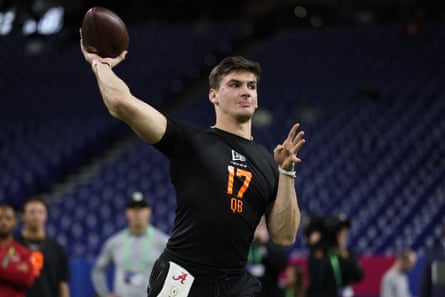
The quarterback situation hanging over the draft adds another layer of complexity to the Jets' decision-making process. While Mendoza is heading to Las Vegas, several other promising signal-callers remain in consideration for early selections, including the controversial prospect Jordan Love. The question of whether Love's ceiling is worth the risk he presents to organizational stability has divided analysts and team executives. Some scouts view him as a generational talent with tremendous upside, while others question his consistency and decision-making under pressure. This divergence of opinion creates genuine uncertainty about where he might be selected and which team might eventually take the plunge on his polarizing profile.
The Jets' personnel decisions must also account for the broader competitive landscape and the threat posed by division rivals. Other teams in the AFC East have been actively addressing their own needs, and failing to capitalize on premium draft positioning could leave New York playing catch-up for seasons to come. The franchise has invested significantly in recent acquisitions and coaching staffing, making this draft class critical for demonstrating that previous investments were justified and that the organization has a coherent long-term vision.
Beyond the Jets' immediate concerns, the draft presents numerous storylines involving teams throughout the league. The Dallas Cowboys have frequently been mentioned as potential trade-up candidates, particularly if an offensive lineman or receiver of exceptional talent becomes available. Questions persist about whether the Cowboys will maintain their current selection position or whether team management will make an aggressive move to secure a transformational player. This uncertainty about Dallas's intentions could influence negotiations between teams and potentially reshape the entire first-round board as general managers adjust their strategies accordingly.
The running back position presents another fascinating subplot in this year's draft narrative. The emergence of difference-making backs at the professional level has reinvigorated discussions about the position's value within modern offensive systems. Several teams have prioritized strengthening this area of their rosters, and the talent pool at running back this year includes some legitimately special prospects capable of producing immediate impact. The question of exactly when the first back will be selected, and whether teams will reach for premium talent at the position, remains genuinely open as draft night approaches.
Scout evaluations have been particularly thorough this offseason, with numerous teams conducting extensive film review and personal workouts with top prospects. The information-gathering process has been more comprehensive than in previous years, suggesting that front offices believe they have significantly more clarity on player capabilities and potential fit. However, this advanced preparation has not eliminated the fundamental uncertainty that characterizes every draft class—the unpredictable nature of professional development and the variables that determine whether college success translates to NFL excellence.
The draft night drama promises to be substantial, with multiple storylines converging on a single evening that will have ramifications for team success over the next decade. Media speculation about potential trades, surprise selections, and strategic pivots has intensified in the weeks preceding the event. Veteran analysts and newcomers to draft analysis alike are offering divergent opinions about which selections represent smart value and which might represent costly mistakes. This diversity of opinion reflects the genuine difficulty of accurately projecting professional success based on college performance and measurable attributes.
The Jets' decision-making process reflects the team's broader philosophy regarding defense-first football and building from the interior outward. Recent coaching and personnel changes have emphasized the importance of establishing a dominant defensive identity that can anchor the team's competitive aspirations. Whether that philosophy is best served by selecting Bailey's proven pass-rush skills or by embracing Reese's defensive flexibility will be among the first major tests of the new regime's analytical approach and personnel judgment. The ripple effects of this single selection could influence the Jets' competitiveness across multiple seasons and affect how the organization approaches subsequent draft selections and free agency acquisitions.
As the NFL draft inches closer, anticipation builds regarding how teams will navigate the complexity of positional needs, prospect evaluation, and strategic positioning within the competitive landscape. The decisions made during the initial selections will set the tone for how subsequent rounds develop and influence the overall talent acquisition strategy for multiple organizations. For the Jets and other teams preparing for draft night, the coming days represent a final opportunity to reassess evaluations, confirm organizational priorities, and prepare for the telephone negotiations and strategic calculations that will define one of professional football's most exciting annual events.
Source: The Guardian


