
Nintendo Icon Takashi Tezuka Steps Back

Legendary Nintendo designer Takashi Tezuka, creator of Mario and Zelda franchises, appears to be retiring from the gaming giant after decades of innovation.
Takashi Tezuka, one of the most influential and celebrated video game designers in industry history, is reportedly stepping away from his position at Nintendo, marking the end of an extraordinary era in interactive entertainment. The legendary creator, whose visionary work has shaped gaming culture for over four decades, helped establish two of the most iconic and commercially successful franchises in the medium's history. This potential departure represents a significant milestone not only for Nintendo but for the entire video game industry, which owes much of its creative foundation to Tezuka's groundbreaking innovations and artistic direction.
Throughout his illustrious career at Nintendo, Tezuka demonstrated an unparalleled ability to translate creative vision into tangible gaming experiences that resonated with millions of players worldwide. His contributions extended far beyond simple character design, encompassing comprehensive game mechanics, level architecture, and the overall player experience that became hallmarks of Nintendo's design philosophy. The designer's influence can be traced through multiple generations of gaming consoles, from the revolutionary Nintendo Entertainment System through to the company's most recent platforms. His work established design principles that continue to influence game developers across the industry today, demonstrating the lasting impact of his creative genius.
The Mario franchise, perhaps Tezuka's most recognizable creation, began as a simple side-scrolling platformer and evolved into a multi-billion dollar empire spanning dozens of game titles, merchandise, and entertainment properties. When Tezuka first designed the character—originally called Jumpman—he created not just a mascot but a cultural phenomenon that would define Nintendo's identity for generations to come. The evolution of Mario games showcased Tezuka's remarkable ability to innovate within established frameworks, introducing three-dimensional gameplay, motion controls, and narrative complexity while maintaining the character's essential charm and accessibility. Each iteration of Mario titles under Tezuka's guidance reflected his deep understanding of what made games engaging and fun for players of all skill levels.
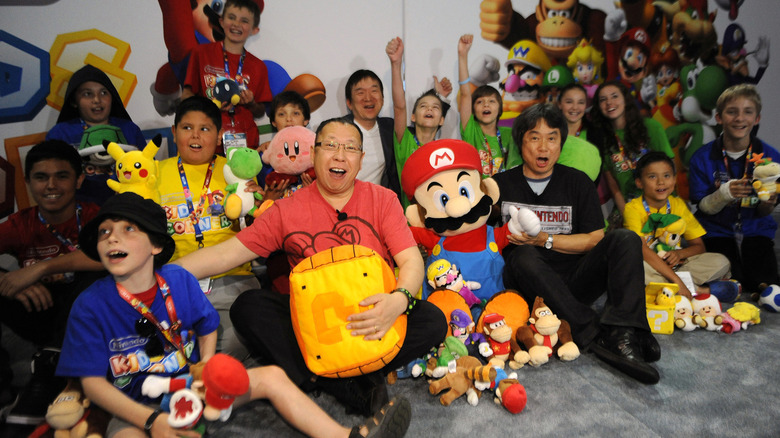
Similarly, the Legend of Zelda series, which Tezuka co-created, revolutionized the gaming landscape by pioneering the action-adventure genre and establishing conventions that persist in game design curricula today. The original 1986 release introduced players to an expansive world filled with exploration, puzzle-solving, and combat—a formula that Tezuka would continually refine and reinvent across sequels and spin-offs. The franchise's emphasis on player agency and non-linear progression challenged industry norms at the time and influenced countless subsequent games. Tezuka's approach to game design philosophy prioritized player enjoyment and intuitive controls, principles that became foundational to Nintendo's corporate culture and design methodology.
Beyond these two monumental franchises, Tezuka's fingerprints can be found throughout Nintendo's catalog of beloved titles and intellectual properties. His creative influence extended to projects that defined multiple console generations, including work on the Star Fox series, the Donkey Kong Country franchise evolution, and numerous other projects that pushed technical and creative boundaries. The designer's ability to collaborate with other creative minds at Nintendo while maintaining a cohesive vision speaks to his leadership qualities and deep understanding of team dynamics in game development. His mentorship of younger designers at the company helped establish a creative legacy that transcends any single individual, embedding his philosophy into the DNA of Nintendo's development process.
The news of Tezuka's retirement from Nintendo comes at a time when the company continues to rely on properties and franchises established during his tenure as the primary drivers of business performance and player engagement. Industry analysts note that the departure of such a foundational creative figure raises questions about continuity and future direction for the company's most valuable intellectual properties. However, Tezuka's documented commitment to mentoring the next generation of Nintendo designers suggests that his influence will continue to shape the company's output well into the future. The designer's decision to step back appears to reflect both a natural life progression and a deliberate transition of responsibilities to ensure the sustainability of Nintendo's creative vision.
Throughout interviews and public appearances over the years, Tezuka has consistently emphasized his belief in the importance of game design fundamentals and player experience above all else. His philosophy rejected unnecessary complexity in favor of intuitive, elegant solutions that allowed players to quickly grasp game mechanics and begin enjoying themselves. This design-first approach, combined with rigorous playtesting and iteration, became the standard methodology at Nintendo and influenced the broader industry's approach to development. Tezuka's legacy extends beyond the games themselves to encompass a complete design philosophy that prioritizes accessibility without sacrificing depth or challenge.
The video game industry has undergone dramatic transformations during Tezuka's career, from the near-death experience of the 1983 crash to the emergence of 3D graphics, online multiplayer, and mobile gaming. Through each transition, Tezuka remained a constant force for innovation and creative excellence, demonstrating an ability to adapt his design sensibilities to new technological possibilities. His work across different eras and platforms proves that strong fundamental design principles transcend technological limitations and remain relevant regardless of hardware capabilities. This adaptability and forward-thinking approach helped ensure that Nintendo remained a relevant and dominant force in gaming across multiple generational shifts.
For aspiring game designers, Tezuka's career serves as both inspiration and instruction in what constitutes meaningful contributions to interactive media. His emphasis on play-testing, iteration, and respect for the player experience established standards that continue to guide industry best practices. The designer's willingness to experiment with new concepts while respecting the core elements that made his previous works successful demonstrates a balance between innovation and tradition that many contemporary creators strive to emulate. His influence on game design education, development methodology, and creative culture cannot be overstated.
As Tezuka transitions to retirement, Nintendo faces the challenge of maintaining the quality and creativity that his leadership ensured while allowing new voices to shape the company's future direction. The company has announced that it will be advancing designers who worked directly under Tezuka into more prominent roles, suggesting a structured succession plan designed to preserve institutional knowledge and creative continuity. The gaming community watches with interest to see how Nintendo's most iconic franchises will evolve under new creative direction while honoring the foundational principles Tezuka established. His retirement marks not an ending but rather a transition in one of entertainment's greatest creative partnerships between designer and medium.
Source: Engadget


