
Nissan Cuts 900 Jobs, Closes UK Production Line

Nissan announces major restructuring with 900 European job cuts and UK plant closure, while exploring third-party partnerships for Sunderland facility.
Nissan has announced a significant restructuring plan that will result in the closure of a major UK production line and the elimination of approximately 900 jobs across its European operations. This decision marks a substantial shift in the Japanese automaker's European strategy and represents one of the most significant employment impacts in the automotive sector in recent years. The announcement comes as the company faces mounting pressures from changing market dynamics, shifting consumer preferences toward electric vehicles, and evolving competitive landscapes within the European automotive industry.
The closure of the UK production line at Nissan's Sunderland facility, one of the company's most prominent manufacturing centers in Europe, underscores the challenges facing traditional automotive manufacturers. The Sunderland plant has been a cornerstone of Nissan's European manufacturing operations for decades, producing vehicles that have been exported across the continent. However, the decision reflects broader industry trends as manufacturers grapple with transitioning their production capabilities to meet modern demands and regulatory requirements.
In response to the plant closure, Nissan is actively considering partnerships with third-party manufacturers to ensure that the Sunderland facility continues to operate at full capacity. Rather than allowing the plant to sit idle, the company is exploring innovative solutions that would leverage the existing infrastructure and skilled workforce. These discussions represent a potential lifeline for the facility, which could continue functioning under alternative operational arrangements even as Nissan reduces its direct manufacturing footprint at the location.
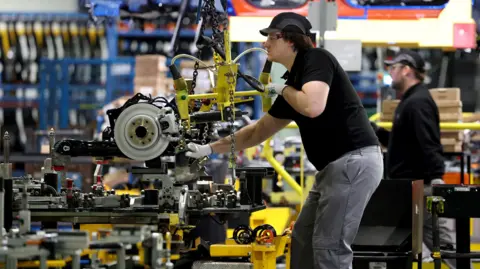
The 900 job cuts across Europe will be distributed among various Nissan facilities and operations, though specific locations and detailed breakdowns are expected to be announced as part of a comprehensive restructuring plan. These employment reductions represent a painful transition for thousands of workers who have built careers within the company. Nissan has indicated its commitment to managing this process responsibly, though the scale of the job losses underscores the severity of the challenges facing the automotive sector.
The decision to close the UK production line comes amid a broader shift in automotive manufacturing priorities within European operations. Nissan's European business has faced significant headwinds in recent years, including increased competition from both established European manufacturers and emerging Chinese automakers. Additionally, the transition toward electric vehicle manufacturing requires substantial capital investment and technological adaptation, compelling companies to make difficult decisions about which facilities to prioritize for modernization.
Industry analysts have noted that this move aligns with broader trends affecting European automotive manufacturers, who are increasingly consolidating operations and focusing investments on electric vehicle platforms. The restructuring reflects the reality that maintaining multiple production facilities across Europe, each operating at varying capacity levels, has become economically challenging. By streamlining operations and exploring creative partnerships, Nissan hopes to create a more sustainable and competitive European business model.
The potential partnership model being explored by Nissan could involve contract manufacturing arrangements where third-party producers operate the Sunderland facility on behalf of Nissan or produce vehicles that Nissan will distribute through its sales channels. Such arrangements have become increasingly common in the automotive industry as manufacturers seek to reduce fixed costs while maintaining access to production capacity when needed. This approach would allow Nissan to maintain strategic presence at the facility while shifting operational responsibilities and financial burdens to external partners.
For the Sunderland community and surrounding region, the announcement represents a significant economic challenge. The facility has long been a major employer and economic driver in the area, with thousands of indirect jobs supported through suppliers, logistics companies, and related service providers. Local authorities and regional economic development agencies are expected to engage with Nissan and explore potential mitigation strategies to support affected workers and communities throughout this transition.
The timing of this announcement is particularly noteworthy as it comes during a period of significant transformation within the global automotive industry. The shift toward sustainable transportation and regulatory pressures in Europe regarding emissions and vehicle electrification have created complex challenges for traditional manufacturers. Nissan's decision reflects the company's acknowledgment that maintaining previous production levels and facility configurations is no longer viable under current market conditions.
Nissan has committed to providing support to affected employees, including severance packages, retraining opportunities, and outplacement assistance. The company recognizes its responsibility to workers who have contributed to its success over many years. Detailed information regarding these support programs and their implementation timeline is expected to be released as the restructuring plan moves forward. The company's approach to managing these transitions will be closely watched by other manufacturers facing similar challenges.
The third-party partnership exploration represents a creative approach to a difficult situation. Rather than allowing a modern manufacturing facility to become underutilized or abandoned, Nissan is pursuing arrangements that could maintain economic activity at the site. Such partnerships could potentially involve contract manufacturing for Nissan vehicles, production of components, or even manufacturing for other brands, depending on what arrangements can be negotiated and made commercially viable.
Stakeholders including the UK government, regional development agencies, and labor unions have begun responding to the announcement. There is considerable interest in understanding the details of the third-party partnership discussions and whether they might preserve significant employment opportunities at the Sunderland facility. These discussions are expected to continue over the coming months as Nissan refines its European strategy.
The broader context of this announcement includes Nissan's ongoing efforts to remain competitive in a rapidly evolving automotive landscape. The company has announced substantial investments in electric vehicle technology and battery manufacturing capabilities globally. These investments are necessary to compete effectively in markets increasingly dominated by EV demand and regulatory requirements for reduced emissions. However, these transformations require difficult choices about which existing facilities to modernize and which to restructure or reposition.
Industry observers suggest that Nissan's announcement may be followed by similar restructuring announcements from other automotive manufacturers operating in Europe. The convergence of multiple pressures—regulatory changes, technological transformation, competitive intensity, and shifting consumer demand—has created an environment where traditional manufacturing footprints must be significantly revised. Companies that successfully navigate this transition while supporting their employees and communities will emerge stronger in the long term.
Looking forward, the success of Nissan's restructuring will depend on effectively executing the closure of the UK production line while simultaneously establishing viable third-party partnerships for the Sunderland facility. The company's ability to manage these complex transitions while maintaining employee support and community engagement will be closely monitored by investors, policymakers, and industry participants. The coming months will be critical as Nissan provides additional details about its European strategy and the specific arrangements being considered for the Sunderland facility.
Source: BBC News


