
Nissan's Groundbreaking E-Power Hybrid Promises 50 MPG in Crossovers

Nissan's new E-Power hybrid system could revolutionize fuel efficiency in crossovers. Our in-depth test drive reveals how this innovative technology delivers exceptional mileage.
Nissan is poised to shake up the hybrid market with its latest E-Power technology, which promises to deliver over 50 mpg in its crossover models. While Toyota and Honda have long dominated the electrified vehicle segment, Nissan has been hesitant to introduce its own hybrid system in North America - until now.
The company's reluctance to bring E-Power stateside stems from concerns that its series hybrid architecture, which powers the wheels solely with an electric motor, may not meet the driving demands of American consumers. However, the latest generation of this innovative technology could change that perception.
We had the opportunity to get behind the wheel of a 2027 Nissan Rogue equipped with the new E-Power system, and the results were impressive. Unlike previous Nissan hybrid efforts that borrowed Toyota's technology, this in-house developed powertrain delivers a seamless, gas-free driving experience with exceptional fuel efficiency.
The secret lies in E-Power's series hybrid architecture, which eliminates the need for a traditional transmission. Instead, a small gasoline engine acts as a generator, charging a lithium-ion battery pack that powers the electric motor responsible for driving the wheels.
This setup allows the engine to operate at its most efficient rpm range, regardless of vehicle speed or driving conditions, resulting in class-leading fuel economy for a crossover. During our test drive, we were able to achieve over 50 mpg in mixed city and highway driving - a remarkable feat for a midsize SUV.
Beyond the impressive efficiency, the E-Power system also delivers a smooth, linear acceleration that feels more akin to a pure electric vehicle than a traditional hybrid. The instant torque from the electric motor provides a responsive and engaging driving experience, without the characteristic engine drone or rubber-band effect of other hybrid systems.
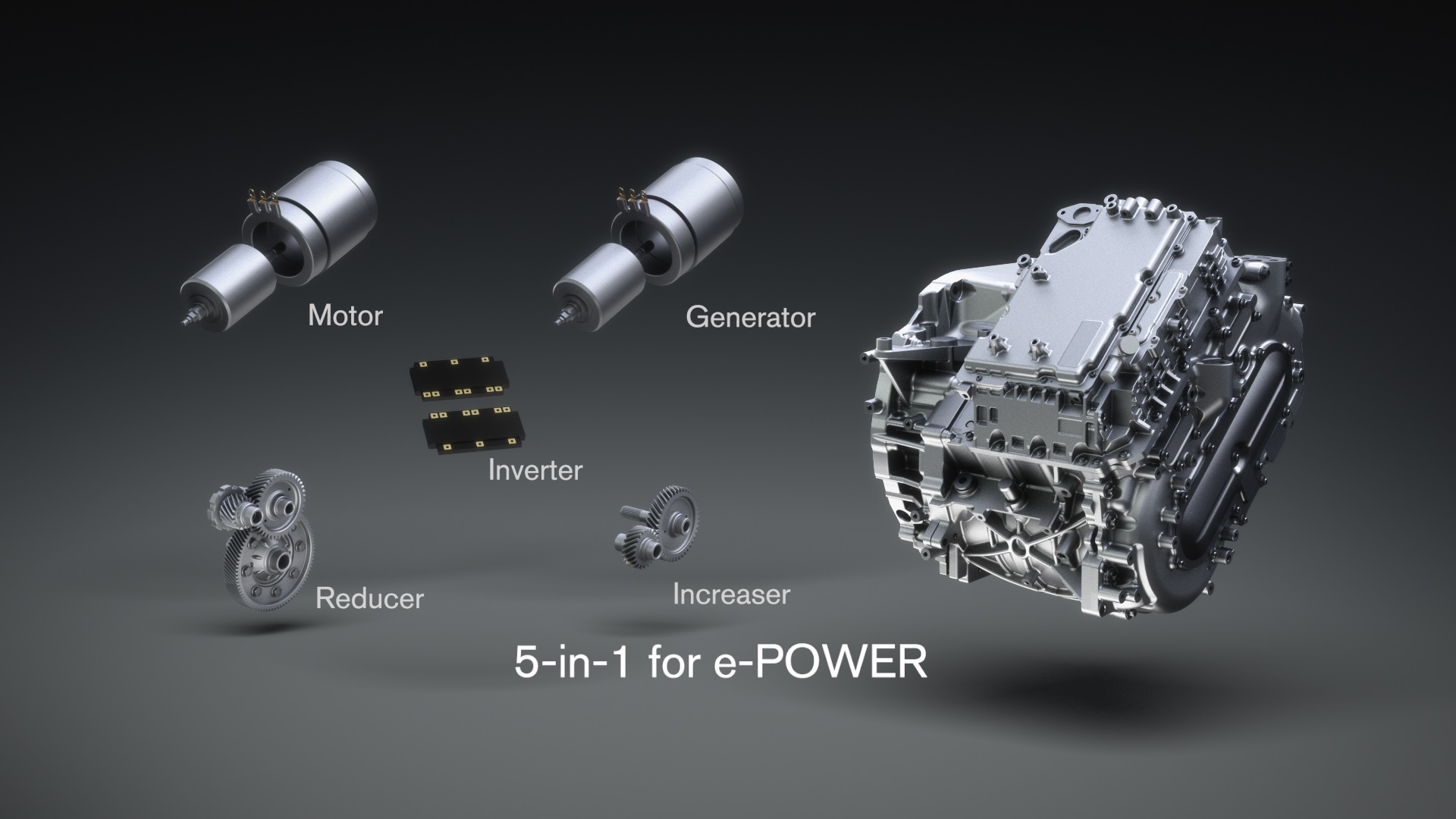
Nissan has also made strides in reducing the complexity and weight of the E-Power components, making it a more cost-effective solution compared to the brand's previous hybrid efforts. This could translate to more attainable pricing for consumers looking to upgrade to a fuel-sipping crossover without sacrificing performance or utility.
While the E-Power system may not offer the same all-electric driving range as a plug-in hybrid, its ability to deliver exceptional efficiency in a practical, family-friendly package could make it a game-changer for the mainstream auto market. As Nissan prepares to roll out this innovative technology in the 2027 Rogue and potentially other crossover models, it's clear that the days of settling for lackluster hybrid fuel economy in larger vehicles may soon be behind us.
Source: Ars Technica


